
15 Ways to Stop Your Front Door from Sticking This Summer
You are running late for a meeting in downtown Clarksville, TN, you grab your keys, and try to pull the front door shut. It won’t budge. You give it a shoulder nudge, then a hip check, and finally, it slams into the frame with a wood-on-wood screech that sets your teeth on edge. This is a classic July morning in Montgomery County. The humidity is thick enough to chew, and your front door is feeling every bit of it.
A sticking front door in Clarksville, TN is more than just a nuisance. It puts stress on your hinges, ruins your door’s finish, and can even be a safety hazard if you can't get out quickly. When the Tennessee heat hits, wood expands. If your door was fitted with tight tolerances in the winter, it’s going to fight you all summer long.
Why your door is acting up
Here is the deal. Wood is like a sponge. When the humidity climbs in the Sango or St. Bethlehem area, that wood door soaks up moisture from the air and physically grows. Even a fraction of an inch of expansion is enough to make a door stick against the jamb.
Common causes include:
- High humidity levels causing wood fibers to swell.
- Loose hinge screws that let the door sag.
- Settling in the foundation of your Clarksville home.
- Layers of old paint that have become "gummy" in the heat.
- A strike plate that has shifted out of alignment.
15 Ways to stop the sticking
I have seen this hundreds of times. Sometimes it is a quick fix, and other times it takes a bit of elbow grease. Here are 15 ways to get your door swinging smoothly again.
1. Run your air conditioning
It sounds simple, but your AC is a giant dehumidifier. By keeping the indoor air dry, you can actually pull moisture back out of the wood door, causing it to shrink back to size.
2. Use a dehumidifier near the entry
If the AC isn't enough, place a portable dehumidifier in the foyer. This is a common trick for older homes in Montgomery County where the seal around the door might already be weak.
3. Tighten the hinge screws
Open the door and check the screws on the top hinge. If they are even a little loose, the door will sag and rub against the bottom or side of the frame.
4. Use the "long screw" trick
What I'd do first if tightening doesn't work is replace one of the short factory screws in the top hinge with a 3-inch wood screw. Drive it all the way into the wall framing behind the jamb. This pulls the door closer to the stud and creates a gap on the handle side.
5. Rub a candle on the rub spots
Quick tip: find where the door is sticking and rub a plain white candle or some beeswax along that edge. The wax acts as a dry lubricant and can help the door slide past the tight spot without catching.
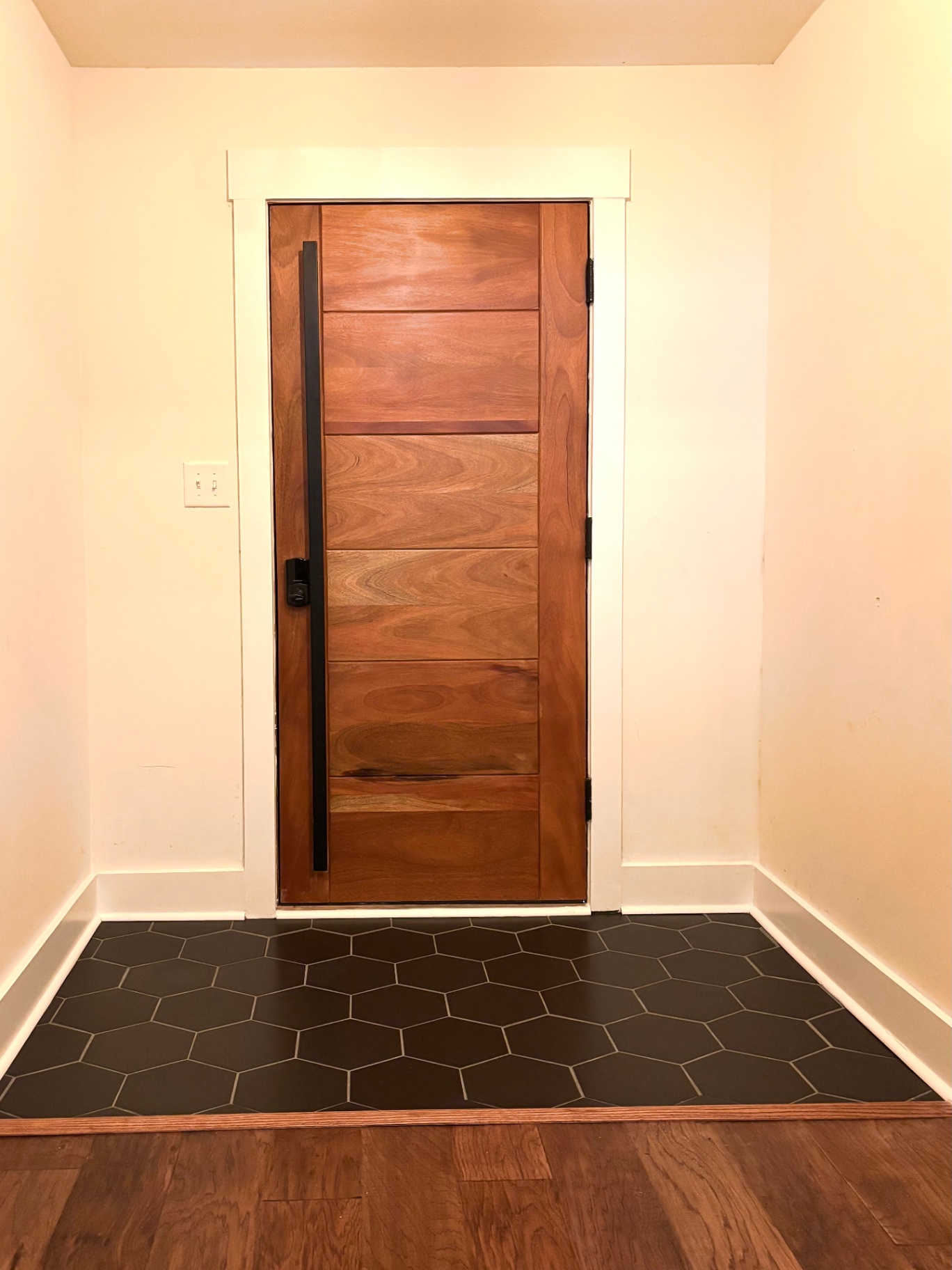
6. Clean the gunk off the edges
Check for a buildup of dirt, wax, or old furniture polish on the door edges and the jamb. This "gunk" gets sticky in the heat. A little soap and water can make a big difference.
7. Identify the rub spots with chalk
If you aren't sure where it’s hitting, rub some sidewalk chalk on the edge of the door. Close it, open it, and look at the frame. The chalk will transfer exactly where the contact is happening.
8. Lightly sand the edges
If the swelling is minor, you can use a block of sandpaper to take down the high spots. Just be sure to touch up the paint or sealer afterward so you don't leave the wood raw.
9. Seal the top and bottom edges
Most people forget to paint the top and bottom edges of their door. These are "raw" ends that suck up moisture like a straw. Sealing these with paint or polyurethane can stop the swelling before it starts.
10. Adjust the strike plate
Sometimes the door isn't swollen; it's just hitting the metal strike plate because the house shifted. You might see a small hairline crack in the drywall above the door which is a sign of settling. Moving the strike plate down an eighth of an inch can solve the problem.
11. Check for split caulk
Look at the seam where the door trim meets the wall. If you see split caulk, it means the frame is moving. Re-caulking and securing the frame can stabilize the door.
12. Lubricate the hinge pins
Pull the pins out one by one, wipe them clean, and hit them with a little silicone spray. Don't use WD-40; it attracts dust and turns into a mess over time.
13. Paint with lighter colors
If your door faces the sun near Fort Campbell, a dark color will soak up heat and cause the door to warp. Painting it a lighter shade keeps the wood cooler and more stable.
14. Shim the hinges
If the door is leaning, you can place a thin piece of cardboard (like from a cereal box) behind the bottom hinge. This tilts the top of the door away from the frame.
15. Switch to a fiberglass door
If you are tired of the constant battle, a fiberglass door is the ultimate solution. They don't swell, rot, or warp like wood does in our Tennessee climate.
What to safely try at home
You can safely handle tightening screws and cleaning the door yourself. If you’re feeling handy, the "long screw" trick is usually the most effective DIY fix. Just don't go crazy with a sander unless you are prepared to repaint the whole door.
I remember a client in Sango who tried to "fix" her door by shaving off a huge chunk with a wood plane. By the time winter rolled around and the wood shrunk, she had a half-inch gap that let in a freezing draft. She ended up needing a whole new door. It is always better to take off a tiny bit at a time.
When to call a professional
If you see structural issues or if the door is so stuck you're worried about breaking the handle, give me a call. If the frame itself is sagging or you see major rot in the threshold, that is a job for a pro. We handle these types of general repairs every day.
How Fix It Quick Handyman Service LLC handles it
When I come out to your Clarksville home, I don't just start sanding. I look at the whole picture. I check the hinges, the plumb of the frame, and the moisture levels.
Here is my process:
- Check the hinge tension and screw depth.
- Inspect the foundation and frame for signs of shifting.
- Identify the exact contact points using professional marking tools.
- Make the smallest adjustment possible to restore function.
- Ensure the weatherstripping still provides a good seal.
If your door is acting up, don't keep fighting it. We show up when we say we will and provide real craftsmanship with no surprises. You can reach out through our contact page or call the office directly.
Get your door fixed today
Ready to stop wrestling with your front door? Fix It Quick Handyman Service LLC is here to help homeowners in Clarksville and Montgomery County.
Give us a call at (615) 716-3318 for a free estimate. We’ll get that door swinging smoothly so you can enjoy your summer.
FAQs about sticking doors
Why does my door only stick in the summer?
It is all about the humidity. High moisture levels in the air cause wood fibers to expand. Since the door is held in a fixed frame, that expansion has nowhere to go but against the jamb.
Is it okay to use WD-40 on my door hinges?
I don't recommend it. WD-40 is a solvent, not a long-term lubricant. It will actually strip away the factory grease and eventually attract dirt. Use a silicone-based spray or a little white lithium grease instead.
Can a sticking door be a sign of foundation issues?
It can be. If you notice the door sticks year-round or if you see cracks in the drywall radiating from the corners of the door frame, your house might be settling.
Do I need to replace my door if it swells every year?
Not necessarily. Often, properly sealing the top and bottom edges or making a slight adjustment to the hinges can solve the problem for good.
SEO Notes
- Meta Title: 15 Ways to Stop Your Front Door from Sticking This Summer | Clarksville, TN
- Meta Description: Is your front door sticking in the Clarksville heat? Discover 15 practical ways to fix a swollen door, from simple DIY tricks to professional repairs.
- Focus Keyword: sticking front door
- Supporting Keywords: door repair Clarksville TN, summer home maintenance, wood door swelling, hinge adjustment, Montgomery County handyman.
- Slug: stop-front-door-sticking-summer