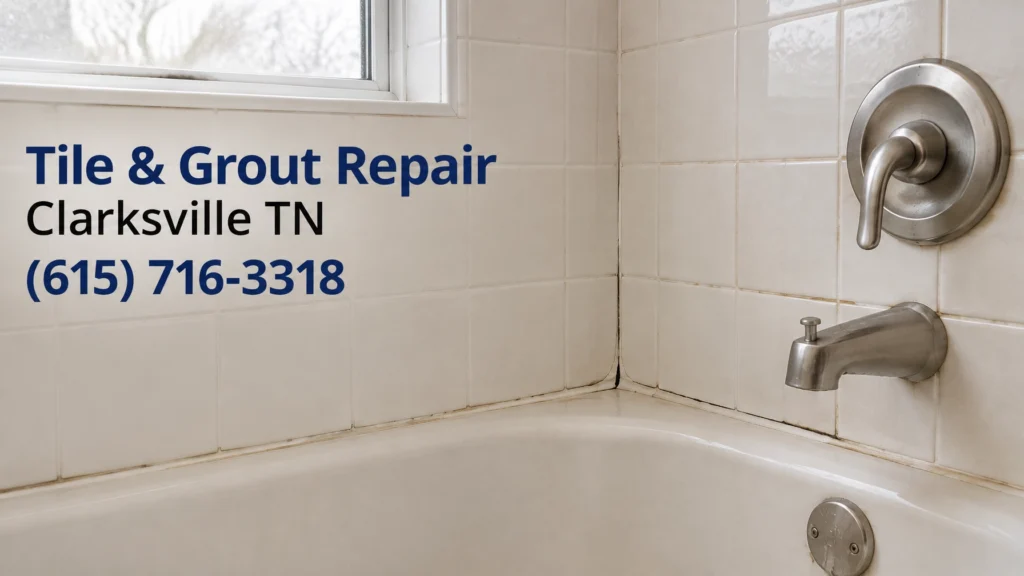
Tile usually gives you clues before a small repair turns into a wet wall or damaged subfloor. A hairline crack through a grout line, a hollow sounding tile near the shower curb, or dark grout that never seems to dry all deserve a closer look.
Fix It Quick Network is a referral network for homeowners in Clarksville and Montgomery County. We connect you with vetted local pros for tile and grout repair, bathroom tile repair, and other common home repairs. The Network does not perform the work itself. The pros in our network are licensed and insured.
1. Start with the condition you can see
Look closely before you scrub, patch, or pull anything loose. Tile problems often show up as small changes in the surface.
Check for these details.
- A hairline crack running through a grout line.
- Grout that is split, crumbling, or missing.
- A tile edge that moves when you press it gently.
- Dark grout that stays damp long after a shower.
- Caulk that has separated from the tub or shower pan.
- A soft spot near the bathroom wall or baseboard.
- A musty smell that returns after cleaning.
- Swollen trim or bubbling paint on the other side of the wall.
One damaged grout joint does not always mean the whole bathroom needs to be rebuilt. A single tile that sounds solid and does not move may be a limited repair. Several loose tiles, recurring grout cracks, and damp areas tell a different story.
In a Clarksville home, start with what is obvious and note where each problem appears. The location matters as much as the size of the crack.
2. Tell a tile problem from a grout problem
The damaged material usually points toward the first repair decision. Grout fills the joints between tiles. Tile is the hard surface itself. They can fail separately, or one problem can lead to the other.
Grout damage often looks like narrow cracks, crumbling lines, powdery material, or gaps at corners. A grout line may wear out from movement, cleaning, age, or moisture. If the surrounding tiles are firm and dry, re grouting may be enough for a limited area.
A cracked tile has a break through the tile surface. It may feel sharp, collect dirt, or spread from one corner. If the tile also rocks or sounds hollow, the problem may involve the bond below it rather than the tile alone.
Tap the tile gently with a coin or your knuckle. Compare it with a nearby tile that appears sound. A solid tile usually gives a dull, firm sound. A hollow sounding tile can suggest a void below the tile or a weakened bond.
Do not pry at the tile to test it. A visual check and a light tap are safer starting points.

3. Look for split and crumbling grout lines
Grout that keeps breaking apart needs more than another quick patch. Pay special attention to the areas that receive regular water or movement.
A split grout line near the tub edge can allow water to move into the joint. Grout at the shower floor, corners, curb, and wall transitions often takes more wear than grout in a dry hallway bathroom. If it is missing in several places, moisture has more opportunities to reach the surface behind the tile.
Crumbling grout may come away as a sandy residue when you rub it lightly. That does not prove hidden damage, but it does tell you the joint is no longer doing its job well. Grout that has been repaired more than once and keeps cracking may be reacting to movement below.
The width and pattern of the cracks matter. One short line may be a local repair. Cracks that travel along several joints or return in the same area suggest that the surface needs a fuller inspection.
For homeowners in St. Bethlehem, this is a practical place to begin. Take a dry photo, then check the same area after the next shower. Note whether the joint becomes darker, stays wet, or changes shape.
4. Watch dark grout and mildew in a shower
Dark grout is not always mildew. It can also be soap buildup, staining, or grout that is holding moisture. The timing helps you understand what may be happening.
Clean surface staining may lighten after a careful cleaning and dry normally. Grout that stays dark for hours after the shower has stopped deserves more attention. A musty smell, recurring black spots, or mildew that returns quickly can point to trapped moisture.
Check the caulk at the corners and along the tub or shower pan. A caulk line that has pulled away can leave a narrow path for water. Look for a gap where the wall meets the tub, not just for discoloration on the face of the tile.
A homeowner near Sango noticed a dark strip of grout along the bottom row of shower tile. The grout looked cleaner after scrubbing, but it darkened again after each shower, and the caulk at the tub corner had split. A local pro found that the surface needed more than a new bead of caulk.
Do not seal over dirty, damp, or damaged material and assume the problem is solved. The surface needs to be dry, and the cause needs to be understood first.
5. Check for loose or lifting tile
A loose tile often feels different before it looks different. It may rock slightly when pressed, sit higher than nearby tiles, or show a small gap along one edge.
On a shower wall, a loose tile can let water move behind the surface. On a bathroom floor, a lifting tile can become a trip point and may crack when stepped on. A hollow sound around one tile is worth noting, especially near a shower curb, drain, tub, or wall edge.
Look at the pattern around the damaged area. One isolated tile with firm neighboring tiles may be a contained repair. A group of hollow sounding tiles suggests that the tile bond or the backing may be failing across a larger area.
Do not push harder to see how much it moves. Extra pressure can break the tile or disturb surrounding grout. If the tile has a sharp edge, keep the area dry and avoid using it as a storage spot for bathroom items.
Tile repair in Clarksville TN homes can range from replacing one damaged tile to removing several tiles and checking the surface underneath. The visible size of the problem does not always show the full amount of work.

6. Check for water behind the tile
Water damage near a tub or shower can show up outside the wet area. Look at the baseboard, wall, flooring, and nearby room instead of stopping at the tile.
Soft spots and swollen baseboards near a bathroom wall are important clues. You may also see peeling paint, a brown mark, bubbling drywall, or flooring that lifts near the doorway. A musty crawlspace smell below the bathroom can point to a plumbing or waterproofing issue, although it does not identify the exact cause by itself.
Inspect the wall on the other side of the tub or shower if it is accessible. Do not cut into the wall just to look for a leak. A pro can determine whether the concern involves tile, caulk, plumbing, the shower pan, or the wall assembly.
If the bathroom is above another finished room, check the ceiling below for a new stain or soft area. Water can travel along framing before it becomes visible, so the mark may not sit directly under the failed grout.
For a broader look at moisture concerns, the sump pump and moisture guide may help you separate bathroom moisture from other water problems around a Montgomery County home.
7. Decide whether re grouting is enough
Re grouting can be a useful repair when the damage is limited. It is not a cure for loose tile, wet backing, or a failing shower pan.
Re grouting may make sense when the joints are damaged in a small area, the tiles are firmly bonded, and there are no soft spots or signs of moisture outside the shower. The old grout still needs to be removed carefully, and the joint must be clean and dry before new grout is added.
Replacement is usually the better path when the tile itself is cracked, loose, lifting, or hollow across a larger section. A replacement tile may also be needed when the grout damage keeps returning in the same place.
A new grout line can look better for a while even if water is still getting behind the tile. That is why repeated re grouting can feel frustrating. You spend time cleaning the joint, then the same crack appears a few months later.
Bathroom tile repair in Clarksville TN should address the material that is actually failing. The right fix may be a small grout repair, a tile replacement, a caulk repair, or a deeper inspection of the backing.
8. Understand what drives the cost
Tile and grout repair costs depend on the actual condition, not just the number of cracked lines. A small repair in an open bathroom is different from work inside a tight shower corner with damaged backing.
General planning ranges often look like this.
- A limited grout or caulk repair may fall in the low hundreds.
- Replacing one or a few accessible tiles may cost a few hundred dollars.
- Larger areas with tile removal, surface preparation, or moisture damage can move into the high hundreds or more.
- Repairs involving rotted subfloor, plumbing, or a full shower rebuild need a separate assessment.
These are general ranges, not quotes. The main cost factors include tile availability, matching grout color, access, the amount of removal, surface preparation, drying time, and whether hidden damage appears after the tile is opened.
The type of tile matters too. A common ceramic tile may be easier to match than an older specialty tile. A shower floor with a tight pattern may require more careful work than a large wall tile.
A Montgomery County handyman may be a good fit for a small, accessible tile or grout repair. If the damage involves major plumbing, structural movement, or a failed waterproofing system, the right referral may be a tile specialist, plumber, or other licensed specialist.
9. Know which checks are safe for a homeowner
You can learn a lot without taking the bathroom apart. Keep the checks simple and stop if the condition feels uncertain.
Start with a dry visual inspection. Look at tile faces, grout joints, corners, caulk lines, baseboards, and nearby flooring. Use a flashlight if the bathroom lighting is dim, but do not remove fixtures or trim just to see behind them.
Next, use the tap test on a few tiles. Compare the suspect tile with one nearby that looks sound. A different sound is a clue, not a final diagnosis.
Press gently on the tile surface and floor. Do not force movement. Check whether the floor feels soft near the tub, toilet, or shower entrance. Look at the caulk lines after the bathroom has been used and again after the area has had time to dry.
Avoid these steps.
- Do not pry up a loose tile.
- Do not seal over wet grout.
- Do not use harsh cleaners without checking the tile material.
- Do not cut into a wall to search for damage.
- Do not keep using a shower if water is reaching the wall or floor below.
- Do not scrape suspected mildew without protecting yourself and improving ventilation.
If a home near Fort Campbell has a soft wall, active leak, or growing stain, get matched with a pro before the damage spreads.
10. Know when to get matched with a pro
Get matched with a pro when the problem keeps returning or several warning signs appear together. One cracked grout line is different from cracked grout, hollow tile, dark moisture, and a swollen baseboard in the same bathroom.
A pro should take a closer look if you notice any of the following.
- Tile moves or lifts when lightly pressed.
- Several tiles sound hollow.
- Grout stays dark long after the shower.
- Caulk separates again after a recent repair.
- A soft spot appears near the tub or shower wall.
- The bathroom has a persistent musty smell.
- The ceiling or wall below shows a water stain.
- The subfloor feels soft or the baseboard is swollen.
- The same grout crack returns after re grouting.
The pros in the Fix It Quick Network are licensed and insured. The Network connects homeowners with the right local pro and does not perform the repair work itself.
If the inspection shows structural damage or a subfloor that is rotted through, the Network will point you toward the right specialist. A full shower rebuild, major plumbing problem, or structural repair should not be treated as a simple grout job.
11. Plan repairs before they become urgent
A small tile concern is easier to plan when you document it early. Take clear photos from a few feet away and close up. Write down when you first noticed it, whether it changes after water use, and whether the area feels soft or smells musty.
Home sellers can also use the pre listing repair checklist for Clarksville homes to sort bathroom tile concerns with other visible repairs. Fixing a split caulk line or loose tile before showings may help prevent a small condition from becoming a buyer question.
Property investors may want to record the location, tile type, last repair date, and any recurring moisture signs. The fall maintenance budget planning guide can help organize planned repairs across a rental portfolio in Woodlawn, Clarksville, or elsewhere in Montgomery County.
If a nearby sink is also draining slowly, review the slow draining sink guide before assuming the tile is the source of the water. A plumbing leak and a tile failure can look similar at first.
A clear record gives the matched pro a better starting point and helps you make a calmer decision.
Frequently asked questions
Can cracked grout cause a bathroom leak?
Cracked grout can give water a path behind tile, especially in a shower or around a tub. It does not prove that a leak is already present. Look for dark grout that stays wet, loose tile, soft areas, stains, or swollen trim nearby.
Is re grouting cheaper than replacing tile?
Re grouting is often less involved when the damage is limited to the joints and the tiles are firmly bonded. Replacing tile may be the better value when the tile is cracked, loose, hollow, or surrounded by recurring grout failure. The condition underneath affects the cost.
How can someone tell if a tile is hollow?
Gently tap the suspect tile and compare the sound with a nearby tile that appears sound. A hollow or drummy sound can indicate a void or weak bond. It is only a first check, not a complete diagnosis.
Should dark shower grout be cleaned or replaced?
Start by determining whether the darkness is surface staining or moisture that remains in the joint. If the grout dries normally and the tile is firm, cleaning may help. If the grout stays dark, smells musty, or keeps growing mildew, get a closer inspection before sealing or replacing it.
What if the subfloor is rotted under the bathroom tile?
Do not treat that as a basic grout repair. Rotted subfloor may involve water damage, plumbing, structural support, or several repairs at once. Fix It Quick Network can point you to the right specialist for the condition found.
How can I get help with tile and grout repair in Clarksville TN?
If you would like a vetted local pro to review the condition, call or text (615) 716-3318 or request a free match online. Share the bathroom location, the visible damage, and whether you have noticed movement, moisture, or soft areas.