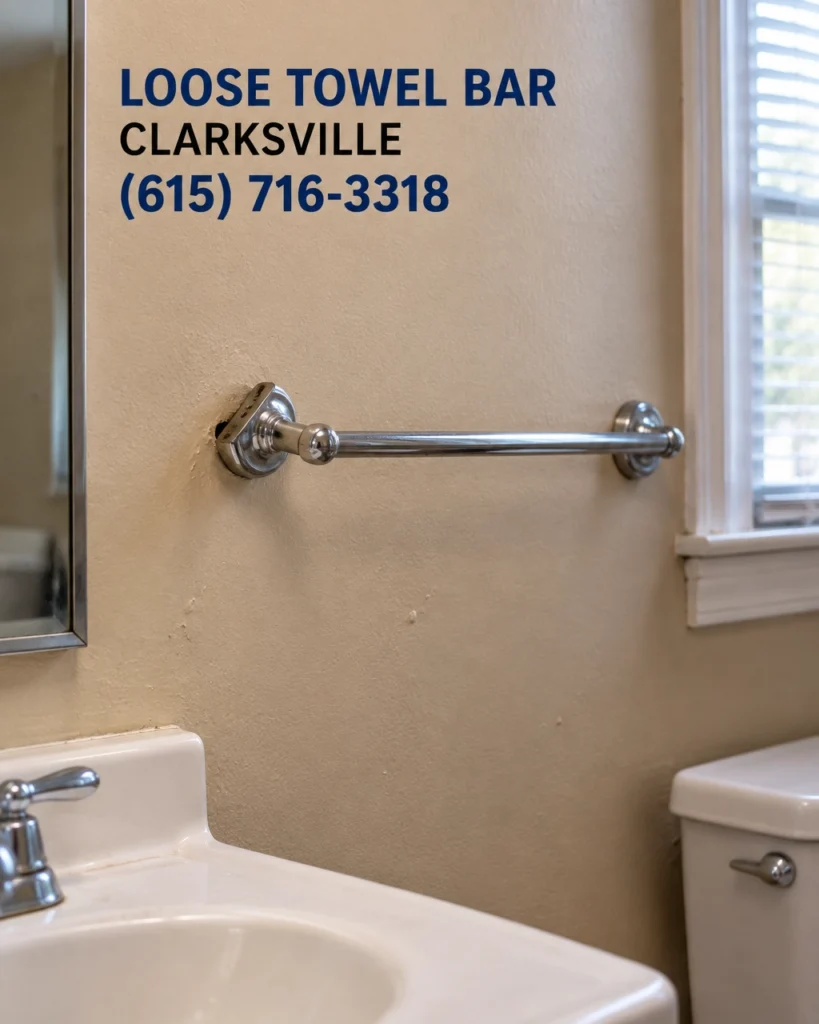
A loose towel bar usually starts with a small wobble. Then one end pulls away from the wall, the bracket tilts, and the drywall begins to crumble around the anchor.
This is common with towel bars, toilet paper holders, hand towel rings, and other bathroom hardware. The good news is that the fix is often simple. The important part is mounting the hardware to something that can handle daily use.
1. Find Out Why the Towel Bar Failed
The wall fastener is usually the weak point. Many towel bars are installed with small plastic anchors in hollow drywall. Those anchors may hold for a while, but the bar creates leverage every time someone grabs a towel.
Bathroom moisture adds more stress. Clarksville humidity, steamy showers, and poor ventilation can soften drywall paper around a hole. Fall weather can make the bathroom feel less humid indoors, but the wall still sees repeated moisture during showers.
Other common causes include these.
- The installer missed the wall stud.
- The anchor was too light for the hardware.
- Kids or guests pulled on the bar.
- A wet towel added more weight than expected.
- The drywall was already weak from an old leak.
- The small set screw on the bracket loosened.
A towel bar is not meant to support body weight. If someone may lean on it, treat the situation differently.
2. Check the Wall Before Reusing the Hole
Remove the loose bar and mounting plates before buying new anchors. Look closely at the wall, especially around the damaged hole.
A pulled towel bar can leave an oval opening with crumbling paper around the edge. You may also see a hairline crack spreading outward, a soft spot, or a faint brown mark from an earlier plumbing leak.
Tap around the area with a fingertip. Solid drywall sounds fairly firm. A hollow sound is normal in some sections, but a soft or mushy feel is not.
Check for a stud near each mounting point. A stud finder can help, but small test holes along the planned line can also show where solid wood begins. Be careful around plumbing and electrical lines, especially in a wall shared with a sink, tub, or shower.

A homeowner in Sango found a towel bar leaning after a family member grabbed it with one hand. The bar was fine, but one plastic anchor had pulled through the drywall and left a rough oval hole. The wall only needed a small repair because there was no sign of moisture damage.
3. Use the Strongest Mounting Point Available
Mounting directly into a stud is the best choice for a towel bar when the layout allows it. Mark the bracket holes so the screws pass into solid wood, then use screws long enough to enter the stud by about an inch.
The existing hardware may not line up with the stud. In that case, check whether the bar can shift slightly without looking out of place. Moving it an inch or two may give you a much stronger mounting point.
If no stud is available, use a heavy duty metal toggle or strap style hollow wall anchor rated for the wall thickness. These anchors spread the load across the back of the drywall instead of relying on a small plastic sleeve.
Use the anchor maker’s required hole size. Do not force a large anchor into a small hole or reuse a stripped fastener. Place the bracket over the anchor, use the correct screw, and tighten until snug. Stop before crushing the drywall.
Keep the bar level before securing the second bracket. Match the original height and spacing when possible. A towel bar that sits too high, too low, or crooked can look worse after the repair.
4. Clean Up a Small Wall Hole
A small hole can usually be patched before the hardware goes back up. First, remove loose paper and crumbly drywall with a sharp edge. The goal is a clean opening with firm material around it.
For a shallow hole, apply a thin layer of setting compound or patching compound. Let it dry, sand it lightly, and apply another thin coat if the surface still dips. Prime the patch before painting so the repaired area does not flash through the finish.
If the hole is large enough that the new anchor cannot grip solid drywall, do not simply cover it with more compound. Move the bracket to fresh drywall or open the area enough to add backing.
The mounting plate can hide a small patched spot, but it should not hide active damage. If the wall feels damp, smells musty, or continues to crumble, stop and find the source first.

5. Know When the Wall Damage Is Bigger
A loose towel bar is a small repair only when the wall is sound. A soft wall near a tub, vanity, or toilet may point to a past or active leak.
Look for these warning signs.
- The drywall feels soft when pressed.
- The hole keeps getting larger.
- Paint is bubbling or peeling.
- There is a musty crawlspace smell nearby.
- The baseboard or flooring feels swollen.
- A stain returns after repainting.
- The same fixture has pulled out more than once.
In St. Bethlehem homes, bathroom wall damage may come from a slow supply line leak, a failed caulk joint, or condensation that never dries. In older parts of Montgomery County, the wall may also have several layers of paint and patched drywall that no longer hold anchors well.
A drywall repair may be enough, but moisture damage can require a plumber, restoration specialist, or other qualified pro. Major structural or hidden water work should not be treated as a towel bar repair.
6. Use the Right Setup for Grab Bars
Grab bars are different from towel bars. They are meant to help someone steady themselves or transfer weight, so ordinary drywall anchors are not enough.
A grab bar should be secured to wall studs, solid blocking behind the drywall, or a mounting system specifically rated for grab bars. If the bathroom is being remodeled, adding blocking before the wall is closed gives the future bar a solid place to attach.
This matters for aging in place in Clarksville homes and rental properties. A grab bar that only feels tight at first can still pull away under body weight later.
If the wall is already finished, get matched with a pro before cutting into it. The pros in our network are licensed and insured, and the right local pro can help determine whether the wall needs backing, repair, or a specialty grab bar system.
7. Keep Bathroom Hardware Tight
Good installation helps, but daily habits matter too. Do not hang several wet towels from a small hand towel ring. Do not use a towel bar as a step or support. Tighten a loose set screw as soon as the bracket begins to move.
Run the bathroom exhaust fan during showers and for a while afterward. If the fan rattles or barely moves air, use the bathroom exhaust fan repair guide to check the basic causes.
Watch the caulk around the tub and sink. Split caulk can send water into the wall over time. A slow drain can also leave more standing water and moisture in the room, so the slow draining sink guide is worth reviewing if the basin takes too long to empty.
For a typical loose towel bar, the cost may range from a small service visit to several hundred dollars if drywall repair, repainting, or moisture work is needed. The final cost depends on wall damage, access, materials, and whether another trade is needed.
8. When to Get Matched With a Pro
A simple towel bar repair may be reasonable if the drywall is firm and the new anchor can be installed correctly. Stop if the wall is soft, the hole is badly enlarged, or you are unsure what is behind the wall.
It also makes sense to get matched with a pro if several bathroom fixtures are loose or if you are preparing a home for sale. A small repair list in Fort Campbell, Woodlawn, or another Clarksville area neighborhood can often be reviewed together instead of handled one item at a time.
Fix It Quick Network is a referral network, not a repair crew. We can match you with a vetted local pro for the work, and the match is free for homeowners.
If you would like help, call or text (615) 716-3318, or request a free match through the contact page. Take a photo of the loose bar and the wall damage, then send it with your location and preferred timing.
9. FAQs About Loose Towel Bars
Can a loose towel bar be tightened without removing it?
Sometimes, but only if the bracket or set screw is loose and the drywall anchor is still solid. If the bracket moves with the wall or the hole is enlarged, tightening the screw will not solve the problem for long.
Should a towel bar be mounted into a stud?
A stud is the strongest option. If the spacing does not work, a properly rated metal toggle or strap anchor can work for a normal towel bar on sound drywall.
Can plastic drywall anchors hold a towel bar?
Light plastic anchors may hold briefly, but they often loosen under repeated pulling and wet towel weight. A heavier hollow wall anchor or direct stud connection is usually a better choice.
How do you repair drywall after a towel bar pulls out?
Remove loose paper, clean the opening, patch the damaged area, and let it dry before sanding and priming. If the hole is too large for an anchor to grip, move the hardware or add solid backing behind the wall.
Can a towel bar be used as a grab bar?
No. A towel bar is not designed to support body weight. A grab bar needs studs, blocking, or a mounting system rated for that purpose.