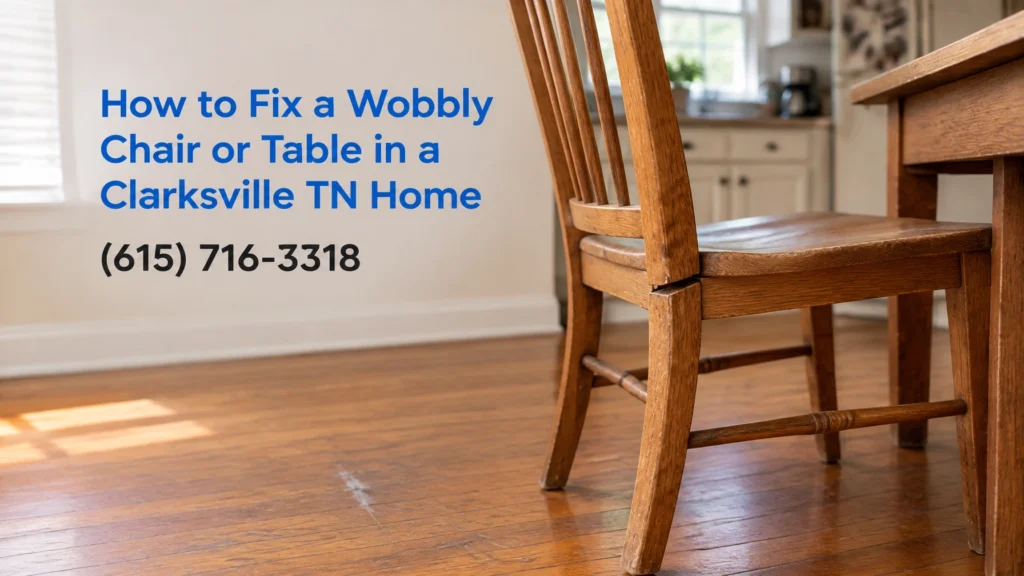
A wobbly chair or table usually has a simple cause. The joint is loose, the hardware has backed out, or the floor and legs are not sitting level.
Start with the diagnosis before reaching for glue. A quick check can tell you whether this is a small home repair or a bigger furniture problem.
1. Find out why the chair or table wobbles
Rock the chair or table gently on a flat area. Watch which leg lifts, then place one hand on each joint where the leg meets the seat, apron, rail, or corner brace.
Feel for movement at these spots.
- A moving joint points to loose glue, a worn dowel, or a split in the wood.
- A turning screw or bolt points to loose hardware.
- Solid joints with one leg lifting usually point to an uneven leg or floor.
- A table that rocks only on one area of the room may be sitting over a floorboard seam or slight dip.
Check all four legs on a chair, even if only one corner feels loose. Wobble can travel through the frame. The other joints may already be under extra strain.
A homeowner near Sango once noticed a dining chair rocking only when someone leaned back. The back leg looked fine from across the room, but a small gap at the joint opened when the chair was pressed. That hairline gap told the real story.

2. Tighten screws and bolts without damaging the wood
Start with the easiest fix. Turn the chair or table over on a blanket and inspect the underside for screws, bolts, threaded inserts, or metal plates.
Tighten each fastener slowly. Stop as soon as it feels snug.
Overtightening can strip the screw hole or crush softer wood. If the screw spins without becoming firm, the wood may be worn out around the threads. A longer screw is not always the answer, especially if it could break through the finished surface.
For bolts, hold the nut or threaded insert steady while tightening the bolt. Check whether the joint closes as the fastener tightens. If a gap remains, the hardware may only be holding a damaged joint in place.
If you see a cracked leg, split apron, or pulled-out corner brace, don't keep tightening. That can make the damage worse.
This same careful approach applies to many daily home repairs in Clarksville. For example, a loose fixture needs the right anchor or fastener, not just more force. The guidance in this loose towel bar repair article follows the same basic idea.
3. Repair an opened wood joint with glue
A loose wood joint can often be repaired with fresh wood glue and steady pressure. This is the honest DIY answer for a chair or table that has no major split and does not carry unusual weight.
First, remove the loose piece if it comes apart without force. Scrape away old dried glue from the mating surfaces, dowels, or tenons. Old glue can keep new glue from bonding properly.
Dry-fit the joint before adding anything. The pieces should seat fully and line up with the rest of the frame. If the joint is badly worn and feels loose even when dry, glue alone may not be enough.
Apply wood glue to the joint surfaces. Reassemble the pieces, then hold them tightly with a clamp, strap, or strong rope placed around the frame. Protect the finish with folded cardboard or a clean cloth.
You don't need fancy clamps for every small repair. A strap around a chair frame can provide even pressure if it is placed carefully. Wipe away glue squeeze-out while it is still wet, then leave the piece undisturbed overnight or according to the glue label.
Don't sit on the chair or load the table until the glue has cured.
4. Add a dowel or hidden reinforcement when glue is not enough
Some joints have been loose for so long that the wood fibers no longer fit tightly. A dowel can bridge the damaged area and give the joint more strength.
The usual method is to align and hold the joint, drill through the outer piece and into the inner piece, then glue a matching wood dowel into the opening. The dowel is trimmed flush after the glue dries.
This repair takes more care than simply adding glue. The hole needs to be centered, and the drill must stay square with the leg or rail. A crooked hole can leave the chair twisted or put stress on another joint.
Corner braces or reinforcement plates can also help on a table. Place them inside the apron or under the tabletop where they are concealed. They should support the joint, not force two badly misaligned pieces together.
An old repaired joint can be stronger than a new one when the damaged area is cleaned, fitted correctly, glued, and reinforced. The repair still needs to match the furniture's design and the load it will carry.

5. Level an uneven chair or table
If every joint feels solid, check the legs and the floor. Move the piece to a flat surface, then press down on opposite corners to see which leg lifts.
For a very small difference, use a felt pad or firm furniture shim. Adjustable feet work well for some tables because they let you make small changes without cutting the wood.
A thin, hard shim is usually better than a soft stack of cardboard. Soft material compresses over time and can make the wobble return. Trim the shim so it stays hidden and does not catch on the floor.
Do not shorten a leg unless you are sure it is the long one. Remove very small amounts, test often, and keep the bottom square. A mistake can leave the chair rocking in a different direction.
Dragging chairs across older floors can also loosen joints and change how the legs sit. Lift them instead. Felt pads help protect flooring, but replace them when they collect grit or start peeling.
6. Know when a wobble points to a bigger repair
A wobbly chair is not safe to use if the frame is cracked, the seat is separating, or a leg moves several inches at the joint. The same goes for a table with a split apron, broken corner block, or leg that is pulling away from the top.
Stop using the piece if you see any of these signs.
- A crack is spreading when weight is applied.
- A joint will not close after cleaning and dry-fitting.
- A screw hole is enlarged and will not hold.
- The table rocks after the brace and leg are tightened.
- The chair has loose rungs or rails that support the back or seat.
A small loose table leg repair in Clarksville TN may be straightforward, but a damaged load-bearing joint needs a proper inspection. The pros in our network are licensed and insured, and Fix It Quick Network can match you with a vetted local pro for furniture repair in Clarksville TN.
7. Consider the cost before deciding how to proceed
Small furniture repairs often cost less than replacing a solid wood chair or table, but the price depends on the diagnosis. A basic tightening or leveling adjustment may fall around $75 to $150. Regluing one accessible joint may run roughly $100 to $250.
More involved work can cost $250 to $500 or more when several joints need to be taken apart, cleaned, doweled, refinished, or reinforced. Specialty furniture, heavy tables, matching stains, and repairs that require careful disassembly can add time.
For a rental property in Montgomery County, repair may make more sense than replacing an entire dining set during turnover. A realtor may also prefer a stable, presentable piece in a staged home near St. Bethlehem. Investors working around Fort Campbell may need several furniture repairs handled together, which can affect the overall cost.
The best estimate starts with the cause, not the symptom.
8. Prevent the wobble from coming back
Keep chairs and tables on felt pads that fit the leg bottoms. Replace pads that are thin, loose, or packed with grit. Lift furniture instead of dragging it across hardwood or older plank floors.
Middle Tennessee humidity swings can make wood expand and contract. That movement may open older joints, especially in furniture kept near a vent, exterior door, or sunny window. Keep indoor humidity reasonably steady and avoid placing wood furniture directly against damp walls.
Check dining chairs every few months. Look for a new rattle, split caulk-like seam at a joint, a small gap, or a screw that starts turning too easily. Early repairs are usually simpler.
If you'd like a vetted local pro to inspect a wobbly chair, table, or several pieces at a rental or listed home, call or text (615) 716-3318. You can also request a free match through the contact page. Take a photo of the loose joint and note whether the wobble follows the furniture or stays in one place.
Frequently asked questions
Can wood glue fix a wobbly chair?
Wood glue can fix a loose wood joint when the pieces still fit together correctly and the surrounding wood is sound. Clean off old glue first, then clamp the joint until the glue cures. Glue will not correct a badly split leg or a joint with severely worn wood.
Should I use screws instead of wood glue?
Not always. Screws can help reinforce a joint, but they can also split a narrow leg or leave visible damage. Use the furniture's original hardware when possible, and consider a hidden brace or dowel when more support is needed.
How do I stop a table from rocking on an uneven floor?
First, move the table to another flat area to rule out the floor. If the joints are tight, use an adjustable foot or a firm, thin shim under the short leg. Avoid soft materials that compress and let the wobble return.
Is a wobbly chair safe to use?
Not if the leg, seat frame, back rail, or another load-bearing joint moves noticeably. Set it aside until the joint is repaired and the frame is stable. A chair can fail quickly when someone leans back or shifts weight.
Is furniture repair worthwhile for a rental property?
Often, yes, especially when the furniture is solid and the problem is limited to a loose joint or fastener. Property managers and investors can group several small repairs during a turnover visit instead of replacing usable pieces.
For broader fall maintenance, see the guide to fall wood rot repairs for Clarksville homes and rental properties. A wobbly chair is small, but the same habit applies. Find the real cause first, then choose the simplest sound repair.