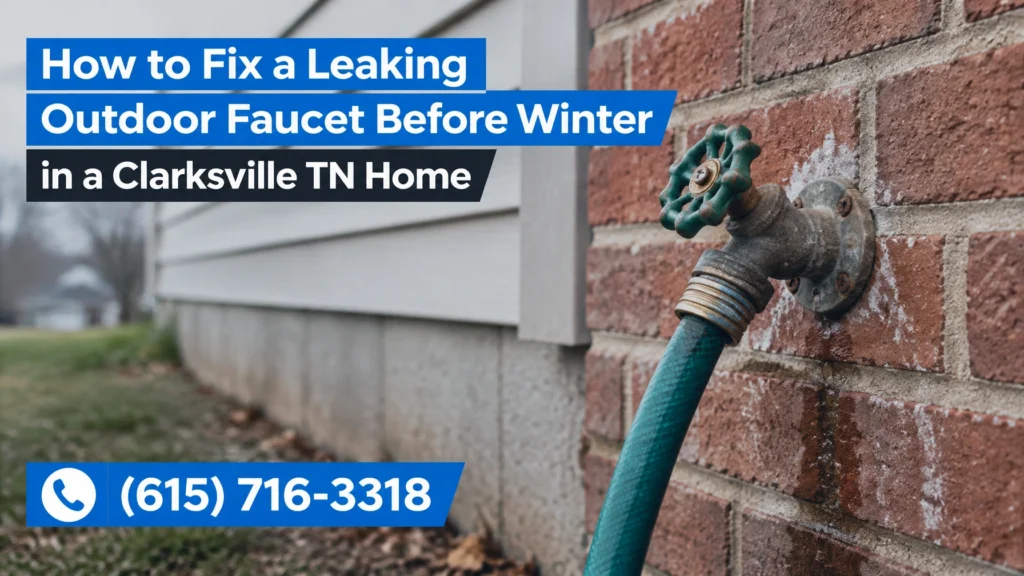
A slow outdoor faucet leak is easy to ignore in September. It is also the kind of small problem that can feel much bigger after the first hard freeze.
A dripping hose bib can waste water, stain brick, and leave water where it should not be. If the leak is inside the wall, freezing weather may split the pipe and create a much more expensive repair.
This guide covers what to check first, what you may be able to fix yourself, and when to get matched with a pro for outdoor faucet repair in Clarksville, TN.
1. Find the exact leak before touching anything
Start with the leak location. The spot where you see water is not always where the failure began.
Check these areas while the faucet is running, then shut off the water before making a repair.
- Water dripping from the handle usually points to a loose packing nut or worn packing.
- Water spraying from the top cap often means a damaged vacuum breaker.
- Water dripping from the spout after the faucet is closed usually means a worn stem washer.
- Water appearing where the faucet meets the wall may point to a cracked frost free sillcock or pipe inside the wall.
- Water leaking only where the hose connects may come from a missing or flattened hose washer.
Look for a slow drip that stains the brick below the spigot. Pale white mineral marks, known as efflorescence, can also show that water has been reaching the wall repeatedly.
A split vacuum breaker cap is another common clue. It may leak only while the faucet is running, so check the top of the fixture instead of assuming the valve body is bad.

2. Shut off the water and drain the line
Turn off the interior shutoff valve that serves the outdoor faucet. Many homes have this valve in a crawlspace, utility room, basement, or near the water heater.
If you cannot find that valve, use the main shutoff. The related guide How to Find Your Main Water Shutoff in a Clarksville Home can help you think through the usual locations.
Open the outdoor faucet after shutting off the interior valve. Let the remaining water drain out, then leave the faucet open while you work. This relieves pressure and helps empty the line.
Do not force a valve that feels stuck or begins to leak around the stem. Older plumbing can fail when a stiff valve is pushed too hard. That is a good point to get matched with a pro.
For more seasonal reminders, see Fall Freeze Prep for Clarksville Rental Properties. The same basic steps apply to many Clarksville homes, even when the property is not a rental.
3. Know the parts before making a small repair
A standard hose bib and a frost free sillcock can look similar from outside. The parts inside work a little differently.
The stem washer sits at the end of the valve stem. It presses against the valve seat when the faucet is closed. If the faucet keeps dripping from the spout, the washer may be hard, cracked, or compressed.
The packing nut sits behind the handle. It keeps water from escaping around the stem while you turn the faucet. If water appears around the handle, the packing nut may only need a slight adjustment.
A frost free sillcock has a longer body that extends into the warmer part of the wall. It is designed to drain when the faucet is shut off, but it can still freeze if a hose remains connected, the valve does not drain, or the pipe inside the wall is damaged.
Here is the deal. A washer repair is different from replacing the entire sillcock. Do not assume the outside fixture is the only problem.
4. Try the simple handle repair first
If water seeps around the handle, check the packing nut. It is the small hex shaped nut directly behind the handle.
With the water shut off, snug the packing nut by turning it clockwise about one quarter turn. Reopen the interior valve and test the faucet. If it still weeps, another small adjustment may help.
Do not crank the nut down hard. Over tightening can make the handle difficult to turn or damage the packing.
If the leak continues, the packing or O ring may need replacement. That repair requires removing the handle and accessing the stem. The parts are inexpensive, but the correct size matters, especially on older fixtures.
If the faucet drips from the spout after it is closed, the stem washer is the more likely problem. Remove the stem assembly, replace the worn washer with a matching washer, and inspect the valve seat for deep pitting.
A badly damaged seat, corroded stem, or broken faucet body usually calls for a replacement rather than another small repair.
5. Check the vacuum breaker and hose connection
Many outdoor faucets have a vacuum breaker near the top. It helps prevent dirty water from flowing backward into the home water supply.
A small amount of water from the breaker while the faucet runs may indicate a damaged cap, seal, or internal check piece. A split vacuum breaker cap should not be ignored. Replacement kits are available for some models, while others require replacing the faucet assembly.
Also inspect the rubber washer inside the garden hose connection. If it is missing, flattened, or cracked, replace it before tightening the hose again.
One Clarksville homeowner near Sango noticed a drip stain below the spigot after a garden hose was left connected through the first cold snap. The hose was removed, but the split vacuum breaker cap and damaged washer still needed attention before winter.
That is why the full fixture deserves a look, not just the most obvious drip.
6. Protect the faucet before the first freeze
Disconnect every hose before freezing weather. A connected hose can keep water trapped inside a frost free sillcock and prevent it from draining properly.
Close the interior shutoff if the fixture has one, then open the outdoor faucet to drain the line. Confirm that the faucet points slightly downward away from the house so water can run out.
A foam faucet cover can add protection, especially on an exposed wall or a home near Fort Campbell. It is a helpful layer, not a replacement for a leak repair or a working shutoff.
Check crawlspaces and utility areas for drafts around the pipe. In St Bethlehem homes with accessible plumbing, a missing insulation section or open foundation vent may make a freeze problem more likely.
If a line already froze, do not use an open flame to thaw it. Wait for safer conditions and watch closely for leaks as the ice melts.

7. Know what the repair may cost
Small outdoor faucet repairs often cost less than replacing the full fixture. A packing adjustment or washer replacement may fall in the general range of $75 to $175, depending on access, parts, and local labor.
A vacuum breaker replacement or complete frost free sillcock replacement may commonly run from $150 to $400 or more. The price depends on corrosion, wall access, the type of pipe, and whether the interior connection is easy to reach.
For a Woodlawn rental or a pre listing repair in Montgomery County, take clear photos of the faucet, wall area, shutoff valve, and any staining. Photos help a property manager, realtor, or matched pro understand the problem before scheduling.
Timing matters. Handle a dripping faucet during fall turnover or before listing photos instead of waiting until a tenant reports water inside the wall.
8. Know when to get matched with a pro
A simple washer or packing repair may be reasonable for a homeowner who feels comfortable shutting off and draining the line. Stop and get help if the faucet leaks into the wall, the shutoff will not close, or the fixture is badly corroded.
The job also goes beyond a typical handyman fix when it involves soldered copper, a pipe broken inside the wall, or damage that requires opening finished siding or drywall. Fix It Quick Network can point you to the right specialist when the repair needs plumbing work beyond a basic fixture replacement.
The pros in the network are licensed and insured. The Network does not perform the repair itself. It matches homeowners, realtors, property managers, and investors with vetted local pros for common home repairs in Clarksville and Montgomery County.
If you would like help with outdoor faucet repair in Clarksville, TN, call or text (615) 716-3318. You can also request a free match through the contact page. Send a photo of the faucet and the stained area if you have one, then take the next step before freezing weather arrives.
Frequently asked questions
Can I leave a hose connected to a frost free outdoor faucet?
No. Disconnect the hose before freezing weather. A connected hose can trap water in the sillcock and increase the chance of freeze damage.
Why does my outdoor faucet drip after I shut it off?
A drip from the spout usually points to a worn stem washer or damaged valve seat. A drip around the handle often points to the packing nut or packing.
Is a foam cover enough to prevent freezing?
A foam cover adds protection, but it cannot correct a leak, a broken pipe, or a hose left connected. Drain the line and repair the faucet first.
What does water at the wall behind the faucet mean?
It may mean the sillcock body or the supply pipe inside the wall is cracked. Shut off the interior valve and get matched with a pro before the leak causes more damage.
Should a realtor photograph a leaking outdoor faucet?
Yes. Photograph the fixture, the wall, any drip stain, the shutoff valve, and the surrounding area. Clear photos help with repair planning and pre listing documentation.
When should I call for hose bib repair in Clarksville, TN?
Call when the leak continues after a basic washer or packing adjustment, when the shutoff is stuck, or when water enters the wall. Soldered copper and hidden pipe repairs should go to the right plumbing specialist.