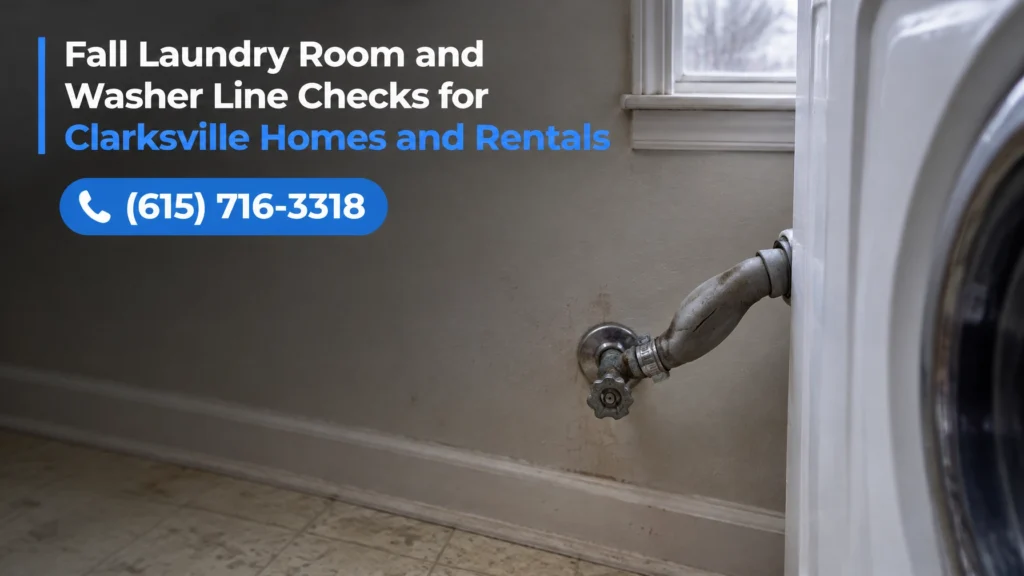
Fall temperature swings in Clarksville can put extra stress on washer hoses, shutoff valves, laundry sink drains, and standpipes. A small drip behind a washer may stay hidden until the floor feels soft or a musty smell reaches the hallway.
This is a good seasonal check for homeowners, realtors, property managers, and investors across Montgomery County. The goal is simple. Find the small warning signs before a worn hose or slow drain creates a much larger water damage problem.
Fix It Quick Network is a referral network, not a repair crew. We match customers with vetted local pros for the work that needs a qualified set of eyes.
1. Start with the Washer Supply Hoses
Check the hoses before the first cold nights arrive. Look at both the hot and cold supply lines where they connect to the wall valves and the back of the washer.
A rubber hose with a bulge, soft spot, hairline crack, or dark stain should not be ignored. Also look for rust around the fittings, white mineral buildup, damp threads, and marks on the wall or floor below the connection. A hose can look acceptable from the front while slowly leaking behind the machine.
Pull the washer forward only if it can move safely without stretching the hoses. Do not force a stacked unit or a machine boxed into a tight closet. If the hoses are hard to see, a pro can inspect the connections without creating a second problem.
Many homeowners replace older washer hoses around the five year mark, especially if the age is unknown. Braided replacement hoses may be a practical option, but the connection still needs to be aligned and snug. Overtightening can damage the valve or fitting.
If there is active moisture, stop using the washer and close the two laundry shutoff valves if they turn easily. Do not force a stiff or corroded valve.
2. Test the Laundry Shutoff Valves Carefully
A shutoff valve only helps if it can close. Check whether each handle moves with steady hand pressure, then watch the valve stem and connection for a drip.
An old valve may feel stiff after sitting untouched for years. Forcing it can break the stem or disturb the connection in the wall. That can turn a washer hose concern into a much larger plumbing call.
Look for these warning signs.
- The handle will not move.
- Water beads around the stem.
- The valve is heavily corroded.
- The wall plate is loose.
- The hose connection has rust or mineral crust.
- The valve closes but water continues flowing.
A homeowner does not need to repeatedly operate an old valve just for practice. It is enough to know where the valves are and whether they appear usable. If the laundry valves are frozen, leaking, or difficult to identify, get matched with a pro.
It also helps to know the location of the main shutoff before any water emergency. The guide on how to find your main water shutoff in a Clarksville home explains where homeowners often find it and what not to force.
3. Check the Drain Hose, Standpipe, and Pan
Supply hoses are not the only source of laundry room leaks. A drain hose can kink, slip out of place, or rub against the back of the washer until it cracks.
Check that the drain hose is secure in the standpipe. It should not be shoved so far down that drainage or airflow is restricted. During a rinse or spin cycle, listen for gurgling and watch for water rising around the pipe.
A drain pan can catch a small leak, but standing water in the pan still needs attention. Look for a slow water line, dark staining, or a musty edge on the drywall behind the washer. Those details suggest the area has been wet more than once.

If the laundry area has a floor drain, check whether it is clear enough to accept water. Do not pour harsh chemicals into a drain that may have a deeper blockage. Slow drainage, repeated overflow, or water backing up around the standpipe needs a proper inspection.
A laundry sink deserves the same attention. Check under the trap, around the faucet supply lines, and along the cabinet base for swelling or old water marks.

4. Look for the Cost of a Slow Drip
Small leaks feel easy to postpone. That is often how a laundry room goes from a simple hose replacement to damaged flooring, drywall, or subfloor.
A slow drip behind a washer may leave only a faint ring on the floor at first. Over time, it can create a soft spot, stained wall, swollen cabinet toe kick, or persistent musty smell. The cost depends on how long the leak has been active and how far water has traveled.
A straightforward hose replacement or valve service may fall in the low hundreds. Drain repairs and supply line work vary with access, fittings, and the condition of the plumbing. If water damage has reached finished flooring, drywall, or framing, the cost can move into the high hundreds or thousands.
A full water damage claim involves more than stopping the leak. Drying, material removal, odor control, and repairs all add time and cost. A small seasonal check is not a promise that every leak will be prevented, but it gives homeowners a better chance to catch visible trouble early.
Do not open walls or pull up flooring just to investigate a faint mark. Take a clear photo, note the location, and request the right referral.
5. Keep Better Records for Sales and Rentals
A clean laundry area matters during a pre listing walkthrough. Realtors should look for stained hoses, loose valves, a damaged drain pan, a slow standpipe, and cabinet swelling before the home reaches inspection.
A short record also helps property managers and investors track tenant reports by address. A message that says “the laundry room is wet” is less useful than a note that identifies the hose connection, the date, the floor condition, and whether the washer was still running.
A rental near Fort Campbell may have a quick response window between tenants. A property in Sango or St. Bethlehem may have different access and scheduling needs. Either way, the address and the exact symptom help the referral process move faster.
A simple laundry record can include the following.
- Hose age or replacement date.
- Condition of both shutoff valves.
- Drain hose and standpipe observations.
- Photos of the pan, floor, and wall.
- Tenant reports and dates.
- Follow up needed by a qualified pro.
Keep this laundry check separate from the fall water heater checks for Clarksville rental properties. The fall freeze prep guide for Clarksville rental properties covers another seasonal concern. For investors managing several homes in Woodlawn or elsewhere in Montgomery County, the fall maintenance budget planning guide can help organize the records and expected repair costs.
A Clarksville homeowner once noticed a dark line along the laundry wall and assumed it was old paint. The nearby washer hose had a small split near the valve, and the drain pan held a shallow amount of water. Catching both signs early made the next step much simpler than waiting for the floor to soften.
If you would rather have a vetted local pro inspect the washer lines, sink drain, standpipe, or shutoff valves, call or text (615) 716-3318 or request a free match at /contact/. Share the property address, the visible symptom, and whether water is active. We will help connect you with the right local referral.
6. Frequently Asked Questions
How often should washer hoses be checked?
Check them at least once a year, with fall being a practical time for a closer look. Inspect them sooner if the hoses are old, the washer is on an upper floor, or you notice dampness and staining.
Should a bulging rubber washer hose be replaced?
Yes. A bulge, crack, soft spot, or damaged fitting is a reason to stop using the washer until the hose is replaced or inspected by a qualified pro.
Why does water collect in the laundry drain pan?
Water may come from a supply hose, drain hose, standpipe, washer connection, or another nearby source. Dry the area if it is safe, take a photo, and watch whether water returns during a cycle.
What should a tenant report about the laundry area?
Report active leaks, damp floors, a musty smell, water in the drain pan, slow standpipe drainage, rattly valves, or a washer that causes water to rise around the drain. Include the address and a photo if possible.
What do laundry room repairs usually cost?
A basic hose or valve service may fall in the low hundreds. Costs rise with difficult access, corroded plumbing, drain repairs, damaged flooring, wet drywall, and cleanup after a longer leak.
Does Fix It Quick Network perform laundry repairs?
No. Fix It Quick Network is a referral network, not a repair crew. The pros in our network are licensed and insured, and we can match homeowners, realtors, property managers, and investors with a vetted local pro.