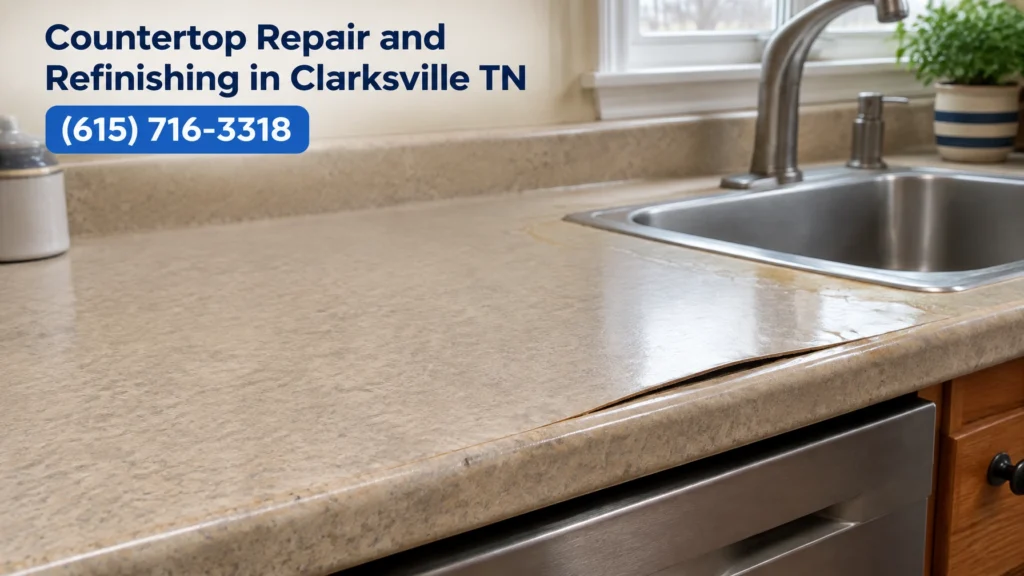
A damaged countertop does not always need to be replaced. A lifted seam, chipped edge, or worn finish may be a small repair if the material underneath is still dry and solid.
That repair first mindset can save money and keep a kitchen or bathroom usable. It also helps homeowners avoid replacing a cabinet run because of one small failure near the sink.
Fix It Quick Network is a referral network. We match homeowners, realtors, property managers, and investors with vetted local pros in Clarksville and Montgomery County. The pros in our network are licensed and insured, and the match is free for homeowners.
1. Start with repair before replacement
Repair makes sense when the damage is local and the countertop still has a firm base. A lifted laminate seam near the dishwasher, a small chip along the front edge, or a worn butcher block surface may not justify removing the whole counter.
The first question is not how old the counter looks. It is whether the material underneath can still hold a repair.
A sound substrate is usually flat, dry, and firm when pressed. A damaged substrate may feel soft, swollen, or uneven. Laminate may look like the main problem, but a slow leak can weaken the particleboard beneath it.
Replacement starts to make more sense when several areas are failing at once, the counter is badly warped, or the base cabinets are no longer able to support it. Widespread swelling can make a patch look fine for a short time while the failure continues underneath.
For a Clarksville home, repair may be the practical middle ground. It can address the visible problem without turning a small counter issue into a full kitchen remodel.
2. Know the countertop problems that show up first
Most countertop failures begin at an edge, seam, cutout, or wet joint. Those areas receive repeated contact, standing water, heat, and movement.
A laminate seam that lifts can catch a dish towel near the dishwasher. A chip may form along the front edge above a drawer after years of bumps and daily use. A hot pan can leave a bubble or dull spot, especially if the surface already has a weak bond.
Other common issues include these.
- Laminate seams that separate or curl upward
- Chips and dings along the front edge
- Bubbles caused by heat or moisture
- Water staining around the sink cutout
- Split backsplash caulk that lets water behind the counter
- Loose or cracked counter tile edges
- Scratched solid surface tops
- Dull or dry butcher block
- Small burns, gouges, and worn corners
In Sango kitchens, a counter may look fine from across the room but show a dark line near the sink when viewed closely. That detail matters. It can point to water entering the cutout or backsplash joint.
A repair pro can determine whether the issue is cosmetic, adhesive related, or connected to hidden cabinet damage. For related tile concerns, homeowners can review the tile and grout repair options in Clarksville TN.

3. Check for hidden moisture before touching the surface
Surface damage is only part of the inspection. Look below the counter before deciding that glue, filler, or new caulk will solve the problem.
Press lightly on the laminate around the lifted area. If it flexes but the surface underneath feels firm, a re bond may be possible. If the area feels spongy, raised, or uneven, the substrate may have swollen.
Open the sink cabinet doors and look for dark swelling in the particleboard under the sink cutout. Check for a musty smell, damp cabinet floor, stained plumbing connections, and a dishwasher line that may be dripping slowly.
Use this short check.
- Dry the counter and inspect the sink rim
- Look around the faucet base and drain
- Check the dishwasher hose or connection
- Open the cabinet after a slow drip has had time to show
- Press near the damaged laminate, not just on the lifted edge
- Look for swelling where the counter meets the backsplash
A slow draining sink can keep water standing around the basin and cabinet area. The guide on how to fix a slow draining sink in a Clarksville TN home may help with the early check.
If a supply line or drain is leaking, find the shutoff before opening up more of the cabinet. The guide on how to find your main water shutoff in a Clarksville home can help locate it.
4. Understand when refinishing beats replacing
Refinishing works best when the countertop is structurally sound but looks worn. It can improve the appearance of an older surface without changing the cabinet layout or removing a usable counter.
Laminate refinishing may address dull color, light scratches, minor burns, and dated patterns. It will not solve a swollen core, a counter that has lost its shape, or a recurring leak around the sink.
Butcher block is especially repair friendly. A worn area can often be sanded smooth, cleaned, and treated with food safe mineral oil or another finish recommended for that surface. Deep scratches, water rings, and small dark marks may disappear after careful sanding.
The basic process often includes these steps.
- Remove surface residue and let the wood dry
- Sand through the damaged finish
- Blend the repaired area into the surrounding wood
- Remove dust from the surface
- Apply several light coats of oil
- Wipe away excess oil between coats
Do not oil butcher block over trapped moisture. That can leave a dark spot in place and make future inspection harder.
Solid surface counters may also allow localized sanding and polishing. Stone is different. Quartz, granite, and other stone materials may need a stone restoration or fabrication specialist, especially if the damage involves a broken seam, a large chip, or a sink cutout.
5. Fix the cause because small failures travel
Water rarely stays in one place. A split caulk line at the backsplash may let water behind the counter. That water can move into the substrate, cabinet side, wall, or trim before anyone sees a larger stain.
The same pattern appears at the sink cutout. A small gap around the rim can allow repeated splashes into the counter edge. Over time, the particleboard can darken and swell. The counter then lifts, the cabinet top softens, and the nearby doors may stop closing correctly.
Heat can travel through a surface in a different way. A hot pan may weaken the adhesive under laminate. Once one section loses its bond, normal wiping and daily use can lift a larger area.
This is why a small failure always travels unless the cause is handled. Replacing the lifted surface without addressing the leak or failed caulk may only delay the next repair.
The cabinet repair guide for Clarksville TN can help homeowners compare counter damage with swelling, loose doors, and cabinet box problems. A small counter repair is often cheaper than a cabinet replacement, especially when the base is still square and firm.
A repair pro should also check whether the sink is sitting level and whether the counter has proper support near an appliance opening. Those details can affect how long the repair lasts.
6. Plan for cost without expecting a firm number
Countertop repair prices vary because the visible damage may not show the full scope. A small chip in a clean, accessible laminate edge is different from a seam that requires cabinet adjustment, sink removal, and substrate repair.
As general planning ranges, a minor laminate chip, edge touch up, or small seam repair may fall around $150 to $500. More involved delamination, section repair, or refinishing may fall around $400 to $1,200. These are broad ranges, not quotes.
A larger replacement can move from roughly $1,200 to several thousand dollars for laminate, depending on layout and installation needs. Solid surface, butcher block, quartz, and natural stone generally have different material and fabrication costs.
The range changes based on several details.
- The length and depth of the counter
- Laminate, solid surface, butcher block, tile, or stone
- The size and location of the damaged area
- Whether the base cabinet or substrate needs work
- Sink removal and reset
- The number of corners and seams
- Matching an old laminate pattern
- Edge shape and thickness
- Disposal and access
- Whether plumbing or cabinet repairs are also needed
A counter with a discontinued pattern may cost more to patch neatly because matching material is difficult. Full stone fabrication or full countertop replacement should go to the right specialist.
For homeowners in Clarksville, the most useful first step is a condition review. That keeps the decision tied to the actual damage instead of a guess based on a photo or a broad online price.

7. Set the right plan for each type of home
A rental turnover needs a fast, practical repair. The goal is usually to stop water entry, correct the damaged section, and leave the surface clean and usable for the next tenant.
A property manager may need photos, notes, and a short record showing what was found and what was handled. That documentation can include the location of the damage, the suspected cause, materials used, and any recommendation for follow up.
A pre listing repair has a different purpose. Buyers notice a lifted edge, dirty caulk line, or swollen cabinet quickly because they open doors and look closely around sinks. The pre listing repair checklist for Clarksville home sellers can help sort countertop work with other visible repairs.
An occupied home needs a clear schedule and clean work area. The resident may need access to the sink, dishwasher, or bathroom vanity during the repair. A matched pro should explain whether the surface needs drying time or whether the sink must remain unused for a period.
In Woodlawn, a rental owner may choose a focused repair before a new tenant moves in. In St. Bethlehem, a homeowner may prefer refinishing because the cabinets and layout still work well. Neither choice needs to become a full remodel.
8. Use fall and winter to catch swelling early
Fall is a good time to inspect counters after the humid Clarksville summer. Swelling may become easier to spot when laminate edges lift, caulk splits, or cabinet doors begin rubbing.
Winter brings its own changes. Indoor heat dries some materials while plumbing areas may still see condensation, leaks, and standing water. A counter that feels stable in one season can show movement later if moisture has already entered the substrate.
A homeowner near Fort Campbell noticed a lifted laminate edge beside the dishwasher. The edge caught a towel, and the cabinet floor had a faint dark mark that was easy to miss. The issue was small enough for a focused repair because it was checked before the particleboard became soft across the whole section.
That is the timing lesson. Do not wait for a large bubble, a sagging counter, or a cabinet floor that crumbles under light pressure.
The fall wood rot repairs for Clarksville homes and rental properties guide covers the same repair principle outdoors. Find the soft area, find the water source, and handle the damage before it spreads.
9. Know when to get matched with a pro
A homeowner can handle simple observation and basic cleaning without taking the counter apart. Wipe up standing water, photograph the damage, check under the sink, and note whether the surface feels firm.
Get matched with a pro if the laminate seam continues to lift, the substrate feels soft, or the counter moves near the sink. Professional help also makes sense when the sink must be removed, the backsplash needs new caulk, or the cabinet below has swelling.
A pro can review whether the counter needs a spot repair, refinishing, section replacement, or specialist referral. The pros in our network are licensed and insured, and the work should be discussed with clear scope, cost factors, and timing before approval.
Stone and solid surface work may need a specialist rather than a general handyman. Full fabrication, large broken sections, custom sink cutouts, and major replacement work should be directed to the right trade.
If you would like to discuss a countertop concern, call or text (615) 716-3318 or request a free match at Fix It Quick. Share the material, the damaged area, the property location, and any photos. We can help connect you with a vetted local pro and a practical next step.
10. FAQs about countertop repair in Clarksville
Can a lifted laminate seam be repaired?
Often, yes, if the laminate is still intact and the substrate underneath is dry and firm. The adhesive may need to be replaced, and the area may need to be pressed flat while it cures. A swollen or crumbly core may require section replacement instead.
Is refinishing cheaper than replacing a countertop?
Refinishing is often less costly when the counter is structurally sound and the damage is mostly cosmetic. The savings depend on the material, preparation, sink details, finish, and whether the existing surface can accept refinishing.
Can water damaged countertop material be saved?
Small areas may be repairable if the substrate is only lightly affected. Dark swelling, soft framing under the sink cutout, repeated leaks, or widespread bubbles can point toward replacement of the affected section or the full counter.
Should backsplash caulk be replaced when repairing a counter?
Usually, split caulk should be addressed because it can allow water behind the counter. Replacing the caulk without drying the area or fixing the leak may leave the original problem in place.
Can a handyman repair stone or quartz?
Some minor surface work may be possible, but full stone fabrication, broken seams, large chips, and custom cutouts should go to a stone or solid surface specialist. The Network can point homeowners toward the right type of pro.
What should a property manager document?
Keep photos before and after the repair, the location of the damage, the suspected cause, the work completed, and any follow up recommendation. That record helps realtors and property managers show that the counter issue was reviewed and handled.