Fall is the right time to look closely at your deck or porch. Clarksville usually sees its first freeze in late October or early November, and winter rain can keep small wood problems wet for weeks. A little prep now can help you avoid a slippery step, a loose rail, or a much larger repair after cold weather arrives.
This guide is for Clarksville homeowners, realtors preparing a listing, property managers between tenants, and investors caring for rentals across Montgomery County. The goal is simple. Find the problems that matter, handle the smaller repairs, and send structural concerns to the right specialist.
1. Start with a dry day before the first freeze
Inspect the deck or porch when the wood is dry. Wet boards can hide soft spots, dark staining, and small splits that become easier to see after a day or two without rain.
For most Clarksville homes, mid October is a practical target for the first inspection. That gives you time to handle small repairs before cold nights and winter rain make exterior work harder. Homes in Sango and St. Bethlehem may have different exposure to shade, wind, and runoff, but the basic check is the same.
Look at the whole area before focusing on one defect.
- Clear leaves from the deck surface and corners.
- Move planters and outdoor rugs so the wood underneath can dry.
- Check where roof runoff lands near the porch or deck.
- Look for standing water after rain.
- Note any board that feels soft, springy, or uneven.
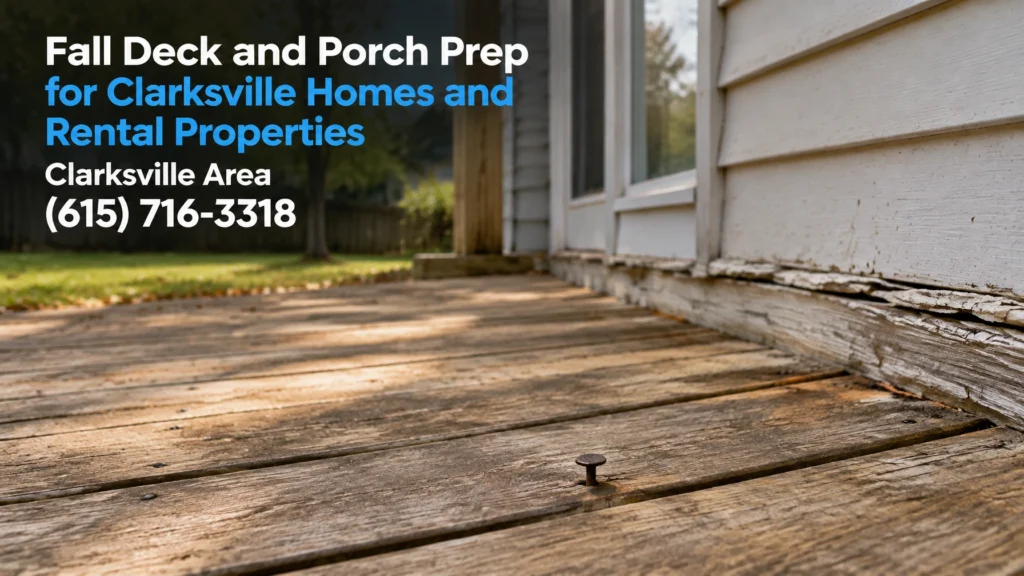
A popped nail head above a deck board is easy to overlook, especially when the rest of the surface looks solid. It can catch a shoe, collect water, and signal that the board has started moving. Mark small concerns as you go so nothing gets forgotten.
2. Check the boards, stairs, and rails
The safest fall inspection starts under your feet. Walk slowly across the deck and porch, paying attention to soft or bouncy areas. Press lightly with your foot, but don't force a board that already feels weak.
Pay close attention to stairs. The bottom porch step often takes on splashback from rain and runoff, so it can wear out before the rest of the porch. Look for dark staining, peeling paint, split edges, and a soft board at the bottom porch step.

Check the rails next. A railing should not wobble when someone uses it for balance. Look at the connection points, the post bases, and the top rail for movement, splitting, or rot.
For a home near Fort Campbell, a rental inspection should include every stair and rail before a new tenant moves in. A realtor may also want these items noted before a showing, since a loose rail can make buyers feel uneasy even if the rest of the home presents well.
Small surface repairs may be reasonable for a capable homeowner. Replacing one damaged board or touching up exterior caulk is different from rebuilding stairs, posts, or rail connections. If the structure moves, stop and get matched with a pro.
3. Inspect the ledger, flashing, and post bases
The deck to house connection deserves extra attention. The ledger board carries important loads, and water that gets behind the ledger can damage the wall or framing where you cannot see it.
Look for split caulk at the ledger flashing, dark staining below the connection, gaps where siding meets the deck, or signs that water runs toward the house. Keep leaves and packed dirt out of the joint, but don't cover a drainage problem with more caulk.

Post bases need a close look too. Peeling paint and a hairline crack near the bottom of a porch post can mean ordinary aging, or they can point to repeated moisture. Check whether the post meets the porch floor cleanly and whether water collects around the base.
For properties in Montgomery County, document what you find with clear photos and simple notes. Include the date, location, and whether the area feels firm or soft. This helps property managers track changes between tenants and gives investors a better record for maintenance planning.
Structural deck issues, ledger concerns, major post damage, and movement in the framing should go to the right deck or structural specialist. Fix It Quick Network is a referral network. We can help connect you with a vetted local pro for an honest next step, rather than treating a structural concern like a basic handyman repair.
4. Match the prep to the property
The right fall checklist depends on what happens next. A homeowner may want the porch safe for family use, while a realtor may need visible repairs handled before photos and showings.
For a home going on the market in Clarksville, focus on details buyers notice quickly.
- Tighten or replace loose rail sections.
- Replace visibly damaged boards.
- Clean leaves from corners and stair treads.
- Repair open caulk at trim and flashing where appropriate.
- Check that exterior doors do not drag against a raised board.
- Keep repair notes for the listing file.
A property manager near St. Bethlehem may need a faster turnover check. Look for soft steps, loose rails, stained boards, and water paths before the next tenant arrives. Link those notes with the broader fall freeze prep guide for Clarksville rental properties so the porch is not inspected separately from the rest of the home.
Investors with several homes near Fort Campbell or across Sango can group similar repairs together. One visit may identify a few small board replacements, a post base that needs attention, and a drainage issue that should be sent to another specialist. That makes the maintenance plan easier to manage.
For related wood damage, see the guide to fall wood rot repairs for Clarksville homes and rental properties.
5. Know what can wait and what should not
Not every worn board needs immediate replacement. Faded stain, minor surface checking, and a small cosmetic split may be scheduled with other exterior work. A soft board, loose stair, moving rail, or wet ledger area deserves quicker attention.
General costs vary by access, material, repair size, and whether hidden damage is found. Small board, caulk, or paint repairs may fall in the low hundreds. Replacing several boards or a small stair section may run from several hundred dollars into the low thousands. Structural deck repairs, ledger work, or foundation concerns can cost more and should be reviewed by the right specialist before anyone starts.
The same repair can feel very different in an occupied home, a vacant rental, or a house preparing for sale. You don't need to fix every cosmetic issue at once. You do need a clear line between appearance work and a condition that affects safety or water entry.
If you'd like help sorting the list, call or text (615) 716-3318. You can also request a free match through Fix It Quick Network. We are a referral network that connects homeowners, realtors, property managers, and investors with vetted local pros. The pros in our network are licensed and insured.
6. FAQs about fall deck and porch prep
Should a deck be sealed before winter?
It can help, but the wood needs to be clean and dry, and the product needs suitable temperatures for application and curing. Follow the product directions and don't rush the work before a freeze or rain event. If the boards are soft or damaged, fix the condition first.
What does a popped nail head mean?
It often means the board has shifted, the fastener has loosened, or the wood has changed with moisture. It can create a trip point and allow water into the board. A single nail head may be a small repair, but repeated movement deserves a closer inspection.
Is split caulk at the ledger a simple repair?
Not always. Split caulk may be a surface issue, but it can also point to movement or water getting behind the ledger. Clean and visible siding joints may be suitable for minor repair, while missing or damaged flashing should be reviewed by a qualified pro.
Should rental property owners inspect porches between tenants?
Yes. Check the boards, stairs, rails, post bases, and ledger area during each turnover. Take dated photos and note anything soft, loose, stained, or shifting so the next repair decision is based on a clear record.
What if the deck feels unsafe?
Keep people off the affected area and get matched with a pro. The Fix It Quick Network can point you to the right local specialist for structural deck concerns, ledger problems, major framing damage, or foundation issues.