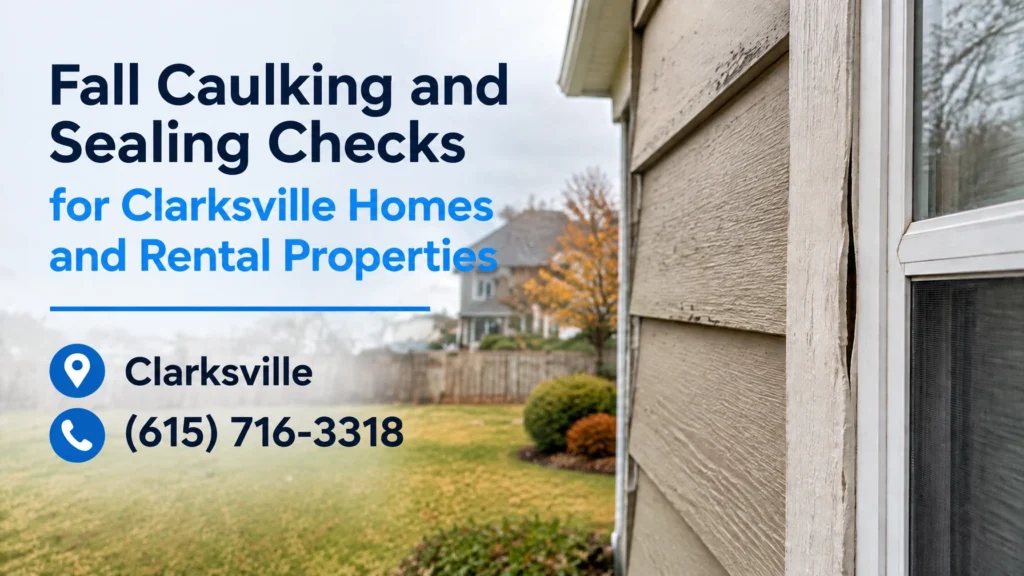
Fall is the right time to check the seals around your home. In Clarksville, cooler nights and fall rain can find small openings that stayed unnoticed through summer.
Look closely at exterior trim, door frames, window frames, siding joints, and utility penetrations before the first hard freeze. A split caulk bead that pulls away from the trim may let water and cold air move behind the surface. A small gap can become a much bigger repair if it stays wet.
Fix It Quick Network is a referral network, not a repair crew. We match homeowners, realtors, property managers, and investors with vetted local pros in Clarksville and Montgomery County.
1. Start with the outside before cold weather settles in
A slow walk around the home can reveal more than a quick glance from the driveway. Pick a dry afternoon and check the areas where two materials meet.
Look for these conditions.
• Caulk that is cracked, brittle, or missing
• A bead that has pulled away from siding or trim
• Hairline gaps around door and window frames
• Open joints at corners and siding transitions
• Gaps around wiring, plumbing lines, hose bibs, and cables
• Sealant around vents that has shrunk or separated
• Peeling paint or dark staining near an opening
Pay close attention to shaded sides of the house. Those areas may stay damp longer after rain, especially around older trim and low exterior walls.
A home in Sango may look sound from the street but still have failed caulk behind a window surround. In St. Bethlehem, repeated summer heat and fall temperature swings can make older sealant shrink and split. These are small details, but they affect how the home feels and how well it sheds rain.

2. Check door and window frames for air and water gaps
Door and window frames deserve a close look before winter. These openings connect the outside weather to the finished parts of the home, so failed caulk can lead to drafts, staining, or damp trim.
From inside, stand near each exterior door on a cool or windy day. Feel for moving air around the frame. Check whether the door closes evenly and whether the trim feels loose. A hairline gap at the corner of a door frame can be easy to miss, especially when the wall and trim are painted the same color.
Outside, inspect the joint between the frame and the siding, brick, or other wall surface. The seal should be continuous, with no obvious breaks or lifted edges. Do not simply apply new caulk over loose old material. The failed section needs to be removed, cleaned, and allowed to dry first.
Weatherstripping and door sweeps are separate from exterior caulk. If you can see daylight beneath a door or feel a steady draft around the sides, the weatherstripping may need attention as well.
One homeowner near Fort Campbell noticed a cool draft at the back door but assumed it was normal for an older home. A closer look found a small separation where the frame met the siding, along with worn weatherstripping. The issue was easier to plan before winter than it would have been after rain entered the wall.
3. Inspect siding joints and utility penetrations
Small wall penetrations can allow more than cold air. Rainwater, insects, and small animals may also use the same opening.
Check around these areas.
• Exterior electrical conduit and cable lines
• Plumbing lines and hose connections
• Air conditioning line sets
• Bath and exhaust vent edges
• Outdoor faucets
• Low voltage wiring
• Siding corners and trim transitions
Sealant should match the surface and the location. Exterior grade silicone or silicone latex products are common choices for many exposed joints, but the right material depends on the siding, masonry, metal, or painted wood involved.
Do not seal over soft wood, active leaks, or a gap that needs flashing or a larger repair. Caulk is not a substitute for damaged framing or a failed building component. Required ventilation openings also need to remain open. Sealing the wrong opening can create a different problem.
If you find a large hole or signs of animal activity, pause before closing it. An opening with an animal inside needs the right exclusion process first.
This matters for rental properties in Woodlawn and across Montgomery County. A documented check by address helps property managers track which homes need routine sealing, which need carpentry, and which require a specialist.

4. Plan repairs before a small gap becomes a winter call
The best repair plan starts with sorting the condition, not guessing at the cost. A few failed joints may be a simple maintenance item. Widespread separation, recurring moisture, or damaged surrounding materials may need a closer review.
A typical exterior sealing visit may include removing failed caulk, cleaning the joint, checking the nearby surface, applying the correct sealant, and allowing time for the material to cure. Wider gaps may need backer material before the sealant is applied. Work at upper levels or around complicated siding and masonry details may also affect scheduling and cost.
For general planning, a small caulking or sealing repair may fall in the low hundreds of dollars. A larger group of repairs may range from several hundred dollars to more, especially if damaged trim, difficult access, painting, or related carpentry is involved. These are planning ranges only, not quotes.
The cost is usually shaped by the following factors.
• Number and length of failed joints
• Surface condition and preparation time
• Height and access around the home
• Material and finish requirements
• Hidden damage behind trim or siding
• Whether several properties can be scheduled together
Investors with homes near Fort Campbell may save time by making one documented list for several addresses. A property manager in Clarksville may also prefer to complete weatherization between tenants instead of waiting for a draft or water complaint after a freeze.
5. Use fall sealing checks for listings and rental records
Exterior condition matters before a home goes on the market. Buyers may notice loose trim, failed caulk, stained siding, or a drafty door during a showing or inspection.
Realtors and sellers can use the pre listing repair checklist for Clarksville home sellers to organize visible repairs by safety, function, moisture, and appearance. Exterior sealing often belongs near the top when the home has exposed gaps or a history of water entry.
For rental properties, take a photo of each concern and note the address, location, condition, and date. That record can show whether the same joint keeps failing or whether the repair held through the season. It also helps investors plan work across multiple properties instead of treating every issue as an emergency.
If you notice darkened or soft exterior wood around a failed joint, review the fall wood rot repairs post for Clarksville homes and rental properties. New caulk should not cover wood that has already lost its strength.
If moisture is showing up inside or beneath the home, the crawlspace moisture guide for Clarksville homes may help you sort out whether the concern is limited to an exterior joint or connected to a larger moisture problem.
6. Know when to get matched with a pro
You can inspect visible caulk and make a repair list without taking on the work yourself. You do not need to climb a tall ladder, open a wall, or remove trim just to prove how far a problem extends.
Get matched with a pro if you find recurring water entry, soft wood, large gaps, separated masonry, damaged siding, or a repair that requires upper level access. The same applies when a rental property needs several weatherization items completed between tenants.
The pros in the Fix It Quick Network are licensed and insured. The Network does not perform repairs or set job prices. It matches customers with vetted local pros and can point customers toward the right specialist for major roofing, structural, HVAC, or other specialty work.
If you would like help with fall caulking in Clarksville, call or text (615) 716-3318, or request a free match at Fix It Quick. Share the property location, the areas that look open, and whether the home is occupied, listed, or between tenants. That is a practical place to start before cold weather turns a small gap into a larger call.
7. Frequently asked questions
How often should exterior caulk be checked?
Check exterior caulk at least once a year, especially before the wetter and colder part of fall. Sealant may fail sooner on sunny walls, exposed corners, and areas with repeated movement.
Can new caulk go over old caulk?
Only if the old material is firmly bonded and compatible with the new product. Loose, cracked, or separated caulk should be removed first. The joint also needs to be clean and dry.
Should every gap around a home be sealed?
No. Some openings provide required ventilation, and some larger gaps need flashing, mesh, masonry repair, or replacement materials instead of caulk. Do not seal combustion air openings or designed ventilation without proper guidance.
Can caulk fix soft exterior wood?
No. Soft or crumbly wood needs a closer inspection. The damaged section may need to be removed and replaced before the joint is sealed.
Is fall too late for exterior caulking in Clarksville?
Not always. Many products need suitable temperatures and dry surfaces, so check the product instructions and the weather forecast. It is better to plan the work before consistently cold nights and wet conditions arrive.
Does Fix It Quick Network perform caulking repairs?
No. Fix It Quick Network is a referral network. We match customers with vetted local pros in Clarksville and Montgomery County, and the pros in the network are licensed and insured.