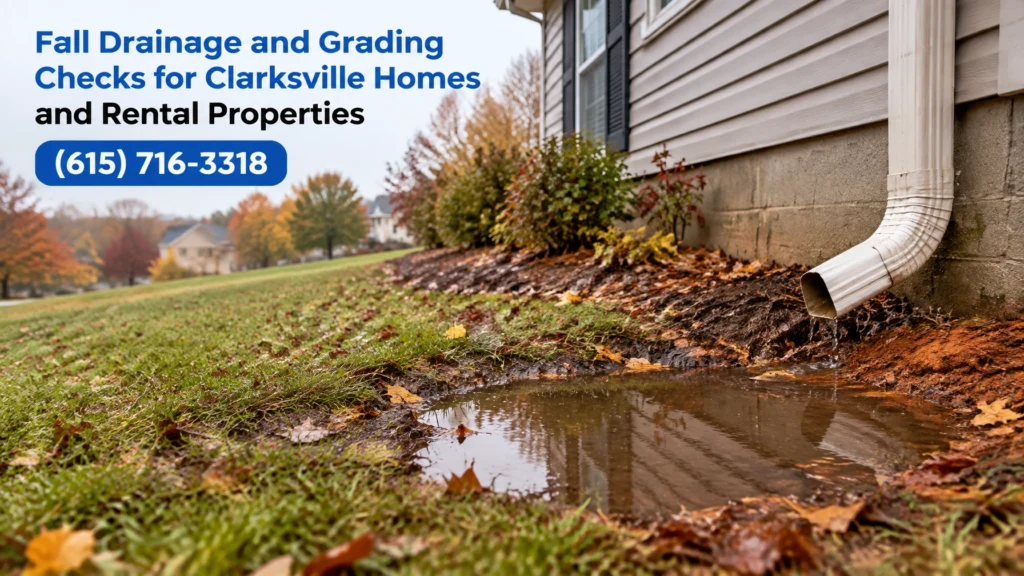
Fall rain exposes drainage problems that dry summer weather can hide. Leaves clog gutters, soil settles, and water may start moving toward the house instead of away from it. A low spot near a downspout or a shallow slope along the foundation can create trouble before winter arrives.
This matters for homeowners, sellers, realtors, property managers, and investors across Clarksville and Montgomery County. The Fix It Quick Network matches customers with vetted local pros. The Network does not perform the work, but we can help connect you with the right person for the condition you find.
1. Walk the property after a steady rain
The best drainage check happens when water is actually moving. Walk the outside of the home during or shortly after a safe, steady rain and watch where water flows, pools, and disappears.
Circle the entire foundation. Check around porches, patios, crawlspace access doors, vents, steps, driveway edges, and low areas in the yard. Look for muddy soil, fresh erosion, or leaves holding water against the wall.
Focus on these details.
- Water flowing toward the house
- A low spot holding water near a downspout
- Soil settled along the foundation line
- Water running beside the wall instead of away from it
- Mulch or leaves covering a drainage path
- Water collecting near a crawlspace door or vent
A homeowner in Sango noticed a shallow puddle beside the rear wall after an October storm. The grass looked healthy, but the soil had settled beneath the downspout and was sending roof runoff back toward the foundation.
Do not assume a dry yard is draining properly. Fall rain gives you better information.
2. Check whether the ground slopes away
The ground should fall away from the house, not lean back toward it. Over time, soil can settle along the foundation, especially after landscaping, construction, or repeated heavy rain.
A common building guideline is about six inches of fall over the first ten feet from the foundation. You do not need to make the yard look perfectly shaped. You do need to notice flat areas, reverse slopes, and depressions that keep water near the wall.
On a dry day, check the first several feet beside the home with a straight board and level. You can also step back and look along the foundation line. If the ground appears to rise toward the house, or if water sits there after rain, the grade deserves attention.
The pros in our network can review smaller yard grading concerns and help determine whether the issue needs light soil correction or a drainage specialist. Major excavation, retaining walls, foundation movement, or structural concerns need the right specialist.

3. Follow each downspout to its discharge point
A downspout should move roof water away from the foundation. It should not release a concentrated stream directly beside the wall or into a slope that runs back toward the house.
Check each gutter and downspout for leaves, loose connections, crushed sections, and overflow stains. Make sure the outlet carries water several feet away on ground that continues to fall away from the home. A splash block or extension may help with a small problem, but it should not send water toward a neighbor, walkway, crawlspace entrance, or driveway.
A downspout that ends at the foundation can leave a dark water mark, wash away soil, and create a soft area near the wall. Repeated saturation may also contribute to crawlspace moisture, wood damage, or musty smells.
The crawlspace moisture guide for Clarksville homes explains other signs to watch for below the home. If the problem involves buried drainage, a French drain, a catch basin, or a new discharge route, get matched with the right drainage or excavation specialist.

4. Know what water against the foundation can cause
Water beside the foundation does not always create immediate damage. The concern is repeated exposure. Soil that stays damp can raise moisture levels in a crawlspace and leave wood, insulation, ducts, and metal components vulnerable.
After fall rain, look for a musty crawlspace smell, damp soil, wet insulation, condensation on ductwork, rusty metal, or standing water. Outside, check for muddy areas near vents, staining on the foundation, and plants or mulch touching the siding.
A hairline crack in a slab may be ordinary settling, but a crack that grows, leaks, or appears with sticking doors and uneven floors needs a closer review. Do not fill a visible crack before understanding whether water or movement is causing it.
Small exterior details can also connect to larger repairs. The fall caulking and sealing checks for Clarksville homes and rental properties guide ties exterior sealing and caulking checks to keeping water out. The fall wood rot repair guide covers soft trim, dark stains, and other signs that moisture has affected exterior wood.
Homes near Fort Campbell and older properties in St. Bethlehem may have different drainage patterns, but the basic question stays the same. Does water leave the house, or does it stay beside it?
5. Document issues for listings and rental properties
Good records make drainage problems easier to plan. Take photos after rain and note the property address, location, weather, and how long water remains.
For sellers and realtors, exterior water issues may show up during a showing or inspection. Overflowing gutters, muddy foundation soil, or a low spot near the driveway can distract buyers even when the rest of the property feels well cared for. The pre listing repair checklist for Clarksville home sellers can help sort drainage beside other visible repairs.
Property managers can use the same process after a tenant reports water near a wall or crawlspace. Schedule smaller work between tenants when possible instead of waiting for another complaint after heavy rain.
Investors in Woodlawn or across Montgomery County may have several properties with similar concerns. A documented condition by address helps group grading, downspout, and exterior maintenance work instead of treating every issue as an emergency.
Keep the notes simple.
- Photograph the low spot and nearby downspout
- Mark whether water flows toward the house
- Record any crawlspace odor or dampness
- Note whether the issue repeats after rain
- Save specialist reports and repair records
6. Get matched with a pro before winter
You can inspect the yard, clear visible leaves from safe areas, and check where each downspout sends water. You do not need to dig a trench, enter an unsafe crawlspace, or start major grading work just to understand the problem.
Get matched with a pro if water repeatedly ponds near the foundation, the soil has washed away, the crawlspace stays damp, or a downspout needs a permanent discharge route. A drainage or excavation specialist should review larger grading changes, buried systems, foundation concerns, septic issues, or structural movement.
For smaller exterior repairs and maintenance items, the Network matches homeowners, realtors, property managers, and investors with vetted local pros in Clarksville and Montgomery County. The pros in our network are licensed and insured. The Network does not set the repair price or perform the work.
If you would like help sorting out a fall drainage concern, call or text (615) 716-3318 or request a free match at Fix It Quick. Share the property location, the area where water collects, and any photos from after the rain. That gives the matched pro a practical place to start.
Frequently Asked Questions About Fall Drainage Checks
How far should a downspout discharge from the house?
A downspout commonly needs to discharge several feet away from the foundation on ground that slopes away. The right distance depends on the yard, soil, slope, and where the water can safely go.
What is a low spot in the yard a sign of?
It may show that soil has settled, erosion has occurred, or the yard was shaped in a way that holds water. A small depression may need soil correction, while a larger recurring problem may need a drainage plan.
Can grading problems cause crawlspace moisture?
Yes. Water that stays beside the foundation can increase dampness below the home. Musty odors, wet insulation, standing water, and condensation on ducts deserve attention after repeated rain.
Should sellers fix drainage problems before listing?
Sellers do not need to correct every imperfection, but visible ponding, overflowing gutters, and water against the foundation can affect showings and inspections. Early documentation gives the seller more time to choose a practical repair.
Does Fix It Quick Network perform drainage or grading work?
No. Fix It Quick Network is a referral network. We match customers with vetted local pros, and the pros in our network are licensed and insured. Major excavation, foundation, structural, septic, and other specialty work should go to the appropriate specialist.