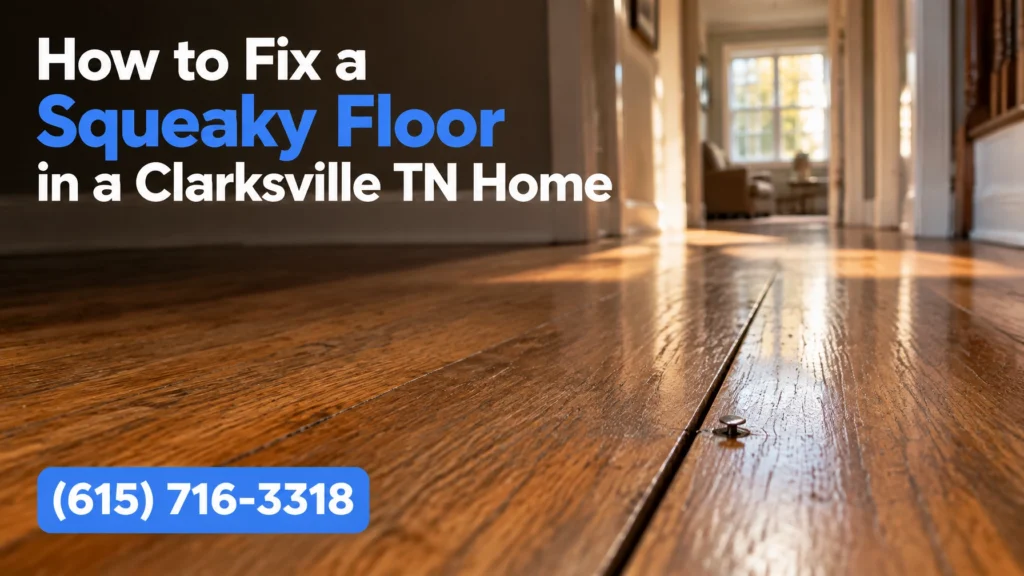
A squeaky floor usually has a simple cause. Two pieces of wood are moving against each other, a board is rubbing a nail shank, or the subfloor is shifting slightly over a joist.
The sound can still feel frustrating, especially when it wakes someone up or makes a quiet hallway sound older than it is. Start with diagnosis before driving a screw or pulling up flooring. The right fix depends on where the movement starts.
1. Find the exact spot first
Walk the floor slowly and listen for the loudest point. Have another person take a few steps across the room while you stand nearby, if possible. Mark each noisy spot with painter’s tape so you can compare the locations from above and below.
Pay attention to how the floor feels under your weight. A small squeak with a solid floor often points to rubbing between boards or a loose fastener. A soft, bouncy, or uneven area needs more caution.
Look closely at the surface. You may find a popped nail head that catches a sock, a hairline gap between two floor boards near a hallway doorway, or a board edge that rises slightly when you step on it.
If the home has an unfinished basement or open crawlspace, check the same marked areas from below. Look for a gap between the subfloor and joist, a loose panel edge, or wood that moves when someone walks above.

2. Understand what is making the noise
Most floor squeaks come from movement between layers. The finished flooring may rub against the subfloor, or the subfloor may move against the joist below it. Older nails can loosen as the wood expands and shrinks through changing seasons.
Moisture can add to the movement. A damp crawlspace, a past plumbing leak, or high indoor humidity may cause wood to swell and later shrink. That cycle can open small gaps and loosen fasteners.
A Sango homeowner once noticed that a hallway squeaked every time the heat kicked on. The sound was traced to a subfloor panel moving over a joist as the home warmed and dried. The floor was not automatically unsafe, but the changing sound pointed to movement that needed a closer look.
Flooring type changes the repair plan.
- Carpet may allow a special screw system through the surface.
- Hardwood may need a small trim screw, careful countersinking, and matching filler.
- Ceramic tile can crack if drilled incorrectly, so the repair often needs to happen from below.
- Laminate and floating floors may have movement at the flooring itself instead of the subfloor.
3. Try a careful repair from above
A repair from above makes sense when there is no basement access, or when the visible floor board is the source of the noise. Do not guess at the joist location. Mark the joist line carefully before adding a fastener.
For hardwood, a trim head screw can be driven at a slight angle through the board and into the joist. The screw head should be countersunk below the surface and filled so it does not catch socks or stand out in the finish.
If a nail head has backed out, countersink it gently. Add a properly sized screw beside it rather than relying on the old nail alone. If it were my house, I would not guess at a screw location anywhere near a plumbing line. The new fastener should pull the board and subfloor tight without piercing a pipe, wire, or the finished ceiling below.
A narrow gap between boards may respond to a small bead of construction adhesive. Use only enough to fill the movement point. Too much adhesive can leave a raised spot or spread across the visible finish.
Carpet needs a different approach. A depth controlled breakaway screw system may pull the subfloor to the joist without leaving a large visible hole. If the squeak covers a wide area, the carpet may need to be pulled back so the subfloor can be fastened correctly.
4. Use the underside when access allows
An unfinished basement or crawlspace usually gives the cleanest path to the problem. The finished flooring stays intact while the subfloor and joist connection are tightened from below.
A small wood shim can fill a narrow gap between the joist and subfloor. Apply a modest amount of construction adhesive to the shim, then slide it into the gap until it is snug. Do not force it so hard that it lifts the floor above.
A short screw can also pull the subfloor tight to the joist. The length matters. It must hold the layers together without reaching through the finished flooring.
A longer gap may need a bead of construction adhesive along the top of the joist. If the subfloor moves across a wider area, solid blocking between joists can add support. Blocking is not the same as covering up a structural problem, though. It should be sized and secured correctly.
A joist that is cracked, badly twisted, or carrying a soft floor may need reinforcement by the right specialist. Subfloor structural rot, floor joist damage, and major foundation movement are not simple squeak repairs.
5. Stop when the floor feels soft
A squeak alone does not always mean serious damage. A soft spot changes the situation.
Stop the repair and get the area checked if you notice any of the following.
- The floor feels soft or bouncy.
- The sound is paired with a dip or uneven surface.
- There is staining near a bathroom, kitchen, exterior door, or plumbing line.
- The crawlspace has a musty smell or damp wood.
- The squeak appeared after a leak or flooding.
- The same area keeps getting worse after a basic repair.
In Montgomery County, moisture under a home can be easy to miss during a dry week. Look for damp insulation, darkened framing, standing water, or a white mineral mark on concrete. The fall basement moisture guide for Clarksville homes explains what to check before treating the floor noise as an isolated issue.
6. Plan for the flooring and the property
A small, accessible squeak may cost a few hundred dollars to diagnose and repair. General planning ranges often fall around 150 to 400 dollars for a short repair visit, depending on access, the number of squeaks, materials, and whether the issue is limited to fasteners.
Wider subfloor movement, carpet removal, hardwood repair, blocking, damaged wood, or moisture correction can move the cost into the high hundreds or more. These are planning ranges, not quotes. The actual cost depends on what is found below the surface.
The property use matters too. A seller may want a squeak handled before showings or an inspection. A rental owner near Fort Campbell may need several flooring and fixture items grouped into one visit. An investor in Woodlawn may need to compare a simple fastener repair with broader subfloor replacement. Investors planning repair costs across several properties can also review the fall maintenance budget planning guide for Clarksville rental investors.
For listing preparation, the pre listing repair checklist for Clarksville home sellers can help organize flooring with other visible concerns. Rental owners can also review the fall turnover guide for properties near Fort Campbell before a vacancy turns into a rushed repair list.
7. Prepare for fall and winter movement
Clarksville homes move a little as the seasons change. Indoor heating often dries the air, while damp fall weather can affect crawlspaces and wood framing. That does not mean every new squeak needs immediate repair, but a new sound deserves a quick inspection.
Keep indoor humidity reasonably steady. Fix plumbing leaks, improve drainage where needed, and avoid storing wet cardboard or materials directly against wood framing. Listen for changes after the heat runs, after heavy rain, and after the home has been closed up for several days.
Fix It Quick Network is a referral network, not a repair crew. The pros in our network are licensed and insured, and we can match you with a vetted local pro for suitable work. Major structural, foundation, roofing, and specialty concerns can be directed to the right specialist.
If you would like help sorting out a squeak, call or text (615) 716-3318 or request a free match. Share the floor type, the location of the noise, whether the floor feels soft, and whether there is basement or crawlspace access. That is the best next step.
8. Squeaky floor repair FAQs
Can a homeowner fix a small floor squeak?
Sometimes. A visible popped nail or a small hardwood board movement may be manageable if the joist location is clear and there are no signs of moisture or damage. Stop if the floor feels soft or the repair requires guessing near wiring or plumbing.
Is it better to repair a squeaky floor from above or below?
Below is often better because the finished flooring stays intact. Shims, adhesive, screws, or blocking can be added under the subfloor when the basement or crawlspace is safely accessible.
Can carpet stay in place during a squeak repair?
Sometimes. A depth controlled breakaway screw system may work through carpet. Widespread squeaks may require pulling the carpet back to inspect and fasten the subfloor correctly.
Why does tile squeak differently?
Tile depends on a firm, stable surface beneath it. Movement in the subfloor can crack grout or tile, so drilling from above can create more damage. Tile squeaks often need an underside repair or a carefully planned flooring removal.
Will fixing moisture stop the squeak?
It may stop the cause from getting worse, but moisture damage may still need repair. A damp crawlspace, plumbing leak, or damaged subfloor should be addressed before adding fasteners.
Can Fix It Quick Network repair a damaged joist?
Fix It Quick Network does not perform repairs as its own crew. It is a referral network that can help connect you with a vetted local pro, while major joist, structural, and foundation concerns are directed to the right specialist.
What does squeaky floor repair usually cost?
A small, accessible squeak may fall around 150 to 400 dollars for diagnosis and a short repair visit. Wider subfloor movement, carpet removal, hardwood repair, blocking, damaged wood, moisture correction, and harder access can push planning ranges into the high hundreds or more.