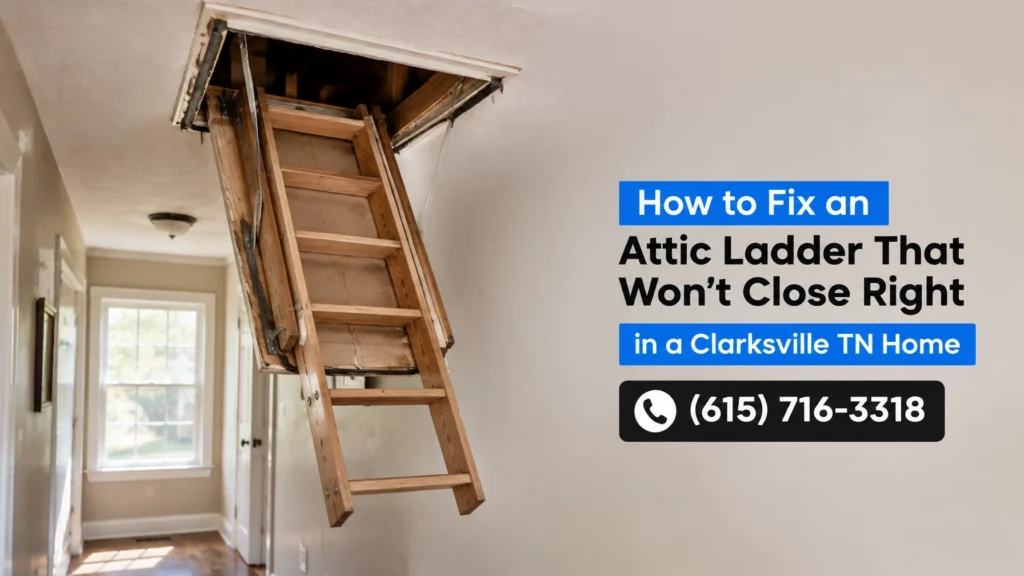
A folding attic ladder that will not close flush usually has a hardware, alignment, or sealing problem. The hatch may sit low on one corner, stop short, or leave a thin line of daylight around the frame.
That gap feels like a draft because it is one. A small repair can make the ladder feel safer and help reduce wasted energy.
Fix It Quick Network is a referral network. We match homeowners, realtors, property managers, and investors with vetted local pros in Clarksville and Montgomery County. The Network does not perform the repair itself.
1. Start With a Safe Inspection
Do not stand on a faulty attic ladder while checking it. Use a stable step ladder, keep your head clear of the folding sections, and have another adult nearby if the assembly needs to be moved.
Start with the ladder fully closed if it can reach that position. Look for an uneven gap, a corner that sits low, scraped paint, split wood, or a hatch that springs back instead of staying seated.
Then open the ladder only as far as needed to inspect the moving parts. Do not put your weight on a ladder with cracked rails, loose framing, bent arms, or a frame that moves at the ceiling.
Check the label for the weight limit. A heavier plywood or drywall panel may pull on a marginal hinge.
If the ladder will not open fully, will not reach the floor correctly, or binds hard, stop using it.
2. Check the Frame and Hinges First
The frame is the first place to look because a small shift can keep the whole assembly from closing square. If the diagonal measurements differ by more than about one eighth of an inch, the frame is out of square.
Loose mounting hardware can create the same problem. A lag bolt at the frame may spin in stripped wood instead of pulling the frame tight.

Look closely at each hinge bracket and folding arm. A bent or bowed hinge arm may force one side of the ladder to sit away from the frame. If the arm bows out two inches when the ladder is half folded, do not try to bend it back while the spring is under tension.
Tightening may be enough when the frame is sound, the bolts still grip solid wood, and the hinge is straight.
Never cut or notch ceiling joists or trusses to make the ladder fit. Structural framing changes need the right specialist.
3. Tell a Spring Problem From an Arm Problem
Open the ladder partway while standing safely to the side. If one side lags, twists, or stops while the other keeps moving, suspect a bent arm, worn pivot, or loose hinge bracket.
Some assemblies have a tension adjustment near the spring or pivot. Adjust only in small steps, following the manufacturer’s instructions. Do not grab or unhook a loaded spring casually. If the ladder must be held overhead while tension is changed, get matched with a pro instead.
A spring that is broken or clearly tired is usually replaced as a balanced pair. Replacing only one side can leave the ladder pulling unevenly.
4. Look for Wear, Swelling, and a Bad Seal
Wood ladder sections can warp or swell after a humid Tennessee summer. Check the edges for rubbing, paint buildup, a cracked rung, or a section that no longer sits parallel to the other side.

Worn hinge bushings can create side to side movement even when the bolts are tight. The ladder may feel loose in the middle of its travel, then catch as it approaches the ceiling.
In a Woodlawn home, that gap can feel like a cold draft during winter.

5. Decide Whether to Adjust, Replace, or Stop
Tightening and realignment may be enough when the frame is solid, the wood is not swollen, and the hinges are straight. The repair may involve shimming the frame, resetting a fastener, replacing a bushing, or correcting spring tension.
Replacing a hinge or one ladder section makes more sense when the part is bent, cracked, or worn beyond adjustment. A cracked rung is not just cosmetic.
The whole assembly may be worth replacing when several parts are failing at once. A badly out of square frame, loose fasteners, warped sections, weak springs, and a damaged hatch can add up fast.
Common planning ranges in the Clarksville area are about $150 to $400 for a minor hardware or alignment repair visit. A folding stair assembly replacement may run about $400 to $900 or more. These are general ranges, not quotes.
6. Plan Around the Home and the Property
Occupied homes need a repair time that works around children, pets, and safe hallway access. Keep the ladder out of service until the problem is understood.
For a pre-listing repair, handle the ladder before photographs and showings. The pre-listing repair checklist for Clarksville home sellers can help organize the rest of the home.
In one Sango home near Clarksville, the owner noticed a musty attic smell and a hatch that hung low on one side. The fix ended up being simpler than expected, loose hardware and flattened weatherstripping, but it was enough to make the hallway feel drafty every morning.
For rental owners in St. Bethlehem, near Fort Campbell, or elsewhere in Montgomery County, document the condition before and after the visit. Property owners can also review fall pest and rodent exclusion for Clarksville homes and rental properties and the fall maintenance budget guide for Clarksville rental investors while planning the next steps.
7. When to Get Matched With a Pro
Get matched with a pro when the ladder frame moves, the fasteners spin, the spring is under visible stress, or the hinge arm is bent. The same applies when the opening needs framing work or the ladder does not match the ceiling height.
Do not cut joists, notch trusses, enlarge the opening, or add heavy material to the hatch without the right specialist.
Fix It Quick Network can match homeowners, realtors, property managers, and investors with a vetted local pro. The Network is referral only, and the match is free for homeowners.
If you would like help, call or text (615) 716-3318, or request a free match at /contact/. Include a photo of the closed hatch, a photo of the hinge area, the approximate ceiling height, and the timing needed for the repair.
8. FAQs About Attic Ladders
Why will an attic ladder not close flush?
Usually it is a frame issue, loose hinge hardware, a bent arm, worn parts, swollen wood, or weatherstripping that is too thick.
Can a homeowner adjust attic ladder spring tension?
Some models allow small adjustments, but the springs can release with force. If the ladder must be supported overhead or the spring looks damaged, get matched with a pro.
How can a homeowner tell if the arm is bent?
Fold the ladder halfway while standing safely to the side. If one arm bows outward, twists, or sits farther from the frame than the other, it may be damaged.
Should the attic ladder be replaced instead of repaired?
Replacement often makes more sense when the frame is badly out of square or several parts are failing at once.
Does attic ladder weatherstripping help with heating costs?
Yes, if the hatch closes evenly and compresses the seal. Torn or flattened weatherstripping should be replaced.
Can Fix It Quick Network perform the repair?
No. Fix It Quick Network is a referral network that matches customers with vetted local pros, and the Network does not perform the repair.