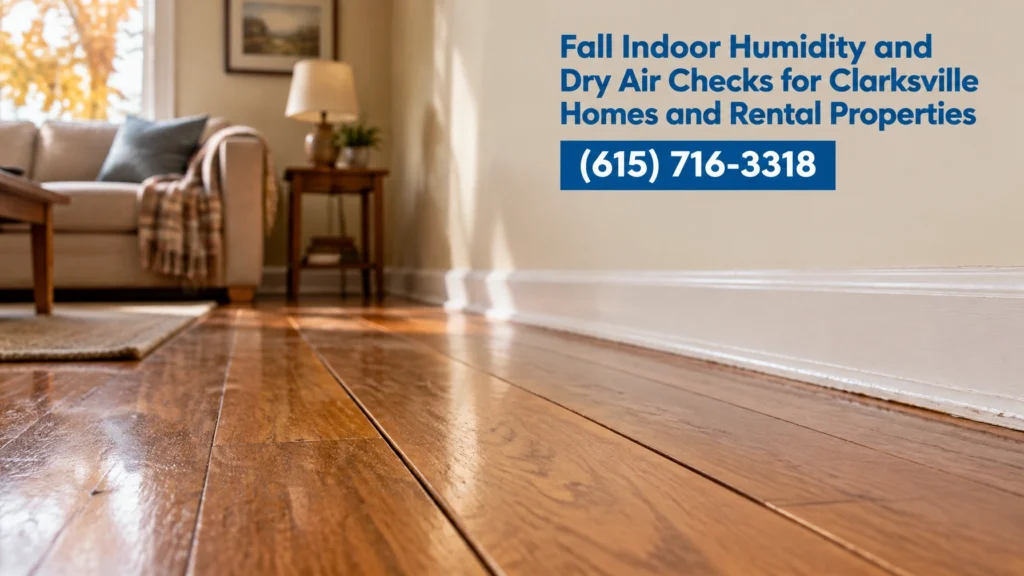
Fall changes how a house handles moisture. Once heating season starts in Clarksville, windows stay closed and warm air moves through the home. The air can start to feel dry fast.
Static shocks, a dry nose or throat, and an eighth inch gap between oak floor boards can all point to low indoor humidity. A cold single pane window may show the opposite problem, with condensation collecting because the glass is much colder than the room.
The goal is balance. You do not need to make the house feel damp.
1. Notice what changes after the heat comes on
Dry air usually shows up through small daily annoyances. A bedroom door may swing open on its own, a sticky door may start rubbing differently, or baseboards may show hairline caulk cracks as trim and flooring dry out.
Check for these signs.
- Static shocks from door handles or blankets
- A dry nose, throat, lips, or skin
- Gaps between wood floor boards
- Interior doors that stick, swing, or stop latching
A St. Bethlehem rental had a tenant report static shocks and a bedroom door that would not latch after the heat came on. The owner also found a narrow floor gap near the baseboard. Together, those details showed the home needed a humidity reading and a closer seasonal check.
2. Measure the air before changing it
Use a small hygrometer before turning up a humidifier. Place it in the main living area, away from a supply register, direct sunlight, or a bathroom door. Check it morning and night for several days.
A reasonable fall starting point is about 35 to 40 percent relative humidity. If cold glass develops lingering condensation, lower the target toward 30 to 35 percent. If the reading stays under 30 percent and the home has static, dry throat symptoms, or growing wood gaps, the air may be too dry.
Do not chase one number all day. The right setting depends on the home, the outdoor temperature, the window type, and how air moves between rooms.
In Montgomery County, a well sealed newer home may hold moisture longer than an older home with leaky trim and drafty windows. Check the reading, then pay attention to how the house feels.
3. Check floors, doors, trim, and moisture control together
Wood reacts to humidity slowly. A small seasonal gap may close as conditions change, but large or growing gaps deserve a closer look. Do not fill every gap right away, especially if the floor is still adjusting.
Walk the rooms and note where the changes are happening.
- Look for floor gaps near exterior walls and baseboards.
- Open and close interior doors at different times of day.
- Check whether a door is sticky, swinging, or failing to latch.
- Inspect baseboard corners for split caulk or hairline cracks.
A floor gap by itself may be ordinary seasonal movement. A soft spot, raised board, water stain, or gap that keeps widening may point to moisture below the surface or a flooring issue that needs a flooring or carpentry pro.
Sellers in Sango may notice wood floor gaps during a showing because furniture has been moved and more floor is visible. Property managers in Woodlawn can record the room, address, and condition so the same repair is not reported several times without a plan.

4. Balance the humidifier, fans, and condensation
A humidifier can help, but only if it is clean and set low enough to avoid wet windows. Check the tank, reservoir, water pad, and filter according to the manufacturer’s instructions. A crusty mineral scaled pad can restrict water flow.
For rental properties, humidifier pads and filters should be checked between tenants and recorded by address. Use bathroom exhaust fans during showers and for a short period afterward, and use the kitchen exhaust fan during cooking that creates visible steam. Exhaust fan replacements that require new duct runs should go to the right ventilation or HVAC specialist, and exhaust air should discharge outdoors rather than into an attic or crawlspace.

Condensation on the cold side of single pane glass is common during cool weather, but it should not be ignored when it stays wet. Beads along the lower edge or a fogged lower corner mean warm indoor air is meeting a cold surface.

Start with these checks.
- Wipe away water and see whether it returns.
- Check the room’s humidity reading.
- Keep curtains and blinds from blocking all warm air movement.
Do not assume the window needs replacement just because it fogs. A cold older window may show condensation before newer glass does. If moisture appears around several windows, inspect the home’s overall air balance rather than treating only one pane.
A damp crawlspace or basement can also affect indoor air. The fall basement moisture checks for Clarksville homes and rental properties can help separate indoor condensation from moisture entering below the home. Exterior gaps are covered in the fall caulking and sealing checks for Clarksville homes and rental properties.
5. Group the small repairs by property
Seasonal humidity checks make more sense as one short list. Homeowners may have a swinging door, cracked baseboard caulk, and a humidifier that needs cleaning. Realtors may notice floor gaps during a showing. Investors and property managers may have tenant dry air and static complaints logged by address.
Group related work instead of reacting to each item separately.
- Door adjustments and loose interior hardware
- Baseboard caulk and trim repairs
- Humidifier pad and filter changes
- Moisture checks around windows and lower walls
Small repair visits may fall in the low hundreds of dollars when access is simple and several items are handled together. Costs can rise with flooring replacement, hidden moisture, electrical work, new duct runs, difficult access, or multiple properties. These are planning ranges only, not firm quotes.
For a home being prepared for sale, the pre listing repair checklist for Clarksville home sellers can help organize visible issues before photos and showings. If wood around a window or baseboard feels soft, review the fall wood rot repairs guide for Clarksville homes and rental properties.
6. Know when to get matched with a pro
You can measure humidity, clean a portable humidifier, and record visible changes without opening walls or pulling up flooring. You do not need to prove the full cause before asking for help.
Get matched with a pro if floor gaps continue to grow, a door will not latch after simple adjustments, or condensation keeps soaking the same area. Whole house humidifiers, HVAC problems, new exhaust duct runs, and major electrical or mechanical work belong with the right specialist.
Fix It Quick Network is a referral network, not a repair crew. We can match homeowners, realtors, property managers, and investors with vetted local pros in Clarksville, Montgomery County, Sango, St. Bethlehem, Fort Campbell, and Woodlawn. The pros in our network are licensed and insured.
If you would like help sorting a seasonal repair list, call or text (615) 716-3318 or request a free match at Fix It Quick. Share the property address, the symptoms you noticed, and whether the home is occupied, listed, or between tenants.
Frequently asked questions
What indoor humidity level is best during fall?
Many Clarksville homes feel comfortable around 35 to 40 percent relative humidity. If condensation appears on single pane glass, lower the setting and watch the windows.
Can dry air cause gaps in wood floors?
Yes. Low humidity can make wood flooring shrink and show seasonal gaps. Large or growing gaps should be checked.
Why does a door stick after the heat comes on?
Drying and shrinking can change how a door fits the frame and latch. Loose hardware or a shifted frame can also be part of it.
How often should a portable humidifier be cleaned?
Follow the manufacturer’s instructions and clean it regularly. Replace a mineral scaled pad or filter when buildup affects the unit.
Does Fix It Quick Network repair humidifiers or HVAC systems?
No. Fix It Quick Network matches customers with vetted local pros, and larger mechanical work should go to the right licensed specialist.