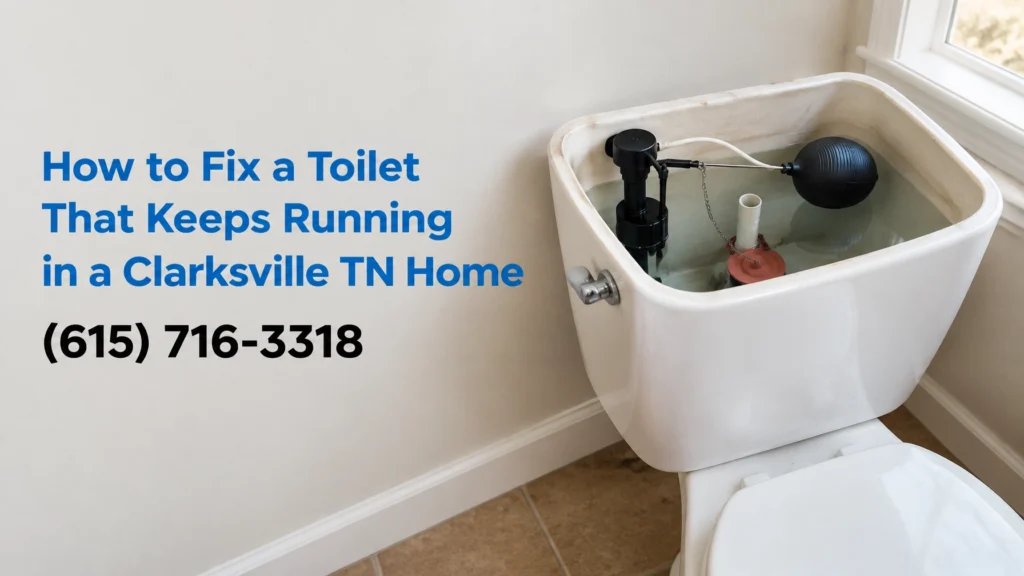
A toilet that keeps running in Clarksville TN can waste water quietly for hours. It feels like a small annoyance, but a running toilet can push up a water bill faster than most people expect.
The good news is that the cause is often simple. The flapper may not be sealing, the chain may be too tight, or the float and fill valve may need adjustment. Here is what to check before deciding whether to handle the repair yourself or get matched with a vetted local pro.
1. Start by checking the tank
Remove the lid and set it aside. Look at the water level, the flapper, the chain, and the fill valve inside the tank.
Listen first. A steady hiss means water is filling the tank and not shutting off.
Check these details first.
-
The water level should stop below the top of the overflow tube.
-
The chain should have a little slack when the flapper is closed.
-
The flapper should sit flat over the opening.
A toilet handle problem follows a different path. If the handle feels loose or rattly, see the guide on how to fix a loose toilet handle in a Clarksville TN home. A firm handle with a toilet that keeps running usually points deeper inside the tank.
2. Check the flapper and chain
The flapper is the first place to look. It lifts during a flush, then drops back to hold water in the tank. If it becomes stiff, warped, or cracked, water leaks slowly into the bowl.
A warped flapper that no longer seals is a common cause of a running toilet. Press down gently on the flapper while the toilet is running. If the sound stops, the flapper may need cleaning or toilet flapper replacement.
Next, inspect the chain. It should not pull the flapper upward when the handle is resting. It also should not hang so loosely that it slips under the flapper.
Try this simple adjustment.
- Turn off the small water valve behind the toilet if you need to remove parts.
- Flush the toilet to lower the tank water.
- Move the chain hook to another hole or link on the flush lever.
- Leave about one half inch of slack with the flapper closed.
- Turn the water back on and flush several times.
The flapper should lift fully, drop flat, and stay in place. If the rubber feels brittle or the edges look uneven, cleaning may not be enough.


3. Adjust the float and fill valve
The float controls when the fill valve shuts off. If the float is set too high, water rises into the overflow tube and continues flowing into the bowl. This can happen even when the flapper is working properly.
Look for a ball float on a metal arm or a cup-shaped float that slides along the fill valve.
Lower the float slightly, then flush and watch the refill. The water should stop below the top of the overflow tube.
An older ball float may need a small adjustment to the rod. If it moves poorly, the fill valve may be worn out.
A mineral-crusted fill valve can fail to shut off cleanly. It may also make a chattering sound while the tank refills. If a basic fill valve adjustment does not stop the water, a fill valve replacement may be the better repair path.
A homeowner in St. Bethlehem noticed the toilet refilling for a few seconds every ten minutes. The flapper looked fine, but the fill valve had heavy mineral buildup and the float was set too high. Lowering the float stopped the overflow, but the older valve still needed replacement.
4. Know when the repair is more than a flapper
A toilet that keeps running after a new flapper and proper chain adjustment needs a closer look. The flush valve seat may be damaged, the fill valve may be failing, or the tank-to-bowl connection may be leaking.
Add a few drops of food coloring to the tank and wait about 20 minutes without flushing. Colored water in the bowl confirms that water is passing through the flapper or flush valve area.
A damp ring, soft flooring, or musty smell is not part of a normal running toilet. It may point to a leak at the wax ring or a loose connection.
Do not keep tightening porcelain parts if something feels stuck. If the toilet rocks, leaks at the base, or has a visible hairline crack, get matched with a pro instead of forcing the repair.
The same caution applies in older homes around Woodlawn, Fort Campbell, and Sango. Parts there are often brittle or corroded, and a local pro can identify the right replacement.
5. Consider the water waste and repair cost
A slow toilet leak feels too minor to worry about, but it should not be ignored for weeks.
A simple chain adjustment or float adjustment is usually at the low end of a running toilet repair in Clarksville TN. A toilet flapper replacement is also generally a smaller repair. Costs rise when the fill valve, flush valve, shutoff valve, porcelain, or flooring needs attention.
A basic repair in a newer bathroom is usually straightforward. A corroded setup in an older Montgomery County home takes more time.
You do not need to replace the whole toilet just because it keeps running. Start with the tank parts and the water level. If a repair has already been attempted and the problem continues, a handyman Clarksville TN referral may be a practical next step for a fixture issue that does not require major plumbing work.
For a larger supply line problem or specialty plumbing work, we can point you toward the right specialist. Fix It Quick Network is a referral network and does not perform repairs itself. We match homeowners with vetted local pros.
6. Get matched with a local pro when needed
Try a basic inspection only if the shutoff valve turns easily. Stop if the shutoff will not close, the tank is cracked, or the toilet leaks at the floor. The main water shutoff guide for Clarksville homes can help if you are unsure which valve controls the home.
A running toilet is different from a slow sink drain. If another fixture is also draining slowly, read the guide on how to fix a slow draining sink in a Clarksville TN home.
If you would like a vetted local pro to handle the toilet, call or text (615) 716-3318 or request a free match online. We can help connect homeowners in Clarksville, Montgomery County, Sango, St. Bethlehem, Fort Campbell, and nearby areas with the right local help. The pros in our network are licensed and insured.
7. Frequently asked questions
Why does a toilet keep running after the flush?
The most common causes are a leaking flapper, a tangled chain, a float set too high, or a fill valve that will not shut off.
Can a homeowner replace a toilet flapper?
Yes, if the shutoff works and the tank parts are easy to reach.
How do you know if the flapper is leaking?
Add food coloring to the tank and wait without flushing. If colored water appears in the bowl, the flapper or flush valve is letting water through.
What water level should a toilet tank have?
The water should stop below the top of the overflow tube.
Can a high water bill come from a running toilet?
Yes. A toilet that refills repeatedly can waste water over time. Check the toilet if the water bill rises without a clear change in use.
Can Fix It Quick repair a running toilet?
Fix It Quick Network does not perform repairs directly. We can match homeowners with a vetted local pro for running toilet repair and general plumbing help in Montgomery County.