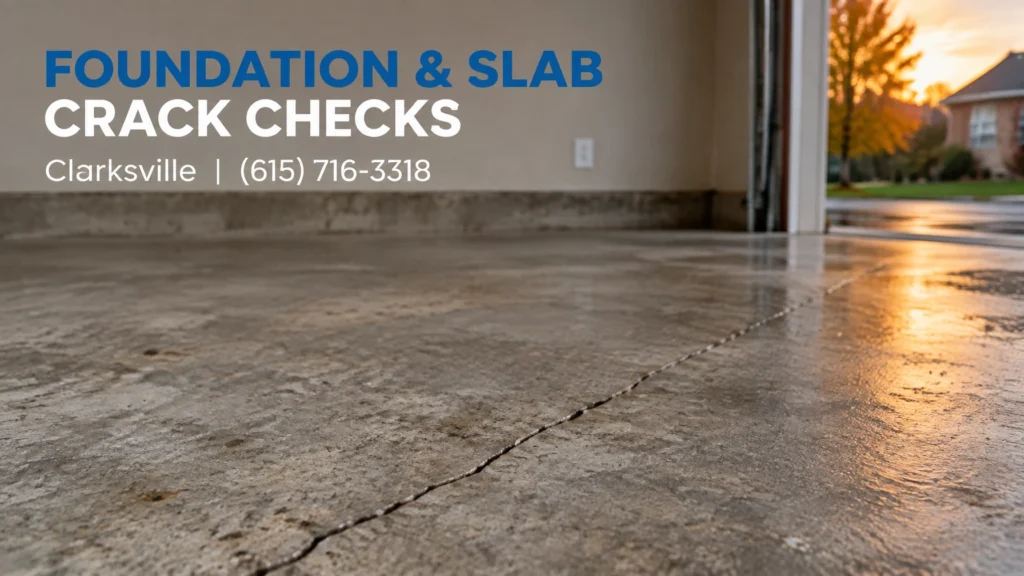
Fall rain can reveal movement that dry summer weather kept hidden. After a hot, dry season, soil around Clarksville and Montgomery County homes may shrink. When rain returns, that soil can swell again and put changing pressure around foundations, piers, and slabs.
That does not mean every crack signals a major failure. Many are ordinary shrinkage or settling. The useful step is learning what to watch, what to document, and when to get matched with the right specialist.
This fall foundation cracks Clarksville TN check applies to homeowners, realtors, property managers, and investors. A small crack is easier to understand before a freeze, a listing deadline, or a tenant call makes the timing harder.
1. Start with the crack, not the fear
Most small cracks need observation before they need a dramatic repair. Look at the width, direction, location, and whether the crack appears to be changing.
A hairline crack in a garage slab may come from normal concrete shrinkage. A narrow vertical crack in a foundation wall may stay stable for years. A short crack in a drywall corner may reflect ordinary movement where two surfaces meet.
Take a clear photo with a ruler beside the crack. Write down the date, recent weather, and exact location. Repeat the photo after several weeks or after another period of heavy rain.
Pay attention to these details.
- Is the crack thinner than a credit card edge, or noticeably wider?
- Is one side higher than the other?
- Does water enter after rain?
- Is the crack vertical, diagonal, horizontal, or stair step shaped?
- Is it appearing with a sticky door, uneven floor, or new gap at the trim?
A crack that stays the same may be a maintenance item. A crack that grows or appears with several other symptoms deserves a closer review.

2. Know what dry summer and fall rain can show
Soil conditions matter. Parts of Clarksville and Montgomery County have clay or mixed soils that respond to changing moisture. Dry weather can leave small gaps near the foundation. Fall rain can make the ground heavier and cause existing cracks or door problems to show more clearly.
This is not a reason to blame every issue on clay. Lot grading, drainage, fill soil, trees, foundation type, and the age of the home all matter. The fall drainage and grading checks for Clarksville homes and rental properties can help you follow the water path around the home.
A homeowner in Sango noticed a garage slab crack looked wider after several rainy days. The nearby door also started rubbing at the top corner. Photos taken before and after the rain gave the matched pro more useful information than a single quick glance.
The timing is helpful. Check the same places now, before colder weather and a freeze make the pattern harder to read.
3. Separate ordinary cracks from cracks worth patching
Small stable cracks are often suitable for sealing or patching after the cause has been considered. A garage slab hairline crack without water, a vertical surface crack in a nonstructural area, or a small drywall crack may fit this category.
Patching is not the first step if the crack is active. Filling a moving crack can hide the change and leave the same opening visible again later. Check nearby drainage, doors, floors, trim, and wall surfaces before choosing a cosmetic fix.
For a concrete slab, look for these conditions.
- The crack is narrow and remains the same width.
- There is no vertical offset between the two sides.
- The floor does not feel soft or uneven.
- Water is not entering through the crack.
- No nearby walls, doors, or cabinets are shifting.
If those signs are present, a suitable sealant or patch may be reasonable. The right material depends on the slab, moisture, width, and expected movement. A local pro can also check whether the crack is simply in the finish or connected to a larger concern.
Foundation crack repair Clarksville TN searches often bring up large solutions first. That is not always where the inspection should begin.

4. Watch for movement inside the home
Interior clues can help show whether a foundation or slab crack is changing. Walk through the rooms near the affected wall or floor and use your senses.
A sticky interior door matters more if it is newly sticking and sits near a foundation crack. A hairline crack above a door corner may be ordinary, but it deserves more attention if the opening is widening or the door frame is pulling out of square. Look for gaps along baseboards, cracked tile, sloping floors, or trim that has separated from the wall.
Also check the sill plate and visible piers where access is safe. Look for crushed wood, shifted supports, moisture damage, or a gap where the structure meets the foundation. Do not enter a tight or unsafe crawlspace just to inspect one mark.
The fall basement moisture checks for Clarksville homes and rental properties may help if the crack is near a basement wall or water is involved. Moisture and movement can appear together, but they are not the same problem.
A single hairline mark is usually less concerning than several changes appearing at once. Patterns matter.
5. Know when to get matched with a structural specialist
Some cracks should not be treated as routine daily home repairs. Get a structural engineer or foundation specialist involved if a crack is severe, wide, growing, leaking, or connected to floor movement.
A horizontal foundation wall crack, a stair step crack through brick or block, a clear vertical offset in a slab, or a bowing wall needs the right specialist. The same applies when several doors and windows stop operating normally, the floor feels noticeably uneven, or a support appears to have shifted.
The Fix It Quick Network does not perform structural foundation work. The Network can point homeowners toward the appropriate structural engineer or foundation specialist. The pros in the network are licensed and insured for the work they are matched to handle.
Do not cover an active crack with paint or filler before it is documented. A repair may still be needed, but the condition should be understood first.

6. Use the check for listings, rentals, and investments
A pre listing walkthrough can save time when a buyer’s inspector calls out a foundation or slab crack. Realtors and sellers do not need to fix every mark before listing, but they should know which cracks are stable, which were sealed, and which need a specialist report. The pre listing repair checklist for Clarksville home sellers can help organize that review.
Property managers can log crack location, width, photos, weather, and nearby tenant reports by address. A property near Fort Campbell may have a door that sticks after wet weather, while another rental in St. Bethlehem may show a slab crack with no related movement. Good records keep those conditions from getting mixed together between tenants.
Investors reviewing a property in Montgomery County can use the same process before purchase. A documented crack does not automatically make a home a bad deal. It does give the repair budget a more honest starting point.
For every property, record the following.
- The room or exterior location.
- The approximate width and direction.
- Photos from the same angle.
- Recent rain or dry weather.
- Any sticking door, uneven floor, leak, or wall gap.
- Whether a specialist has reviewed it.
Fall is usually a better time to investigate than after a freeze or during a closing rush. A simple repair may cost less than a delayed decision.
7. Take the next practical step
You can photograph visible cracks, check for related movement, and look at drainage without taking on structural work. You do not need to break concrete, dig beside the foundation, or enter an unsafe crawlspace.
If you find a stable surface crack, a local pro may be able to handle suitable patching or sealing. If the floor is moving or the crack is wide, severe, changing, or connected to a foundation wall, the Network can point you to the right specialist.
For common home repairs Clarksville TN homeowners need alongside a foundation check, the Network can match you with a vetted local pro. That includes suitable repair lists for homeowners, realtors, property managers, and investors, but not major structural work.
If you'd like help sorting out a crack, call or text (615) 716-3318 or request a free match at Fix It Quick. Share the property location, a few photos, and what changed after the fall rain. That gives the matched pro a practical place to start.
Frequently Asked Questions About Foundation and Slab Cracks
Is a hairline crack in a garage slab normal?
It can be. Small stable cracks often come from concrete shrinkage or ordinary settling. A crack with water, vertical movement, soft flooring, or continued growth needs a closer review.
Should a foundation crack be sealed before winter?
A stable crack may be suitable for sealing, but active movement should be understood first. Do not use patching material to hide a crack that is widening or connected to other movement.
What foundation cracks need a structural specialist?
Wide, growing, leaking, horizontal, stair step, or displaced cracks need professional evaluation. A bowing wall, moving floor, shifted pier, or several sticking doors also raises the priority.
Can a sticky door mean foundation movement?
Sometimes, but not always. Hinges, humidity, a shifted frame, or ordinary settling can also cause a door to stick. The concern is stronger when the door problem appears with nearby cracks, uneven floors, or gaps at the trim.
Should a property manager track cracks between tenants?
Yes. Record the address, location, width, photos, date, recent weather, and related complaints. Comparing the same area over time helps separate a stable maintenance item from a changing condition.
Does the Fix It Quick Network repair foundation cracks?
The Network is a referral network, not a structural repair crew. It can match customers with a vetted local pro for suitable home repairs and point severe or specialized foundation concerns toward the right structural engineer or foundation specialist.