Fall rain can soak the soil under a home before the coldest months arrive. That makes mid fall a useful time to check for crawlspace moisture in Clarksville, before a damp smell or wet insulation turns into a harder repair.
Fix It Quick Network is a referral network, not a repair crew. We connect homeowners, realtors, property managers, and investors with vetted local pros. You don’t need to crawl under your house or pull materials apart to get a useful first look.
1. Open the access hatch and check safely
Start at the crawlspace access hatch. Check whether it opens easily, closes securely, and shows signs of dampness or damage around the edge. If you can see inside without entering, use a flashlight to scan the nearest ground, piers, and floor framing.
Don’t enter if you find standing water, exposed wiring, damaged supports, sewage, or signs of contamination. A narrow or unstable space can also be unsafe. Keep your inspection to what you can see from a safe position and take a photo if it helps you track a change.
Fall rain in Clarksville and across Montgomery County can reveal moisture that isn’t obvious during a dry spell. A look after a soaking rain, followed by another check later, gives you a more useful picture than one visit on a sunny day.
2. Look at the ground cover and soil
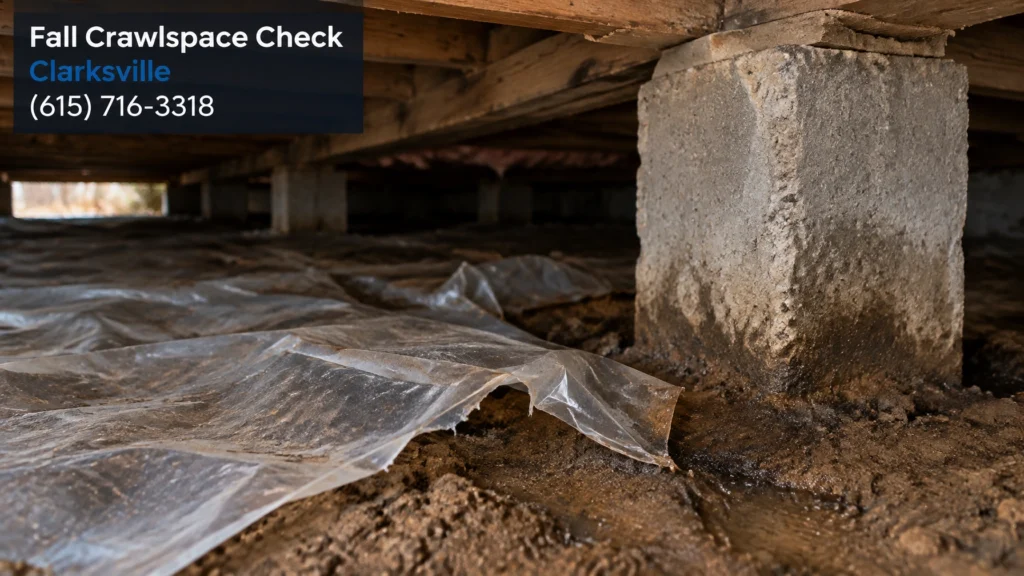
A plastic vapor barrier should cover the exposed soil. Look for missing sections, loose overlaps, tears, or plastic pulled away from the edges. A torn patch beside a concrete pier is one detail worth photographing and noting.
Check the soil you can see, too. It may feel damp after rain, but standing water or repeated wet patches deserve attention. Don’t assume a loose sheet of plastic is the only cause, and don’t cover a wet area with more plastic before the source is understood.
A vapor barrier can limit moisture rising from the ground, but it may not solve every wet crawlspace. The right response depends on the amount of water, the condition of the existing material, and the rest of the space. For more background, see crawlspace moisture problems in Clarksville.

3. Notice odors, staining, and fallen insulation
A musty crawlspace smell can rise into the living space. Notice where it feels strongest, such as near a hallway closet or floor register. Smell alone doesn’t confirm mold, but it’s a reason to look for moisture and identify what may be holding it.
Look for insulation that has fallen or sagged between floor joists. Also note dark or fuzzy growth, and white staining on joists or other wood. White staining can have different causes, so don’t treat it as a diagnosis from a quick glance.
A common Clarksville-area example is a rental home where the tenant reports a musty smell strongest in the hallway closet. A look from the access opening shows a loose section of insulation and white marks on one joist. That’s a good reason to document the spots and arrange a closer review, not to guess at the cause.
4. Check vents, pipes, and moisture readings
A blocked foundation vent can limit airflow, but adding more venting isn’t always the answer. In humid weather, outdoor air may add moisture to cooler crawlspace surfaces. Vent changes can affect the home’s moisture-control setup, so ask a qualified pro to assess the space before blocking vents or changing the design.
Look for condensation on pipes and ductwork. Beads of water or damp marks on insulation can point to a humidity problem, a leak, or another issue that needs checking. Don’t pull down insulation to investigate if it’s wet or appears damaged.
A pro may use a moisture meter on accessible wood and check the crawlspace air’s humidity. They can compare readings in joists, beams, and other areas, then look for patterns that suggest ongoing moisture. Realtors preparing a Sango or St. Bethlehem home for listing can keep dated photos and inspection notes with the rest of the property records.
5. Connect crawlspace moisture to floor changes
A bouncy or sagging floor is worth noting, especially if the change is near a damp area below. Moisture can affect wood over time, but a floor that feels uneven doesn’t prove the crawlspace is the cause. A pro can check the framing and other possible reasons.
For a persistently wet crawlspace, a dehumidifier or encapsulation may be part of a moisture-control plan. Those options aren’t one-size-fits-all. Encapsulation, drainage correction, structural floor repair, and mold remediation should go to the right specialist in the Network or another qualified specialist.
If you’re also checking for moisture in a basement, keep that inspection separate. The fall basement moisture guide covers those areas. For a crawlspace, keep your notes focused on the liner, soil, framing, insulation, vents, and pipes.

6. Keep a simple record for each property
A short record helps you compare conditions after the next period of rain. Homeowners can note the date, odor, visible damp spots, and any floor changes. Property managers can log tenant complaints and inspection notes by address, while investors can use the same checklist across several homes.
For a property near Fort Campbell or in Woodlawn, a few labeled photos can make turnover and post-inspection concerns easier to discuss. Realtors can also pair crawlspace notes with their pre listing repair checklist for Clarksville sellers. If exterior wood shows moisture damage, see the guide to fall wood rot repairs.
Costs depend on access, the moisture source, how much material needs attention, and whether specialty work is needed. A limited inspection or small correction may be in the low hundreds, while encapsulation, dehumidification, drainage work, or structural repairs can run from several thousand upward. Treat those as general planning ranges, not quotes.
7. Get matched with the right pro
You can check what’s visible and write down what feels different. You don’t need to enter a risky space, remove insulation, or buy equipment before you know what the problem is.
Get matched with a pro if water is standing, the odor keeps returning, wood looks stained or damaged, insulation has fallen, or the floor feels newly bouncy. The pros in the Fix It Quick Network are licensed and insured. The Network is a referral service, not a repair crew, and can point specialty concerns to the right specialist.
If you’d like a free match for a crawlspace concern or rental turnover list, call or text (615) 716-3318 or request a free match online. Share the property location, what you noticed, and when the issue showed up. That’s a practical place to start.
Frequently asked questions
Is a musty crawlspace smell always mold?
No. The smell can come from damp soil, insulation, wood, or mold growth. If it keeps returning, have the space checked for moisture and the source of the odor.
Should I add more foundation vents to dry the crawlspace?
Not automatically. More venting can bring humid outside air into a cooler space, so a pro should review the existing setup before you make changes.
Can I lay new plastic over a torn vapor barrier?
A small tear is a useful detail to document, but new plastic alone may not address standing water or other moisture sources. Ask a pro to assess the liner and the conditions below it.
Can crawlspace moisture make floors sag or bounce?
It can contribute to damage in floor framing, but floor movement has other possible causes. A qualified pro should inspect the framing before anyone decides what repair is needed.
Does Fix It Quick Network perform encapsulation or mold remediation?
No. Fix It Quick Network is a referral network. We can help connect you with a vetted local pro or point you toward the right specialist for encapsulation, mold remediation, drainage correction, or structural floor repair.