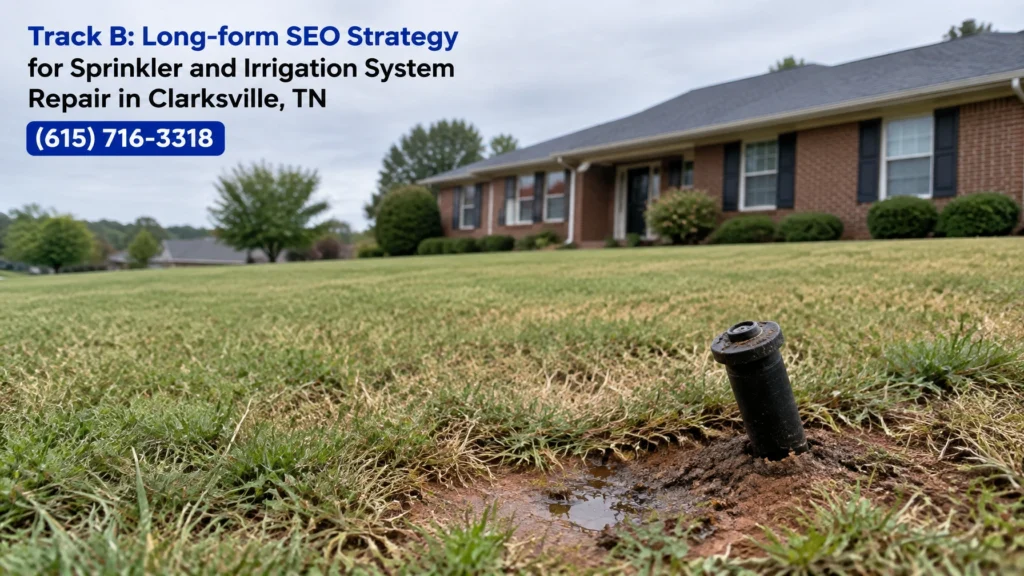
Fall is the right time to look at your sprinkler system. In Clarksville, the window between late September and the first hard freeze can be short. A small leak or weak zone may not seem urgent now, but trapped water can crack valves, backflow assemblies, and buried pipe when temperatures drop.
This guide covers sprinkler system repair in Clarksville TN, including common failures, safe checks, general cost ranges, and the steps that help protect a system through winter. It also explains when it makes sense to get matched with a vetted local pro.
1. Know how your irrigation system works
A lawn irrigation system has several parts that work together. The controller tells each zone when to run. Electric valves open one at a time, sending water through lateral lines to the sprinkler heads.
Most systems also have a backflow preventer. It helps keep irrigation water from moving backward into the household water supply. The main supply line brings water to the valves, while smaller lateral lines carry water to each zone.
A basic system may include these parts.
- Controller and zone wiring
- Rain sensor and controller battery
- Shutoff valve
- Backflow preventer
- Zone valves and solenoids
If one head is weak but the rest of the zone looks normal, the problem may be at the head. If every head in one zone stays dry, the valve or wiring may be at fault.
That difference matters. Replacing a sprinkler head will not fix a zone wiring problem.
2. Look for the failures that show up first
Most irrigation problems leave clues before the system stops working completely. Walk the yard while one zone runs and watch for changes in sound, pressure, and flow.
A cracked or tilted head is common after mowing. A head set too low may send water sideways into the grass instead of across the planting bed. A head that geysers may have a broken body, damaged riser, or loose connection below the surface.
Other signs include the following.
- A solenoid that buzzes but will not open
- A valve box full of muddy water
- A stuck zone that stays on after the controller shuts off
- A leaking backflow assembly
- A low spray pattern from a clogged nozzle
- A broken riser at the base of a sprinkler head
- A lateral line nicked by a shovel or fence post dig
- A spongy wet stripe in the lawn over a buried line
A small leak can waste water for hours. A stuck valve can raise a water bill fast, especially if the zone runs overnight or during a vacant rental period.
In Montgomery County, clay soil can hold water near the surface. That can make a buried leak look like a soft patch, dark stripe, or muddy low spot instead of an obvious spray.

3. Separate a head problem from a valve problem
The easiest way to narrow down a failure is to watch one full zone cycle. Do not assume the first weak head is the main problem.
A head problem usually affects one sprinkler or a small group near the same lateral line. You may see a clogged nozzle, a tilted body, a split riser, or water bubbling around the base. Cleaning the nozzle or leveling the head may solve it.
A valve problem affects the entire zone. The zone may not turn on, may run continuously, or may have very low pressure at every head. A broken solenoid, worn diaphragm, stuck valve, or damaged valve wiring can cause similar symptoms.
A zone wiring problem can look like a bad valve. Check the controller display and note whether other zones operate normally. If one zone will not respond while the others work, the issue may be the solenoid wire, a loose connection, or a break in the line.
There is also a simple water meter check. Turn every zone off, make sure indoor faucets and appliances are off, then watch the meter dial. If it keeps moving, there may be a supply line, valve, or backflow leak.
A homeowner near Sango noticed a wet stripe that stayed soft for several days after the system ran. The nearest head looked fine, but a lateral line had been nicked during an earlier fence post dig. The leak was underground and not visible until the grass began to sink.
4. Handle the safe checks first
Some irrigation checks are reasonable for a homeowner. They do not require digging into pressurized lines or opening electrical parts.
Start with the controller. Replace the backup battery if it is old, check the date and run times, and make sure the rain sensor has not been knocked loose. Take a photo of the settings before changing anything.
Next, run each zone through a full cycle. Write down which heads spray, which stay dry, and whether pressure changes. Mapping the zones on paper can save time later, especially if the valve boxes are hard to find.
A few basic tasks are usually safe.
- Clean debris from a clogged nozzle
- Use a hand trowel to level a tilted head
- Clear grass from around a head
- Check a controller battery
- Confirm the rain sensor is connected
- Photograph a cracked housing or leaking connection
- Note the water meter reading with all zones off
Keep the controller cover closed if you see damaged wiring or moisture inside. Do not work on a live valve box. Avoid digging near buried electrical, gas, or water lines.
A homeowner in St. Bethlehem may also see standing water near the curb or beneath a downspout discharge. That water may come from irrigation, but it may also point to a grading or drainage issue. The exterior drainage and yard grading guide can help compare the possibilities.
5. Understand how soil and slopes change the symptoms
Yard conditions affect how irrigation problems look. Flat, compacted clay soil may hold water around a leaking lateral line. A sloped lot can send water downhill, making the leak appear away from the actual break.
Sango has a mix of newer and established homes, with yards that may slope away from driveways or patios. In those settings, a broken line can create a muddy edge along a sidewalk instead of a wet circle around the pipe.
St. Bethlehem yards can show a different pattern. Water may collect near a curb, foundation planting bed, or low corner beside a driveway. If a downspout sends water into the same area, the irrigation system may get blamed for a drainage issue it did not cause.
Look at the timing. If the area is wet only after an irrigation cycle, focus on the system. If it stays wet after several dry days, check downspouts, grading, and underground drainage too.
A head that sprays unevenly can also be a pressure problem. Too many heads on one zone, a partially closed shutoff, a failing valve, or a damaged line can reduce pressure across the whole zone. A clogged nozzle usually affects one head.

6. Winterize before the first hard freeze
Lawn irrigation winterization in Clarksville TN should happen before a hard freeze, not after one. The timing changes each year, so watch the forecast because cold nights can arrive quickly in late fall.
A typical winterization process includes these steps.
- Shut off the irrigation water supply
- Turn off the controller or place it in rain mode
- Drain water from accessible components
- Blow out the lateral lines when the system requires it
- Drain or protect the backflow preventer
- Insulate an above-ground valve or exposed piping
- Check valve boxes for standing water
Compressed air must be used carefully. Too much pressure can damage heads, valves, or fittings.
Pay close attention to the backflow assembly. A backflow preventer sweating on a cool morning may have a small leak or loose fitting. A hairline crack in the housing can worsen after freezing weather, especially if water stays trapped inside.
Shutting off the controller is not enough. It stops the schedule, but water can stay in the supply line or backflow device.
For rental owners, the fall freeze prep guide for Clarksville rental properties offers a broader checklist for outdoor plumbing and other seasonal concerns.
7. Know when to get matched with a pro
Some irrigation repairs are better handled by a vetted local pro. This is especially true when the problem involves pressurized water, buried lines, wiring, or backflow protection.
Get matched with a pro if a zone stays on, a valve will not open, or the valve box fills with water after each cycle. A pro can test the solenoid, trace the valve, and determine whether the issue is mechanical or electrical.
Backflow testing deserves extra care. A backflow preventer tied to the household supply may be subject to testing, repair, or municipal requirements. If the work involves a permit, inspection, or local rule, the right specialist should handle it.
The same applies to specialty work such as the following.
- Major main line trenching
- Well and pump work
- Large system redesigns
- Municipal backflow compliance
- Repairs near buried utility lines
The pros in the Fix It Quick Network are licensed and insured. The Network is a referral service, not a repair crew, and it does not set the price. Homeowners, realtors, and property managers can be matched with a local pro who can inspect the condition and provide a written estimate.
A rental near Fort Campbell may need a quick check between tenants. A homeowner in Woodlawn may need a seasonal shutdown before leaving for part of the winter.
8. Plan for the cost without guessing
Sprinkler repair costs depend on access, parts, system size, and how easy the failure is to locate. A simple diagnostic or minor repair may fall around $75 to $225 in the Clarksville area. That range is general and can vary.
A single sprinkler head replacement may cost more when the riser, fitting, or buried connection is damaged. Valve repairs often cost more than head repairs because the valve may be deep, hard to locate, or connected to several zones.
Common cost drivers include the following.
- Number of zones
- Ease of reaching the valve box
- Whether a part or full assembly needs replacement
- Buried line location and trenching needs
- Backflow testing or specialized repair
- Winterization method and system size
Winterization is often priced by the number of zones and the equipment involved. A small system with an accessible shutoff may take less time than a larger system with several valve boxes, exposed piping, or a backflow assembly that needs extra protection.
Realtors handling a pre-listing exterior check should look for wet spots, missing heads, and controller problems before photos and showings. Property managers at turnover should run every zone, while investors with several yards may want a map and seasonal record for each property.
Small irrigation problems are easier to budget when they are found early.
9. Choose the simplest next step
Start by taking photos and writing down what happens. Note the zone number, the affected area, when the zone runs, and whether the water continues after the controller shuts off.
If the issue is a clogged nozzle or tilted head, a careful homeowner may be able to handle it. If there is a valve problem, buried leak, backflow concern, or wiring fault, it is reasonable to get matched with a pro instead of digging through the yard.
Fix It Quick Network helps connect homeowners, realtors, property managers, and investors with vetted local pros for home repair Clarksville TN needs. That includes irrigation system repair Clarksville TN when the work fits a qualified local provider. The Network does not perform the repair or set the final cost.
If you'd like help finding the right next step, call or text (615) 716-3318, or request a free match through the free match request page. Share the symptoms, the number of zones if you know it, and whether the system needs winterization before the forecast turns cold.
10. Frequently asked questions
How do I know if I need sprinkler system repair in Clarksville TN?
Look for a zone that will not turn on, a zone that stays on, a broken or tilted head, muddy areas, weak spray, or water moving on the meter when every zone is off. These signs can point to a head, valve, line, or wiring problem.
Can I replace a sprinkler head myself?
A homeowner can often replace a simple head if the connection is accessible and there is no buried line damage. Shut off the irrigation water first, use care around the riser, and make sure the replacement head matches the system. If the riser is split or the connection is leaking underground, get matched with a pro.
What causes a sprinkler valve to stay open?
A valve may stay open because of a failed solenoid, damaged diaphragm, debris inside the valve, wiring trouble, or a controller problem. A stuck valve can waste a lot of water quickly, so shut off the irrigation supply if the zone will not stop.
When should I schedule lawn irrigation winterization Clarksville TN?
Schedule it before the first hard freeze, usually after the last regular watering but before temperatures are expected to stay below freezing. The exact timing changes each year in Montgomery County, so watch the forecast rather than relying on one calendar date.
Does clay soil cause irrigation problems?
Clay soil can slow drainage and make leaks appear as soft stripes, muddy low spots, or standing water near a curb. It can also hide the location of a broken lateral line. Sloped yards may move water away from the actual break.
Who should handle backflow testing or municipal requirements?
Use a qualified specialist for backflow testing, repairs tied to a household water supply, permits, inspections, or municipal requirements. A referral network can help point you to the right type of pro, but the specialist determines the repair and price after inspection.