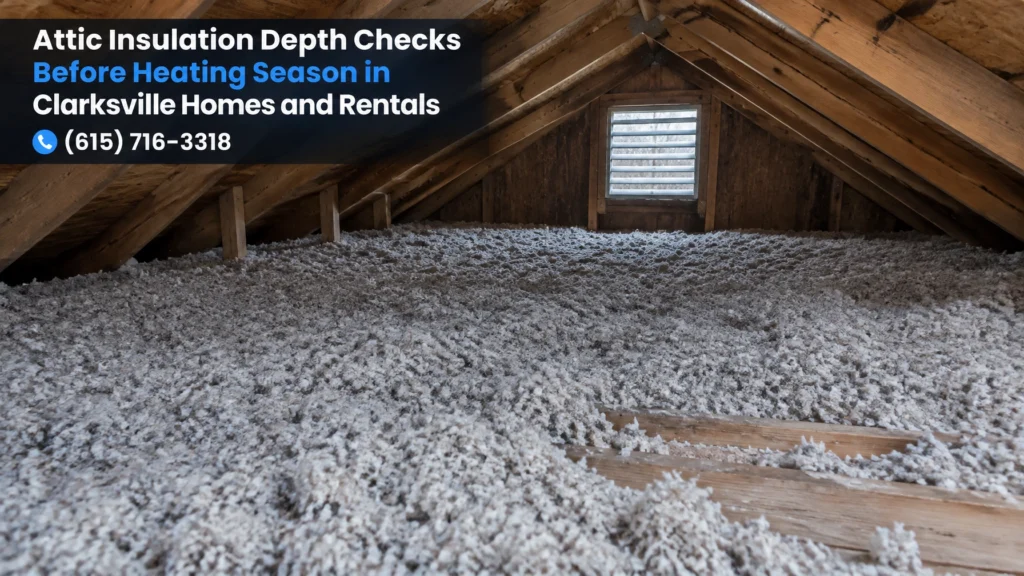
1. Check the depth before the first cold snap
Upstairs rooms can feel chilly before a heating bill shows you there’s a problem. With the first real cold snaps arriving in Clarksville, insulation depth is worth a look, especially if the bedrooms feel colder than the rest of the house.
A common planning target for an attic in this area is about R 49. R 38 is a common older baseline, but it isn’t a promise that every attic meets current needs or local requirements. The right target can depend on the home and the rules that apply, so treat these figures as general guidance.
R value measures how well insulation slows heat transfer. More depth usually means a higher R value, but the material and its condition matter too. A thick patch beside a thin or settled spot won’t provide even coverage.
For a quick first check, look for areas where insulation has dipped, thinned, or stopped short. Don’t buy more material based on one glance. Measure several places first.
2. Measure the material, not just the joists
The joist tops give you a useful clue, but they aren’t the measurement. If the insulation is level with the joists or lower, coverage may be thin. If it rises well above them, the attic may have a more useful depth, though the material and evenness still matter.
Measure from the attic floor surface to the top of the insulation. Take readings in more than one spot, including areas where the coverage looks shallow. Avoid stepping on insulation or between joists, where a foot can break through the ceiling below. If access feels unsafe, stop there.
As general planning numbers, fiberglass is often estimated at about R 3.2 per inch, so roughly 15 to 16 inches can correspond to R 49. Cellulose is often estimated at about R 3.7 per inch, so roughly 13 to 14 inches can correspond to R 49. These are estimates, not guarantees. Check the product label or ask a specialist to assess the actual insulation.

3. Look for settled or uneven coverage
Even coverage matters. A few inches of difference across the attic can leave some ceiling areas less protected than others. Look for shallow dips, bare strips, and places where the tops of joists are easy to see.
Insulation can settle over time, especially loose fill. It may also be uneven around the eaves or near obstructions. Don’t fluff it up or press it down to make it look deeper. That can give you the wrong impression of its coverage and performance.
Picture a two story rental in St. Bethlehem where a tenant reports that one upstairs bedroom feels cold, while the next room stays comfortable. A quick visual check finds a low patch of insulation above the cold room and a deeper layer nearby. That’s a reason to measure and arrange an assessment, not proof that insulation alone is the cause.
If the ceiling has a water stain, damp insulation, or a musty smell, pause before adding material. The moisture source needs attention first. An assessment can help sort out whether the concern is depth, uneven coverage, or another issue.
4. Seal first, then decide whether more insulation is needed
Insulation and air sealing do different jobs. Insulation slows heat moving through the ceiling. Air sealing helps close gaps that let air pass between the home and attic.
If you’re considering both, address suitable gaps before adding insulation. Covering them first can make later checks harder. The companion guide on attic air sealing before the first cold snap explains where to look for common openings.
More insulation may be worth considering when the depth is low, large sections are settled, or coverage is uneven. If the existing insulation is deep and consistent, adding more may not be the first step. A specialist can check the material and its label, assess the low spots, and compare the findings with the right target for the home.
In Sango and elsewhere in Montgomery County, older homes may have different attic layouts and insulation histories than newer subdivisions around Fort Campbell. A simple check can help you understand what’s there before deciding what, if anything, should happen next.
5. Make depth checks part of turnover planning
Attic depth is easy to forget during a rental turnover, especially when the rooms look clean and the heat still works. Add a basic insulation check to the winter leasing walk through. Record the date, any visible low spots, and whether joists are exposed in parts of the attic.
For investors with homes near Fort Campbell or in Woodlawn, notes from each property can help track repeat tenant comments about cold upstairs rooms. Keep photos if they help document what you could see, but don’t climb into an unsafe space to get them.
This check can fit into a wider maintenance budget. The guide to fall maintenance budget planning for Clarksville rental investors offers more ideas for sorting seasonal needs from larger repairs. The goal is a clearer picture, not another long list of chores.
6. Know when to get matched with a pro
A visual depth check is a useful starting point. Adding insulation across an attic is a bigger job, and the right scope depends on the material, the coverage needed, attic access, and any work needed before new insulation goes in.
Cost can vary widely. A small assessment is different from adding material throughout a large attic or correcting uneven coverage in hard to reach areas. The home’s size, insulation type, access, and any needed prep all affect the cost. Ask for a written scope and confirm which material and target depth are included.
Fix It Quick Network is a referral network, not a repair crew. The pros in the network are licensed and insured. For large insulation jobs, the network can point you to the right specialist rather than implying the Network does that work.
If you’d like a vetted local pro to assess the attic, call or text (615) 716-3318 or request a free match. Share the property location and what you noticed, such as shallow spots or exposed joists. Start with a few notes and a safe visual check.
Frequently asked questions
Is R 49 the required target for every Clarksville attic?
No. R 49 is a general planning target, not a guarantee or a universal requirement. The right target can depend on the home and applicable local rules.
How many inches of fiberglass correspond to R 49?
A general estimate is about 15 to 16 inches using roughly R 3.2 per inch. Check the product label, since actual values vary by product and insulation type.
How many inches of cellulose correspond to R 49?
A general estimate is about 13 to 14 inches using roughly R 3.7 per inch. Settling and the specific product can affect the depth needed.
Do exposed joists mean I need more insulation?
Not always, but they can be a clue that coverage is thin. Measure in several spots and consider the insulation type before deciding.
Can I add insulation over what’s already there?
Sometimes, but check for moisture, damaged areas, and uneven coverage first. If access or existing conditions are unclear, get matched with a pro for an assessment.