1. Why the tub caulk line matters
The caulk line keeps water from slipping into the gap where the tub meets the tile or surround. It’s flexible on purpose. A tub can shift a little under weight, and the wall and tub can move differently as temperatures change. The caulk absorbs some of that movement.
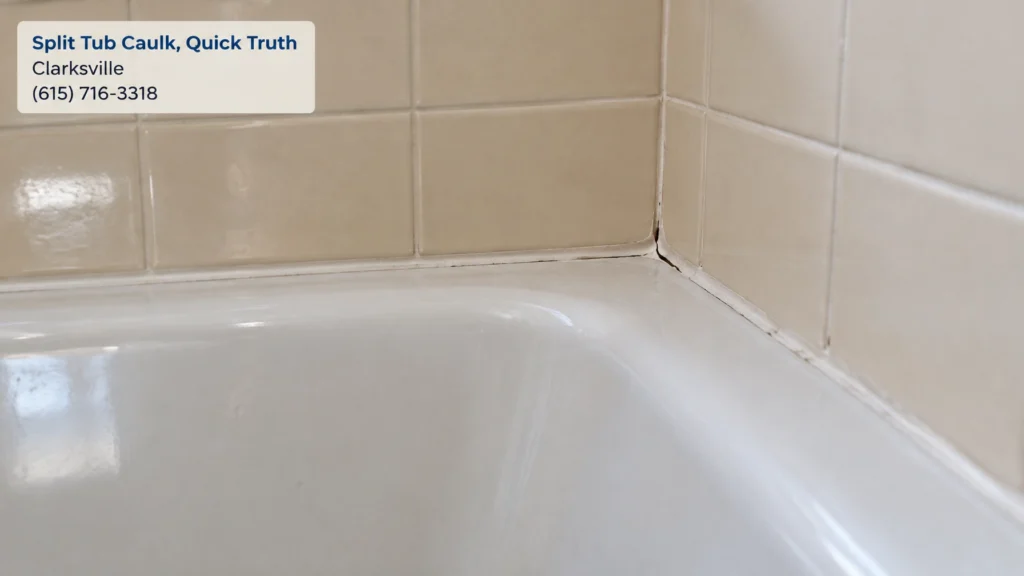
That flexibility also means the tub joint often wears out before other bathroom joints. Look for a split bead at the tub corner, a shrunken line pulling away from the tile, or black specks along old caulk. These small changes can leave an opening for water.
A tub may look fine overall while the caulk line feels rough or loose under a gentle touch. In a Clarksville home, it’s worth checking both the long seam along the wall and the tub edge near the floor. A clean, continuous line helps keep routine splashes where they belong.
2. Caulk and grout are different materials
The tub line needs caulk, not grout. Caulk stays flexible as the tub shifts and as nearby tile expands and contracts. Grout is rigid, so it can crack when used in a joint that needs to move.
You can usually tell them apart by feel and appearance. Grout is gritty and firm, while caulk feels rubbery and may look slightly shiny. Don’t spread grout over a caulk joint or caulk over a grout joint. Neither shortcut gives the joint the right material.
If the line between the tub and tile is gritty and rigid, it may be grout rather than caulk. Grout is a different material and a different fix, covered separately in this shower grout repair guide for a Clarksville home. This article is only about the flexible caulk line.

3. Warning signs that it’s time to recaulk
Recaulk when the bead is cracked, split, shrunken, peeled, yellowed, or stained with mold that won’t clean off. Pay close attention to corners, where small separations can be easy to miss. Check the tub edge near the floor, too.
Try a gentle press test. Press the caulk line lightly with a fingertip and see if it pushes in, crumbles, or feels loose. Don’t press hard or poke into the gap. If the surface looks intact and feels firm, there may be no need to rush into replacing it.
A musty smell that lingers after cleaning deserves attention, especially if it seems to come from the tub corner or wall. A shower drain can also cause an odor, so consider that possibility before assuming the caulk is the source. This guide to a smelly shower drain in a Clarksville home covers a different place to check.

4. When to stop and get matched with a pro
Some signs point beyond a worn bead. Stop and get matched with a pro if the wall behind the tub feels soft or spongy, there’s a water stain on the ceiling below, or the same line keeps reopening within weeks. A missing bead with a visible gap at the tub flange also needs a closer look.
Mold that returns soon after cleaning can mean moisture is staying behind the surface. New caulk won’t fix water damage hidden in the wall. In Montgomery County, a homeowner may first notice a musty smell, then find that the wall near the tub corner gives slightly when pressed. That’s a reason to pause, not cover the area with another layer.
A renter in Sango once noticed a split bead and an odor that lingered after cleaning. The landlord’s handyman found that new caulk had been applied over old caulk instead of replacing it. A recurring gap needs its cause checked before another bead goes on.
5. How to recaulk a tub line
A small, sound joint can be a manageable DIY job. Use 100% silicone caulk labeled for tubs and showers, and follow the product directions. Don’t caulk over old material. The new bead needs a clean, dry surface to hold.
- Remove the old caulk completely with a caulk removal tool. A utility knife and plastic scraper can help, but work carefully to avoid scratching the tub or tile.
- Clean away soap residue and loose bits. Wipe the joint with isopropyl alcohol if it’s safe for the tub and tile surface, then let it dry fully.
- Apply painter’s tape along both sides of the joint for a neat edge.
- Cut the tube tip at a small angle. Run one steady bead along the joint, then smooth it with a caulk tool or finger.
- Pull the tape right away. Keep water off the caulk for the full cure time on the tube, usually 24 hours.
If the bathtub has a joint where its edge meets the bathroom floor, check it too. Use the same care with removal and drying, and confirm that the silicone is suitable for those surfaces. Don’t rush the cure time, even if the bead feels dry on top.

6. Keep the line in good shape and plan the cost
A few small habits can help the caulk last. Run the bath fan during showers and leave it on afterward. Wipe the tub line down when it stays wet, and look over the corners now and then. Recaulking isn’t on a fixed calendar for every home, so check the condition rather than replacing a sound bead just because time has passed.
For general planning, basic DIY supplies such as caulk, a removal tool, and tape may cost roughly $15 to $40. A pro’s tub line recaulk is commonly a modest flat visit cost, depending on the joint length and the condition of the surface underneath. Hidden water damage costs more to address. These are broad planning ranges, not quotes.
Seasonal home checks can catch other failed seals around the house. This fall caulking and sealing checklist for Clarksville homes and rentals offers a useful reminder. Around Fort Campbell and St. Bethlehem, the same simple habit can help homeowners and rental property managers spot a loose bead before it becomes a bigger concern.
Fix It Quick Network is a referral service, not a repair crew. We match homeowners with vetted local pros, and the pros in our network are licensed and insured. If you’d like help, call or text (615) 716-3318, or request a free match. A practical first step is to take a photo of the tub corner and do the gentle press test.
FAQs
How often should a bathtub be recaulked?
There isn’t one schedule that fits every tub. Check the line regularly and recaulk when it’s cracked, peeling, shrunken, or no longer firmly attached.
Can new caulk go over old caulk?
It’s best to remove the old caulk completely. Leftover material can keep the new bead from bonding well.
Should grout be used where the tub meets tile?
No. That joint needs flexible caulk because the tub can move. Grout is rigid and can crack in a joint like this.
How long should the tub stay dry after recaulk?
Follow the cure time on the caulk tube. Many products call for about 24 hours before water touches the joint, and some conditions may require longer.
What does a soft wall near the tub mean?
A soft or spongy wall may point to moisture damage behind the surface. Pause the recaulk and get matched with a pro to check what’s going on.