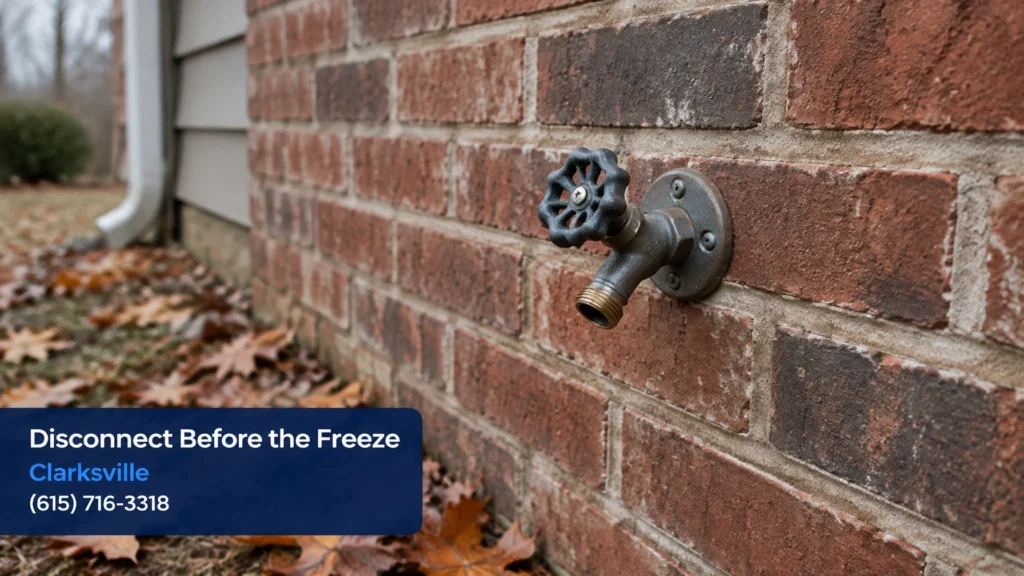
1. Disconnect every hose before temperatures drop
Start with the simple step. Remove garden hoses, splitters, timers, hose reels, and quick connect fittings from every outdoor faucet. Store them somewhere they can drain and dry.
A hose left connected can trap water inside a frost free faucet. That water may freeze in the long section of the faucet that runs through the wall. When it expands, it can split the pipe out of sight, even if the faucet itself looks fine. For frost free models, a connected hose is one of the main preventable causes of a hidden split.
Clarksville often sees its harder freezes in late November or December, but a single cold night is enough to do the damage. Check now, not after the first icy morning.
Check the front, back, and side of the house. Don’t forget a faucet near the garage or patio. In Montgomery County rentals, make sure tenants know to remove the hose, too.
2. Check what kind of faucet you have
Frost free and standard hose bibs need different winter care. A frost free sillcock has a long stem, with the shutoff valve set farther inside the warmer part of the wall. When the faucet is turned off and nothing is attached, water in the stem can drain outside.
A standard bib shuts off close to the exterior wall. Water can remain in the pipe behind it, so it may need an interior shutoff and draining. The shape alone may not tell you for sure, especially if an older faucet has been replaced. If you’re unsure, check the model information or ask a local plumbing pro to identify it.

A foam faucet cover can add a little protection on a frost free model, but it’s not a fix for a hose left attached. It also won’t drain a standard faucet’s supply line. Think of the cover as a backup, not the main winter plan.
3. Find the indoor shutoff and drain the line
If you have a standard bib, look for a shutoff valve on the pipe inside the house. It may be in a crawlspace, basement, utility area, or garage, near the point where the pipe heads through the exterior wall. Some homes have a separate valve for each outdoor faucet.
Close the valve, then open the outside faucet so water in the line can drain. If there’s a small drain cap on the shutoff, place a container underneath before opening it. Leave the outdoor faucet open for winter after draining.
Don’t force a stuck or corroded valve. If water keeps flowing after you close it, the shutoff may not be working, and the line may still be full. A plumbing pro can help confirm the setup before freezing weather settles in.
For a frost free sillcock, remove everything from the outlet so it can drain properly. Foam insulation around a pipe in an unheated space can help, but it doesn’t replace draining a standard bib.
4. Check the spaces behind the faucet
The outdoor faucet is only part of the picture. Look at the pipe run in a crawlspace, an unheated garage, or another cold area. Check that insulation hasn’t fallen away and that the garage door stays closed when temperatures drop.
After a freeze, look for signs of a split pipe as things begin to thaw. A water stain on the rim joist or crawlspace sheathing, damp insulation, or a fresh drip near the pipe penetration can be a clue. A leak may not show on the coldest night. Water can start escaping as ice melts, so the first thaw is often when a hidden split becomes visible.

A familiar scenario in Sango goes like this. A garden hose stays connected through a cold snap, and the pipe splits behind the brick. Nothing looks wrong outside, then water appears on the ceiling below as the line thaws. If you spot a stain or damp insulation, cross-check the fall crawlspace moisture checks for Clarksville homes, but don’t assume a new wet spot is just ordinary dampness.
5. Don’t forget irrigation parts and vacant units
Irrigation shutoffs, hose reels, quick connect fittings, and faucet splitters can all hold water. Disconnect them from the bib and drain them. If the property has a sprinkler system, follow its winterizing instructions or arrange the proper service. A covered faucet won’t protect an irrigation line that still has water in it.
For a vacant rental or pre-listing, add the outdoor faucets to the walkthrough. Check each side of the home, identify the indoor shutoffs, and leave a note showing which valve controls which faucet. In St. Bethlehem and across Clarksville, a short checklist can save a second trip when the weather turns.
If you manage several properties, use one repeatable list for each address.
- Remove hoses, reels, timers, and fittings.
- Confirm standard bibs are shut off and drained.
- Check exposed pipes in the garage or crawlspace.
- Make sure vacant homes keep adequate heat.
- Record any leak, stain, or valve that needs attention.

6. If a pipe has already frozen
If water flow slows to a trickle or stops, leave the affected faucet open. Shut off the local supply valve if you can identify it, or turn off the home’s main water supply if you suspect a split or can’t isolate the line.
Never use a torch or open flame. Don’t aim a hair dryer into a wall cavity or at an area you can’t see. Gentle heat from a hair dryer or warm towels may be used only on an exposed, accessible pipe, and only if you can do so safely. If the frozen section is inside a wall, call a plumbing pro.
Watch closely as the line thaws. A pipe can split while frozen and begin leaking only once water moves again. If you see water, shut off the supply and get help. The American Red Cross guide to frozen pipes also advises leaving a faucet open and avoiding open flames when thawing.
7. What repairs may cost, and when to get matched with a pro
A straightforward hose bib replacement may fall in the broad range of about $150 to $450, depending on the faucet, access, and how it connects to the supply line. Freeze damage repairs can run from a few hundred dollars for an accessible pipe section to much more if a finished wall needs to be opened and repaired. The actual cost depends on the location of the split and any water damage.
A sticky shutoff, a pipe inside a finished wall, or a wet ceiling is a good reason to get matched with a pro rather than guess. This is especially true for investors coordinating several homes near Fort Campbell or property managers handling a vacant unit.
Fix It Quick Network is a referral network, not a repair crew. The pros in the network are licensed and insured. If you’d like help finding a vetted local pro, call or text (615) 716-3318 or request a free match. The practical next step is simple. Disconnect every hose today, then check the shutoff before the hard freeze arrives.
8. Common questions
Should I leave the outdoor faucet open all winter?
If it’s a standard bib and you’ve shut off and drained its line, leave the outside faucet open. A frost free faucet should be turned off normally and left clear of hoses and attachments.
Does a foam cover stop a faucet from freezing?
It can provide extra protection on a frost free faucet, but it won’t drain a standard bib’s line or make a connected hose safe. Remove the hose and handle the shutoff based on the faucet type.
Why might a leak show up after the cold night?
Water can escape once ice inside a split pipe starts melting. Check the area during the thaw for fresh stains, damp insulation, or dripping.
What should a property manager check at a vacant home?
Remove hoses and fittings, confirm standard faucets are drained, check vulnerable pipes in unheated spaces, and keep the home heated. Record the shutoff locations for the next visit.
Can I thaw a frozen pipe inside the wall with a hair dryer?
No. Don’t use a hair dryer inside a wall cavity. Leave the faucet open, shut off the supply if needed, and contact a plumbing pro if the frozen section isn’t safely accessible.