Boost Energy Efficiency with 5 Door/Window Fixes: A Clarksville Homeowner's Guide
I've walked into a lot of Clarksville homes where the heat's cranked up in January and the AC's running full blast in July, but the place still feels drafty. You know what I always check first? The doors and windows.
Here's the thing. Your HVAC system can be brand new and top of the line, but if your doors and windows are leaking air, you're basically heating or cooling the great outdoors. I've seen energy bills drop by 15 to 20 percent after making a few targeted fixes around entry points. No major renovation needed.
If your utility bills have been climbing or certain rooms in your house never quite feel comfortable, your doors and windows are probably the culprits. Let me walk you through five fixes that make a real difference.
Why Doors and Windows Matter So Much
Before I get into the specific repairs, let me explain why this matters.
Your home is like an envelope. When that envelope has gaps, tears, or thin spots, conditioned air escapes and outside air sneaks in. Doors and windows are the weakest points in that envelope. They're moving parts with seals that wear out, glass that conducts temperature, and frames that can warp over time.
In Clarksville, we deal with humid summers and cold winters. That's a lot of work for your HVAC system. When your doors and windows aren't doing their job, your heating and cooling equipment runs longer and harder. That costs you money every single month.
The good news? Most of these fixes are straightforward. Some you can handle yourself. Others are worth calling in a professional handyman to get them done right the first time.

1. Upgrade Your Weatherstripping
This is the easiest and most affordable fix on the list, and it makes an immediate impact.
Weatherstripping is that rubber or foam seal around your door and window frames. Over time, it compresses, cracks, or pulls away from the frame. When that happens, you get drafts. I can't tell you how many times I've found weatherstripping on exterior doors in Clarksville homes that's been there since the house was built.
Here's how you check it. Close your door or window and run your hand along the edges. If you feel air movement, your weatherstripping is shot. You can also do the dollar bill test. Close a dollar bill in the door. If you can pull it out easily without resistance, the seal isn't tight enough.
Replacing weatherstripping is simple. You can pick up rolls of self-adhesive foam, vinyl, or silicone weatherstripping at any hardware store. Just clean the surface, peel off the backing, and press it into place along the door jamb or window frame.
For sliding glass doors, I recommend fin-seal or brush-fin weatherstripping. It holds up better to the constant friction of opening and closing.
If you've got multiple doors and windows to tackle or you want to make sure it's done right, give me a call at (615) 716-3318. I can knock out all your weatherstripping in a couple of hours.
2. Install Double- or Triple-Pane Glass
Single-pane windows are energy nightmares. That thin sheet of glass does almost nothing to stop heat transfer.
If you've got old single-pane windows in your Clarksville home, upgrading to double- or triple-pane glass is one of the smartest investments you can make. The difference is dramatic.
Here's how it works. Double-pane windows have two layers of glass with a sealed air space between them. That air acts as insulation, slowing down heat transfer. Triple-pane windows add another layer for even better performance. The space between the panes is often filled with argon or krypton gas, which insulates better than regular air.
I know what you're thinking. That sounds expensive. It can be, but the return on investment is real. Homeowners who replace single-pane windows with ENERGY STAR certified double-pane windows see energy bill savings of around 13 percent on average. In a place like Clarksville where we run heating and cooling most of the year, that adds up fast.
You don't have to replace every window at once. Start with the rooms where you spend the most time or where you notice the biggest temperature swings. Bedrooms, living rooms, and home offices are good places to start.
The same principle applies to exterior doors with glass panels. French doors, sliding glass doors, and entry doors with sidelights all benefit from insulated glass units.

3. Apply Low-E Coatings
Low-E stands for low-emissivity. It's a thin metallic coating applied to window and door glass that reflects heat while still letting light through.
Think of it like sunscreen for your windows. In summer, Low-E coatings reflect the sun's heat back outside, keeping your home cooler. In winter, they reflect your indoor heat back into the room instead of letting it escape through the glass.
The best part? You don't sacrifice natural light. Your windows still look clear.
If you're replacing windows or doors, I always recommend getting Low-E glass. It costs a little more upfront but pays for itself in energy savings. If you're not ready to replace your windows yet, you can also apply Low-E window film as a retrofit. It's not quite as effective as factory Low-E coatings, but it still helps.
This is especially important in Clarksville if your home has a lot of south-facing or west-facing glass. Those windows take the full force of afternoon sun in the summer. Low-E glass can cut your cooling costs noticeably.
For doors with glass panels, like sliding patio doors or French doors, Low-E glass is a must. Those large glass surfaces are major sources of heat gain and loss.
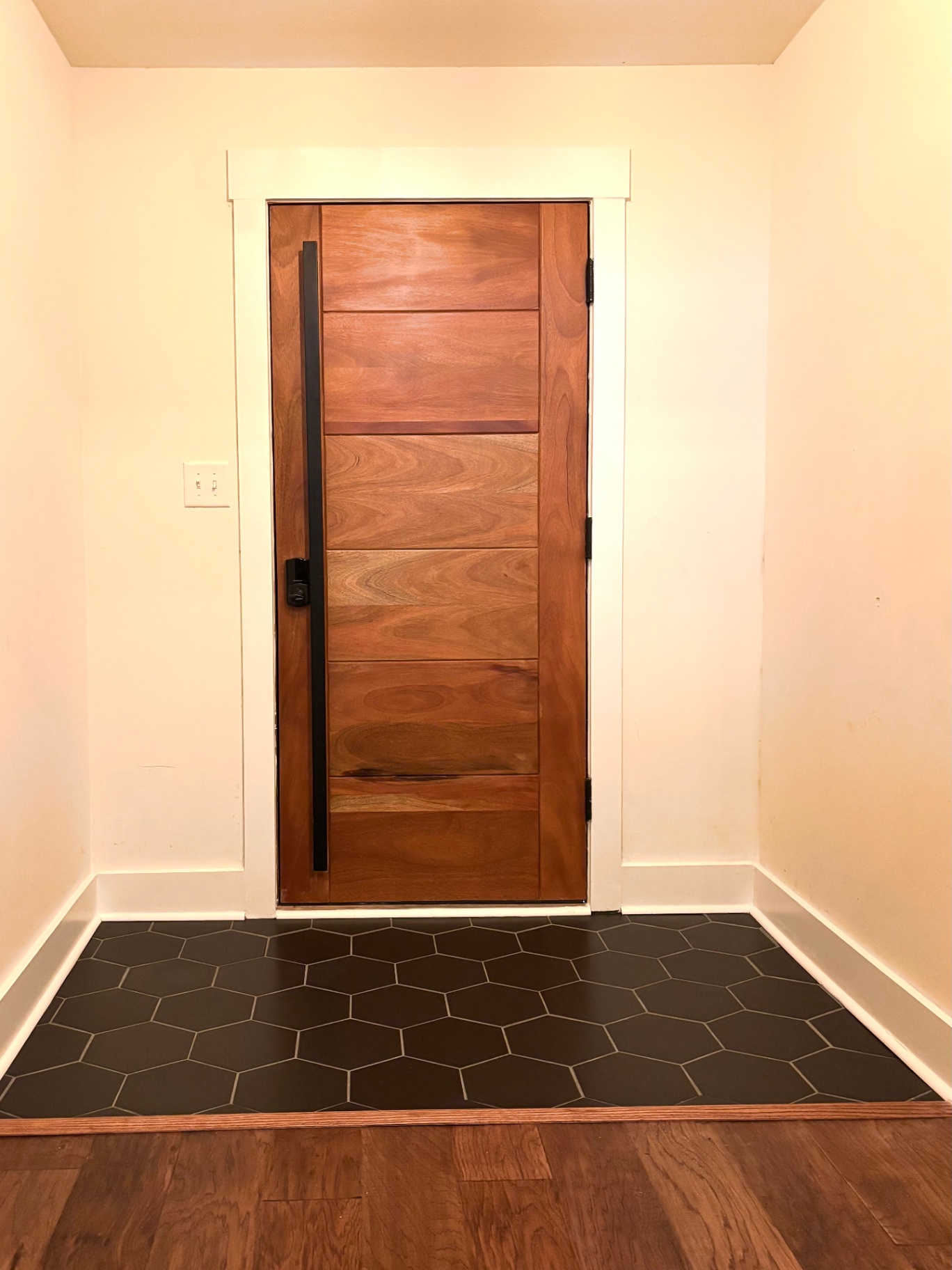
4. Replace or Upgrade Exterior Doors with Insulated Materials
Your front door, back door, and any door that leads outside needs to be more than just decorative. It needs to insulate.
Old hollow-core doors are terrible for energy efficiency. So are solid wood doors without proper weatherstripping and a tight seal. If you can feel a temperature difference when you stand near your exterior doors, it's time for an upgrade.
Modern insulated doors use fiberglass or steel skins with a foam core. That foam core provides serious insulation. A quality insulated door can have an R-value of 15 to 20, which is comparable to an insulated wall.
Steel doors are durable and affordable. Fiberglass doors look great and require almost no maintenance. Both are huge improvements over old wood or hollow-core doors.
If you've got an old wood door you love for its character, you can sometimes retrofit it with weatherstripping and a door sweep to tighten up the seal. But if the door itself is warped or damaged, replacement is your best bet.
I install a lot of insulated exterior doors for homeowners in Clarksville, especially when they're getting ready to sell. It's a visible upgrade that buyers notice, and it improves comfort and energy efficiency immediately.
If you're thinking about replacing an exterior door, let's talk. I can help you pick the right style and get it installed properly so it seals tight. Call me at (615) 716-3318 for a free estimate.
5. Add Storm Doors
Storm doors are an extra layer of protection for your main entry door.
A good storm door with Low-E glass and proper weatherstripping can improve your door's energy efficiency by up to 29 percent. That's a big deal, especially if you've got an older main door that you're not ready to replace yet.
Storm doors also protect your main door from weather damage. They take the brunt of rain, snow, and sun exposure, which extends the life of your entry door.
Here's what to look for in a storm door. Get one with Low-E glass. Make sure it's double-pane or even triple-pane if you can find it. Check that the weatherstripping is high quality and that the door closes tightly with no gaps.
Storm doors come in full-view, ventilating, and retractable screen styles. For energy efficiency, full-view models with Low-E glass perform best. Ventilating models with screens are nice in spring and fall when you want fresh air without fully opening your main door.
Installation matters. A poorly installed storm door won't seal properly and won't give you the energy savings you're paying for. If you're handy, you can install one yourself. If you want it done right the first time, that's part of what I do for homeowners all over Clarksville and Montgomery County.

Bonus: Tax Credits and Rebates
Here's something a lot of homeowners in Clarksville don't realize. You can get money back for energy-efficient upgrades.
As of January 2023, there's a federal tax credit for qualified energy-efficient home improvements. You can get up to $3,200 back for things like ENERGY STAR certified windows, doors, and insulation. The credit covers 30 percent of the cost up to certain limits.
ENERGY STAR certified windows and doors qualify. Low-E glass and insulated doors often qualify. You'll need to keep your receipts and check the current IRS guidelines, but the savings are real.
Some utility companies also offer rebates for energy efficiency upgrades. It's worth calling your provider to see what programs are available in the Clarksville area.
These incentives can take a lot of the sting out of the upfront cost. When you combine the tax credits with lower monthly energy bills, these fixes start paying for themselves faster than you'd think.
What's Next?
If you've been living with drafty doors, uncomfortable rooms, or high energy bills, you don't have to keep dealing with it.
Start simple. Check your weatherstripping. Look at your doors and windows and notice where you feel drafts or temperature differences. Those are your problem areas.
You can tackle weatherstripping yourself pretty easily. For bigger jobs like installing insulated doors, upgrading to double-pane windows, or adding storm doors, that's where professional help makes sense.
I've been doing home maintenance and repairs in Clarksville, TN for years, and door and window work is some of the most satisfying because the results are immediate. You feel the difference right away.
If you'd like a free estimate on any of these fixes or you just want to talk through what makes sense for your home, give me a call at (615) 716-3318. I'm happy to come take a look and give you honest advice on what's worth doing and what can wait.
Your home should be comfortable year-round. These five fixes can get you there.