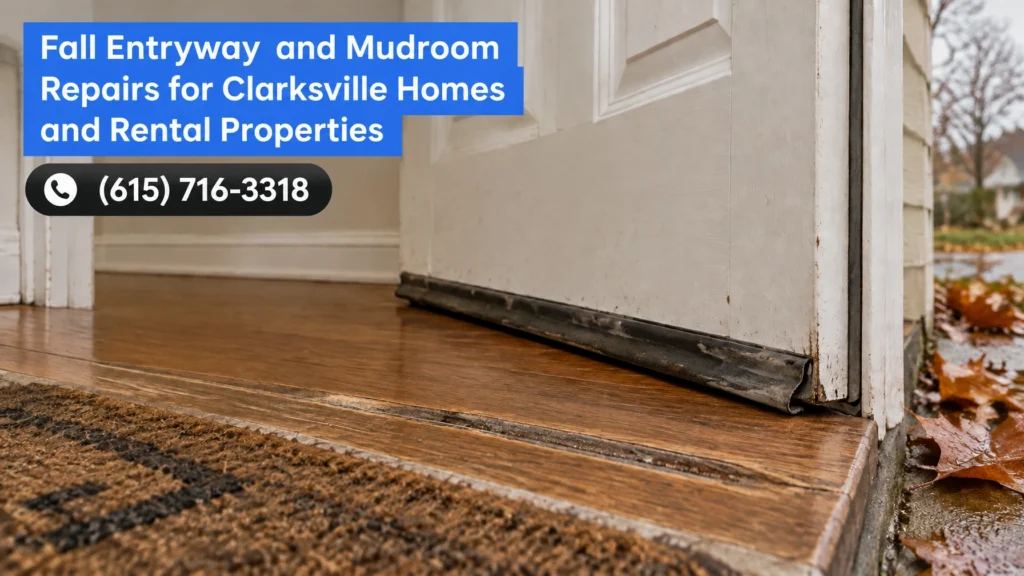
Fall weather usually shows up at the entry first. Rain, wet leaves, muddy shoes, darker evenings, and the first cold snaps put extra strain on the door, threshold, flooring, and mudroom storage.
For homeowners, realtors, property managers, and investors, this is a good time to check the entry zone before small problems turn into daily repairs. In Clarksville and Montgomery County, these fall entryway repairs can often be grouped into one practical visit.
1. Start with the entry door and threshold
Check the bottom of the door before checking anything else. A worn sweep can leave a visible gap, drag across the threshold, or let rainwater and leaves collect inside. A split weatherstrip at the bottom corner is another simple detail that can make a room feel drafty on a cold evening.
Look for these signs.
- Light showing around the closed door
- A sweep that drags or leaves a groove
- A threshold that feels loose or soft
- Water marks near the inside edge
A sticky door does not always mean replacement. Moisture can swell wood, and loose hinges can let the slab sag against the frame. Hinge adjustments, fastener checks, weatherstrip replacement, or a new sweep may solve it.
If the threshold has rot underneath, the wall framing is damaged, or the door needs full replacement, the right specialist should inspect it. Fix It Quick Network can help route that larger repair in Clarksville to the proper pro.
2. Watch how the floor handles wet shoes
Entry flooring takes a beating in October. Water sits under wet shoes, grit gets tracked across smooth tile, and repeated dampness can affect laminate or wood near the door.
A hairline crack in the grout at the entry tile may not be urgent by itself. It still deserves a look if water is getting underneath the tile or the crack keeps spreading. Check for hollow sounds, loose tile edges, darkened wood, swelling at laminate seams, or a soft spot close to the threshold. A small section of damage usually costs less to address than a larger replacement later, depending on the flooring type and whether the subfloor is affected.
If flooring has started to cup, buckle, or discolor, do not hide it under another rug until the moisture source is known.

3. Check the door hardware before winter
The lock and deadbolt should operate smoothly with the door fully closed. If the deadbolt only works when someone pushes or pulls the door, the door may be out of alignment. That can become more frustrating as humidity changes and the frame shifts slightly.
Rental property managers should also test the keypad and latch. A keypad that accepts the code but will not latch can create a lockout problem during a tenant move in or a showing. Log the concern by property address, including whether the problem happens from the inside, outside, or both.
For a property near Fort Campbell, a reliable entry lock matters during tenant turnover, and basic alignment or hardware adjustments may be appropriate, while complex hardware, damaged framing, or electrical wiring should go to the right specialist.
4. Keep mudroom hooks and shelves anchored
Mudroom storage gets heavier in the fall. Coats, backpacks, umbrellas, hats, and wet outerwear can pull on hooks that were only fastened into drywall.
Look closely at the wall around each hook. Coat hooks pulling out of drywall can leave a crumbly hole, a loose screw, or a small bulge in the paint. A shelf may also tilt forward when its anchor has started to fail.
The fix depends on what is behind the wall. A hook mounted into a stud may only need a proper fastener. A hook in open drywall may need a stronger anchor or a small patch before it can be mounted again. If the wall has hidden moisture, widespread damage, or signs of rot, that needs attention first.

5. Use the right plan for each property
Homeowners often notice these issues while getting ready for guests or the holidays. A Sango homeowner may see wet shoes tracking across oak flooring after a missing sweep lets rainwater reach the inside edge of the door.
Realtors have a different concern. A buyer may test the front door during a rainy showing and notice that it sticks or fails to latch. The Pre Listing Repair Checklist for Clarksville Home Sellers can help organize these details before showings.
Property managers need clear records. A tenant report about a swelling door, water on the entry floor, or a keypad that will not latch should be logged by address and grouped with related repairs.
Investors can protect flooring and doors across multiple units by grouping repairs by property.
6. Match moisture clues with the right repair
Not every wet entry is caused by the door. Check the threshold, split caulk at the trim, floor transitions, and the area outside the opening. A clogged drainage path or poor grading can send water toward the entry even when the door itself is in fair shape.
The post Fall Caulking and Sealing Checks for Clarksville Homes and Rental Properties covers related sealing concerns. The Fall Drainage and Grading Checks for Clarksville Homes and Rental Properties may also help if water keeps collecting near the outside of the door.
In one St. Bethlehem rental after a week of rain, the entry looked like a basic sweep problem at first. The real clue was a soft spot by the threshold and a musty smell near the wall, which pointed to a bigger moisture path that needed the right pro.
If there is suspected mold, structural rot, major water intrusion, or electrical work near the entry, the job should be pointed to the right specialist. For related indoor comfort concerns, see Fall Indoor Humidity and Dry Air Checks for Clarksville Homes and Rental Properties.
If you'd like help sorting out a sticky door, worn sweep, wet entry floor, loose mudroom hooks, or several repairs across a rental property in Clarksville, Sango, St. Bethlehem, Fort Campbell, or Montgomery County, call or text (615) 716-3318. You can also request a free match through the contact page. Send the property address, a few photos, and the main symptoms so the next step is clear. The pros in our network are licensed and insured, and Fix It Quick Network can match you based on the work involved.
7. FAQs about fall entryway repairs
How can I tell if my door needs a new sweep?
Close the door and look for daylight at the bottom. A sweep that is cracked, bent, missing sections, or dragging hard may need adjustment or replacement.
Why does my entry door stick more in cold or rainy weather?
Wood can swell as moisture changes, and loose hinges can let the door sag. A pro can check the basics before replacement is recommended.
Is a hairline grout crack at the entry serious?
It may be minor, but watch it if water sits nearby or the crack grows. Loose tile, darkened flooring, or a soft area underfoot can point to moisture below the surface.
What should a property manager do about a keypad that will not latch?
Log the issue by property address and note whether the door closes, locks, and opens from both sides. Simple alignment may be enough, but complex lock or electrical work should go to the right specialist.
Can loose coat hooks be repaired without replacing the wall?
Often, yes. The wall should still be checked for hidden moisture before new hooks are installed.
When should a larger specialist handle the entry?
Get the right specialist for full door replacement, structural framing, rot inside the wall, major water damage, complex lock work, or electrical repairs. Fix It Quick Network can help direct the request.