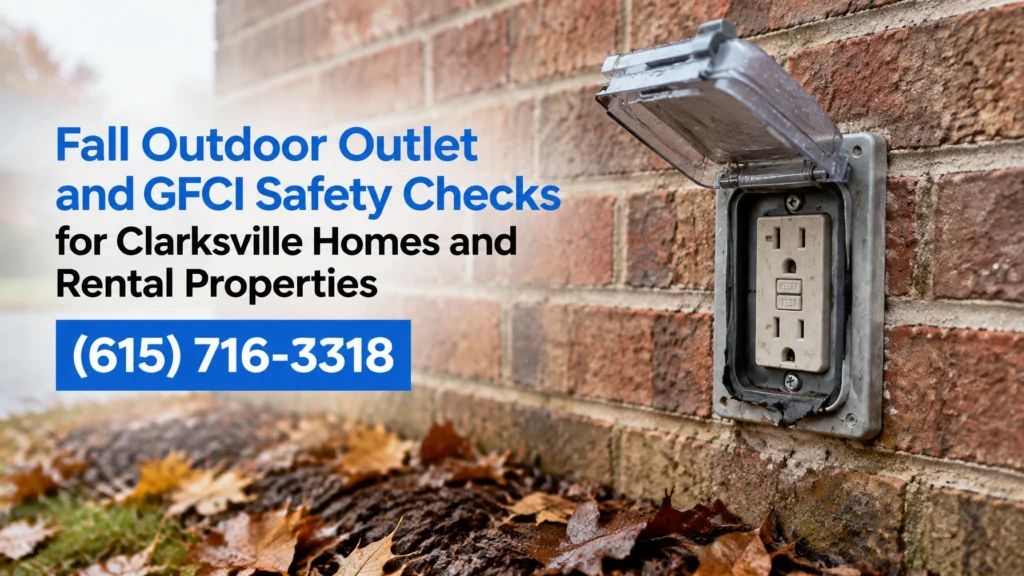
Mid fall is a good time to check the outdoor outlets around your Clarksville home. Cold rain, damp spells, and falling leaves can expose problems that stayed hidden through summer.
Exterior receptacles often get more use from October through January. Holiday lights, leaf cleanup, decorations, and cold weather chores all add demand.
That matters for homeowners, landlords, realtors, and investors across Montgomery County. A quick visual check can help you catch a problem before it turns into a dead porch outlet, a tenant call, or a repair item during a sale.
1. Fall weather exposes outdoor outlet problems
Moisture is usually where the trouble starts. Leaves and mulch can hold water against an outlet box, and repeated rain can work into a cracked cover or a gasket that has gone flat.
Check the receptacles on your porch, patio, deck post, garage wall, and under the soffit. If the outlet is wet, just look. A cover that will not snap shut, sits crooked, or leaves the plug exposed needs attention.
A Sango homeowner once reported that a porch outlet tripped every time holiday lights got wet. The outlet saw regular seasonal use, but the cover was no longer keeping moisture away from the connection.
You do not need to take the cover off. Look for standing water, cracked plastic, rust, loose mounting, and a seal that no longer presses firmly against the wall.
2. Know what the outlet and cover are telling you
A plain outdoor outlet and GFCI protection are not the same thing. A GFCI receptacle has test and reset buttons, but a plain looking receptacle may still be protected by a device farther upstream.
Look for these visible details.
- A hairline crack in a plastic weatherproof cover
- A gasket that is hard, flat, split, or missing
- Water sitting inside the box
- A loose outlet face or cover plate
- A damp or loose plug fit
- Scorch marks, melting, or discoloration
- Buzzing or a warm outlet face
Do not remove a cover, probe inside a box, or poke around a wet receptacle. Anything past the cover and the cord belongs with a licensed pro.

3. Understand a tripped GFCI and a tripped breaker
A GFCI can trip because it senses an electrical leak, often from moisture or a damaged cord. The reset button may not stay in if the problem is still there, the device is worn out, or another outlet on the same protected circuit has an issue.
A breaker trips at the panel. A GFCI trips at the receptacle or at another GFCI device protecting that circuit. Resetting either one does not prove the outlet is safe.
If the outlet feels warm, smells burnt, buzzes, or shows a black mark, do not reset it. Do not touch a receptacle with visible water around it. Unplug nearby cords only if you can do so without touching a wet connection, then leave it alone until a licensed pro checks it.
A St. Bethlehem rental with a dead garage wall outlet may have a tripped GFCI, a breaker issue, or a failed device. The right answer comes from tracing the circuit, not guessing at the reset button.
4. Use outdoor cords for short, safe runs
An extension cord is not a permanent fix for a missing or poorly placed outlet. It can help with a short term task, but it should be outdoor rated, sized for the load, and removed when the task is done.
Keep cords out of these locations.
- Under doors or through window gaps
- Across a walkway or driveway
- Through standing water, wet grass, or mulch
- In places where vehicles or lawn equipment can crush them
- Outside during a storm when they are not needed
An undersized cord can heat up under load. Daisy chained cords add connection points and can overload a circuit. Seasonal lighting loads also stack up fast.
Before the next storm, unplug seasonal cords and put them away. Do not leave a flat cord stretched across a porch just because it worked yesterday.

5. Add outlet checks to property planning
Realtors should include exterior receptacles in a pre listing walkthrough. Buyers and inspectors may flag a broken cover, missing GFCI protection, loose device, or an outlet that does not work. The pre listing repair checklist for Clarksville home sellers can help keep these small items from being missed.
Property managers should record the address, location, visible condition, and inspection date. A dead porch outlet or a breaker that keeps tripping should be logged, not brushed off. That record helps separate a simple cover repair from a circuit problem.
For investors near Fort Campbell, a properly placed and protected exterior outlet can be a relatively low cost rental upgrade. Owners managing homes in Woodlawn or elsewhere in Montgomery County can group these checks with seasonal turnover work.
The fall maintenance budget planning guide for Clarksville rental investors is a useful place to plan routine outlet work before a wet cold snap creates an urgent call.
6. Know when to get matched with a pro
A cover or gasket replacement is usually the least expensive repair. Replacing the whole outdoor receptacle or GFCI device is often a modest service call. Repairs involving a damaged box, a longer wire run, or hard access cost more.
A new outdoor outlet may require a new circuit, panel capacity, or work through finished walls. Full home rewiring, panel work, new circuit runs, and burnt or scorched wiring should go to the right electrical specialist.
The pros in the Fix It Quick Network are licensed and insured. Fix It Quick Network is a referral network, not a repair crew, and connects customers with vetted local pros for the work the property needs.
If you would like a free match, call or text (615) 716-3318 or request a match through the contact page. Choose the option that feels easiest, then share the outlet location, the visible condition, and what happened when it stopped working.
7. Frequently asked questions
Should every outdoor outlet have GFCI protection?
Outdoor receptacles generally need GFCI protection, though it may come from a device elsewhere on the circuit. A licensed pro can confirm how it is set up.
Can a homeowner test an outdoor GFCI?
This article recommends a visual check only. Do not press buttons on a wet, warm, buzzing, or burnt smelling receptacle.
What does a weatherproof cover do?
It helps keep rain away from the receptacle and plug connection. The gasket should not be cracked or flat, and the cover should close securely.
Why does the outdoor outlet keep tripping?
Common causes include water intrusion, a damaged cord, a failing GFCI device, another problem on the same protected circuit, or an overloaded setup.
Is an extension cord safe for holiday lights?
An outdoor rated cord can work for a temporary setup when it is properly sized, kept out of water and walkways, and removed after use.