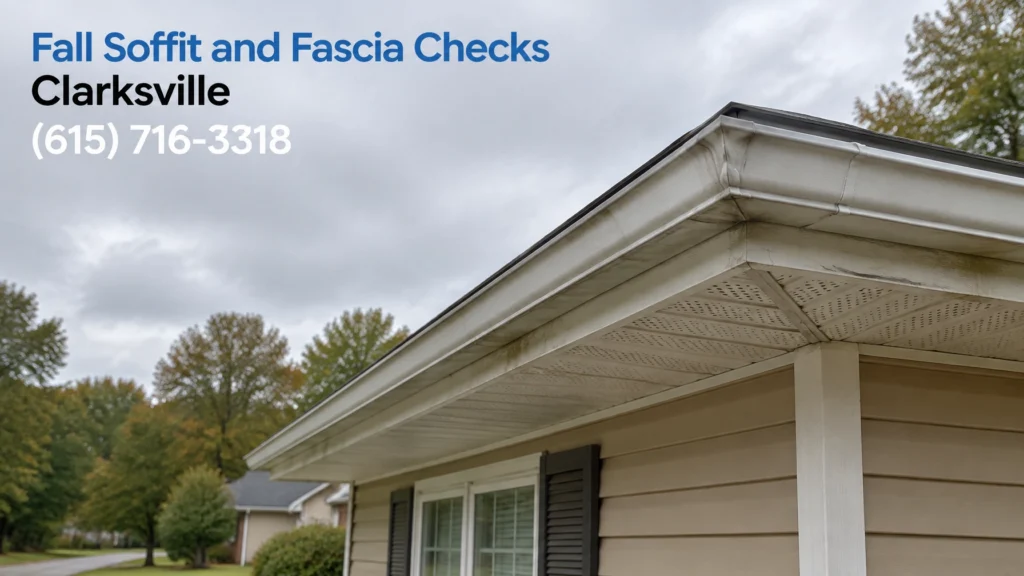
1. Check the roof edge before fall rain settles in
Late September is a good time to look up. The first cool nights and fall rain can expose problems around soffits, fascia, eave trim, gutters, and the roof edge before they get worse.
Start from the ground and walk around the home. You do not need to climb onto the roof. Look for a sagging gutter, peeling paint, dark water marks, open seams, or a section of soffit that does not sit flat.
Pay attention to details that are easy to miss.
- A hairline crack in the fascia paint.
- A soft or swollen spot on the eave board.
- A rusted or bent drip edge.
- Water streaks below the gutter.
- Missing or loose soffit panels.
- Gaps near corners, roof valleys, or porch roofs.
Clarksville homes deal with heat, storms, humidity, and quick temperature swings. In Montgomery County, that can leave roof edge materials looking fine from the driveway while moisture is already working behind the paint.
A short fall inspection can help separate ordinary aging from a repair that needs attention. It does not have to be fancy. A few clear photos and notes are enough to start.
2. Know what soffit, fascia, and drip edge each do
These roof edge parts work together, but they do different jobs. The soffit covers the underside of the eave and often contains intake vents. The fascia is the vertical trim board along the roof edge, where gutters are commonly attached.
The drip edge is the thin metal flashing along the lower roof edge and roof rakes. It helps direct water away from the roof deck and fascia. If it is bent, missing, or installed poorly, rain can travel behind the gutter and keep the fascia damp.
Soffit vents support attic airflow. They need to stay open so fresh air can enter at the eaves and move toward higher exhaust vents. Blocked vents, insulation pushed into the eaves, paint buildup, or nesting material can reduce that airflow.
A homeowner near Sango noticed a brown line beneath one gutter after a week of rain. The fascia did not look badly damaged from the yard, but the paint had started to lift near one fastener. That small clue deserved a closer look before the next wet stretch.
Read more about related exterior concerns in our guide to fall wood rot repairs for Clarksville homes and rental properties.

3. Inspect ventilation without making the problem worse
Keep the eave vents clear, but do not seal an opening just because it looks unusual. Some soffit panels are solid, while others are meant to bring air into the attic. Covering vent slots with caulk or paint can make moisture and heat problems worse.
From the ground, look for blocked slots, sagging panels, or dark staining around the vent openings. If you can safely view the attic access area, check whether insulation has been pushed tightly against the roof edge. Look for water stains on the roof decking, damp insulation, or daylight showing through a gap that should be closed. If you see nesting material or blocked soffit vents, it also helps to review our guide to fall pest and rodent exclusion for Clarksville homes and rental properties.
A very hot attic, recurring shingle problems, or a musty smell near the eaves may point to a ventilation issue. Those signs do not automatically mean the whole roof needs to be replaced. They do mean the roof edge and attic airflow should be evaluated.
For homes near St. Bethlehem, fall is a practical time to record the condition of each vented section before leaf season. If a repair involves roof design, major flashing changes, or a full roof, Fix It Quick Network can point you to the right roofing specialist. The Network does not perform major roofing or structural work.
4. Watch how gutters affect the fascia
A gutter that pulls away from the house can damage more than the gutter itself. Loose fasteners place stress on the fascia, while overflowing water can soak the soffit and eave trim below.
Look for sections that sag, separate at the joints, or leave dark overflow marks on the siding. Check whether downspouts carry water away from the foundation. A short discharge can keep soil wet near the home and add to moisture problems around lower walls and the crawlspace.
Do not focus only on leaves. A clean gutter can still have a loose hanger, cracked end cap, or poor slope. It may also be pulling away because the fascia behind it has softened.
Homeowners in Clarksville often start with a visible gutter problem. The better question is what caused it. The answer may be a small adjustment, damaged trim, a drip edge concern, or a larger roof drainage issue.
For a rental property, take one photo from the front, one from each side, and a close view of any problem area. Label the record by address and date so you can compare conditions at the next inspection.
5. Use a simple fall record for rentals and listings
A roof edge record helps property owners make calm decisions. Realtors can use it during pre listing preparation, while property managers can add it to a tenant turnover walkthrough. Investors can keep the same checklist by address across several homes.
Write down the condition of these items.
- Soffit panels and vent openings.
- Fascia boards and gutter attachment points.
- Drip edge visibility and damage.
- Water marks below gutters.
- Roof edge gaps or loose trim.
- Attic stains near the eaves, if safely visible.
- Photos taken after heavy rain.
A seller preparing a home in Woodlawn may not need to replace every piece of exterior trim. A clean record can show which areas are sound, which need a small repair, and which should be reviewed by a roofing specialist. That feels better than discovering the issue during a buyer inspection.
For homes near Fort Campbell, property managers may also want to note whether a tenant reported dripping water, a rattling soffit panel, or a draft near an upper room. Small reports can help identify recurring roof edge problems before a turnover deadline.
A pre listing exterior review can work well alongside our pre listing repair checklist for Clarksville home sellers.
6. Understand repair choices and general cost factors
Soffit and fascia repair Clarksville TN costs depend on the size of the damaged area and what caused it. Refastening a loose trim section is different from replacing softened wood, correcting a gutter problem, repainting, or repairing flashing.
Small exterior repairs may fall in a general range of about 150 to 400 dollars when access is simple and several items can be grouped together. Larger repairs involving multiple fascia sections, soffit replacement, gutter removal, painting, or water damage may move into the 500 to 1,500 dollar range or higher.
These are planning ranges, not quotes. The matched pro reviews the actual condition before setting a price. Cost is usually affected by a few details.
- How much material needs to be removed.
- Whether the surrounding wood is solid.
- The height and access around the roof edge.
- Whether gutters must be taken down and reset.
- Whether painting or sealing is part of the work.
- Whether the drip edge or roof covering also needs attention.
- Whether a roofing or structural specialist is needed.
The pros in our network are licensed and insured. Fix It Quick Network is a referral network, not a repair crew, so the matched pro handles the inspection, estimate, and work.
7. Know when to get matched with a pro
A few ground level checks are reasonable for most homeowners. Take photos, note the location, and watch the roof edge during or after rain. Do not climb onto the roof or pull at loose materials.
Get matched with a pro if you see active leaking, a soft fascia board, a gutter pulling away, missing soffit material, repeated paint failure, or water staining inside the attic. A recurring problem usually deserves more than another coat of paint.
If the issue may involve a full roof, major flashing failure, structural framing, or extensive water damage, the right specialist should review it. We can help point you toward the right local pro instead of treating a specialty repair like a routine handyman visit.
If you would like help sorting out a roof edge concern, call or text (615) 716-3318, or request a free match through Fix It Quick Network. Send the property location, a few photos, and what you noticed after the last rain. That is a practical place to start.
8. FAQs about fall soffit and fascia checks
Should I inspect the soffit and fascia every fall
A visual check each fall is sensible, especially after summer storms and before heavier leaf drop. Look from the ground for stains, gaps, sagging, peeling paint, and loose gutter sections.
Can I repair a small fascia problem myself
A homeowner may be comfortable documenting the issue or tightening an accessible fastener. Avoid roof climbing, hidden water damage, electrical concerns, and repairs that require removing gutters or roof materials.
How do I know if soffit vents are blocked
Look for painted over slots, dirt, nests, or insulation pressed against the attic side of the eave. If airflow seems poor or the attic shows moisture signs, ask a matched pro to review the ventilation pattern.
Does a damaged fascia always mean wood rot
No. Fascia can pull loose because of gutter weight, failed fasteners, movement, or water entering from the roof edge. A soft spot, swelling, or crumbling surface suggests the material needs closer review.
What if the problem is part of the roof
A full roof, major flashing repair, or structural concern should go to the right roofing or building specialist. Fix It Quick Network can help with a free match, but the Network does not perform that specialty work.