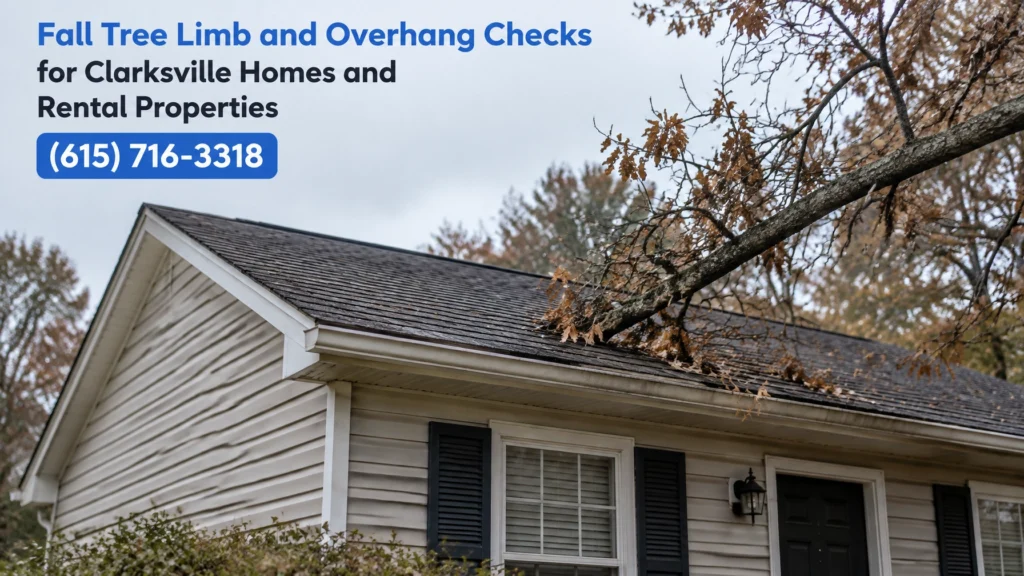
Fall storms can expose a problem that was easy to miss during summer. After the leaves drop, the first hard winds in Clarksville can put extra pressure on dead limbs, loose branches, gutters, siding, and power drops.
A slow walk around the property can help you spot trouble before the next front moves through. This applies to homeowners, realtors, property managers, and investors across Montgomery County.
Fix It Quick Network is a referral network, not a repair crew. We match customers with vetted local pros for smaller exterior repairs and point larger hazards toward the right specialist.
1. Start with a safe walk around
Stay on the ground and look up before you inspect anything closely. You do not need to climb onto the roof, shake a branch, or pull at loose material.
Walk the full perimeter of the house and look at the places where trees meet the property.
- Dead limbs above the roof or porch
- Branches touching shingles, siding, or windows
- Limbs hanging over driveways and parking areas
- Broken branches caught in the canopy
- Tree trunks that lean toward the house
- Loose gutters or downspouts below low branches
- Power drops or lines that pass near a limb
Look for a dead limb that is still attached but rubbing the shingle edge. Repeated movement can wear away the shingle surface and leave a path for water.
Also check the shaded north slope of the roof. A moss or algae stripe may not be caused by a tree, but it can show that the area stays damp and deserves a closer look.
A homeowner in Sango found a low limb resting on the back porch roof after a night of wind. The limb had not fallen, but it had shifted enough to press on the roof edge. That kind of small movement is worth documenting before another storm adds more force.
2. Know which branch signs matter
Not every branch over a roof is an emergency. The condition of the wood, the size of the limb, and what sits below it all matter.
Check for a split at the branch collar with dark wood showing. The branch collar is the raised area where a limb joins a larger branch or the trunk. Dark, cracked, or soft wood there can point to decay or a weak connection.
Other warning signs include these.
- Bark that is peeling or falling away
- A long crack running along the limb
- Dead wood with no buds or smaller twigs
- A branch that rubs another branch in the wind
- Fresh sawdust near the trunk or branch union
- A noticeable lean after recent weather
- A hanging limb above a door, roof, or tenant walkway
Do not stand underneath a cracked or hanging limb to take a closer photo. Use a zoom lens from a safe place instead.
Properties near Fort Campbell may have mature trees close to older roofs, fences, and rental driveways. Homes in St. Bethlehem can have similar concerns around backyard patios and narrow side yards. The location does not change the basic rule. If the limb looks unstable, leave it alone.

3. Check what the limb may have damaged
A branch does not need to fall completely to cause a repair problem. Wind movement can loosen a gutter, scrape siding, break trim, or knock a downspout loose.
Look at the roof edge from the ground. Check for lifted shingles, fresh scrapes, dark marks, or small piles of bark and twigs. A damaged shingle edge may not leak immediately, so take a photo and note the location.
Walk around the windows and exterior walls. Look for split siding, chipped paint, cracked caulk, or a branch mark that was not there before the storm. A branch rubbing against faded vinyl siding can leave a shallow groove that collects water and dirt.
Then check the lower areas of the house. Leaves and twigs packed against a window well or foundation vent can hold moisture against the wall. Clear only loose debris that you can reach safely from the ground, and do not cover a vent with mulch or wet leaves.
The same debris can hide a soft spot, a hairline foundation crack, or a musty crawlspace smell. The fall wood rot repair guide for Clarksville homes and rental properties explains why damp trim and split caulk deserve attention before winter.
4. Follow the water after the leaves fall
Tree debris often creates a gutter problem before anyone notices a roof leak. Leaves, small twigs, and acorns can collect where an overhanging limb meets the roof edge.
From the ground, check whether the gutter is sagging, overflowing, or pulling away from the fascia. Look for dark water streaks on the siding and washed out soil below the downspout.
A downspout knocked loose by a low branch may send water directly beside the foundation. That can create muddy soil, a damp crawlspace, or a low spot that grows worse after each storm.
If you can safely reach a gutter from the ground, remove loose leaves without leaning a ladder against unstable branches or damaged roof edges. Gutter cleanout, downspout reattachment, and minor exterior repairs can be matched through Fix It Quick Network.
The fall drainage and grading check guide covers what to watch for around settled soil, foundation moisture, and downspout discharge. Homes in Woodlawn and across Montgomery County may have different grades, but water should still move away from the house.
5. Leave power lines and large limbs alone
Anything near a power line needs a different response. Do not trim, pull, or move a branch that touches a line or hangs close enough that it could shift into one.
Large removals, hazard trees, and anything near a live line should go to a tree or utility specialist. If a line is down, stay well away, keep others clear, and contact the utility. Treat every downed line as live.
The same caution applies to a large limb resting on a roof, porch, carport, or service drop. Broken wood can be under tension and may move suddenly when weight is removed.
A regular handyman match may make sense for a small limb trimming concern that is safely separated from structures and utilities. It is not the right answer for a dangerous tree, a major removal, a full roof replacement, or structural damage.
The pros in our network are licensed and insured. Fix It Quick Network can help with smaller exterior repairs, but the right tree, utility, roofing, or structural specialist should handle major hazards.
6. Keep better records for listings and rentals
A few photos and notes can make fall maintenance easier to manage. Take one wider photo that shows the property location and one close photo of the concern. Record the address, date, weather, and whether the condition changed after the storm.
Realtors can use this process when a limb hangs over a roof before a showing, inspection, or appraisal photo. A visible branch scraping the siding can distract from an otherwise well cared for Clarksville home.
Property managers can document the same issue by address across several rentals. Add tenant reports about rattling branches, dripping gutters, or blocked foundation vents to the maintenance record.
Investors near Fort Campbell, Woodlawn, and St. Bethlehem can group small exterior repairs by property instead of reacting to each one as a separate emergency. The fall maintenance budget guide for Clarksville rental investors can help sort urgent work from planned work.
For sellers, the pre listing repair checklist for Clarksville home sellers can help place tree, gutter, siding, and drainage concerns in the right order.
7. Know when to get matched with a pro
You can inspect visible areas, take photos, clear loose debris from safe ground level locations, and note where water is going. You do not need to cut a branch, climb onto the roof, or open siding to find every possible problem.
Get matched with a pro if you see a limb rubbing the roof, damaged siding, a loose downspout, blocked drainage, or exterior wood that feels soft. A small repair may cost a few hundred dollars when access is simple and the work is limited. Larger repairs can move into the $500 to $1,500 range or higher when materials, height, hidden damage, several repairs, or specialist work are involved.
Those are general planning ranges, not quotes. The actual cost depends on access, limb size, roof condition, materials, disposal, and whether the issue reaches fascia, framing, or the roof covering.
If you would like help sorting out a fall tree or overhang concern, call or text (615) 716-3318 or request a free match through Fix It Quick Network. Share the property location, a few photos, and what changed after the last wind. That gives the matched local pro a practical place to start.
Frequently asked questions
Should I remove a dead limb over my roof myself?
Only consider simple, ground level work that is clearly away from structures and utilities. Leave large, cracked, hanging, or high limbs alone and request a tree professional.
What should I do if a branch is touching a power line?
Do not touch, trim, or move it. Keep people away and contact the utility or a qualified utility tree specialist. Downed lines should always be treated as live.
Can a small branch damage a gutter or roof?
Yes. Repeated rubbing can wear shingles, scrape siding, loosen fascia, and pull a gutter out of position. Small twigs and leaves can also clog the gutter and send water toward the foundation.
What should rental owners document after a fall storm?
Take photos of the limb, roof edge, siding, gutter, downspout, foundation vent, and any visible water or debris. Record the property address, date, tenant report, and whether the condition changes after rain or wind.
Does Fix It Quick Network remove large trees?
No. Fix It Quick Network is a referral network that matches customers with vetted local pros. Large removals, hazard trees, anything near a live line, full roof work, and structural repairs should go to the right tree, utility, roofing, or structural specialist.