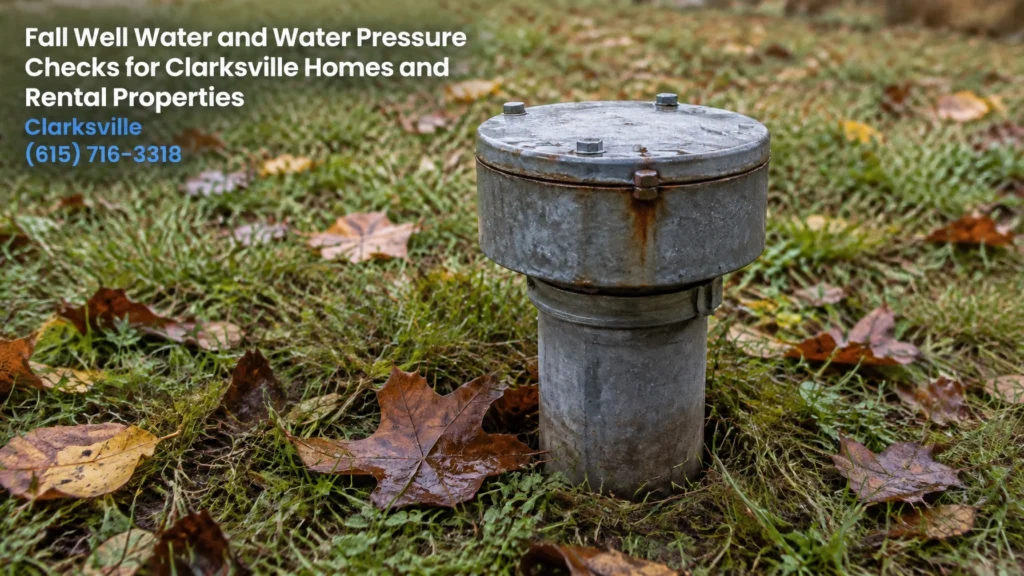
1. Check the wellhead after fall rain
Start outside. October rain and leaf litter can hide pooling or erosion around a well, so look for standing water, soil washed toward the casing, or leaves packed around the cap. The ground should slope away from the well, not direct runoff toward it.
Check that the steel cap looks secure and intact. A rust streak, loose fastener, cracked casing, or damaged seal deserves attention from a well specialist. Keep leaves and debris clear, but don’t open the cap or disturb wiring and conduit.
In rural Clarksville and Montgomery County, a wellhead may sit away from the house and be easy to overlook as evenings get darker. Take a photo of the cap and surrounding ground now. It gives you a simple reference if the area changes after another storm.
2. Get the well house ready for the first freeze
Check the well house door, roof, and visible insulation before temperatures drop. A door that won’t latch or a gap around the frame can let cold air reach exposed pipes, the pressure switch, and the gauge. Look for cracked insulation and signs of moisture, too.
Don’t wrap electrical parts or block ventilation to make the room warmer. If the well house uses a heater, follow its safety instructions and keep the area clear. A licensed specialist can advise on safe protection for the particular setup.
For a wider cold weather checklist, see our guide to fall freeze prep for Clarksville rental properties. Homeowners near Sango and Woodlawn can also check the home’s crawlspace for dampness or cold air leaks with our fall crawlspace moisture checks guide. Small checks now can make a cold snap feel less stressful.
3. Watch the pressure tank and pump cycle
A pressure tank stores water under pressure so the pump doesn’t need to run every time someone opens a tap. The pressure switch tells the pump when to start and stop. Settings differ, so check the label or service records rather than assuming a particular pressure is right for the system.
With no fixtures running, note the gauge reading, then listen as someone briefly runs a faucet. A needle that jumps sharply, pressure that surges at the tap, or a pump that starts and stops every few seconds can point to a tank, switch, gauge, filter, leak, or pump problem. Don’t open the switch or touch wiring.

If a home in St. Bethlehem has guests arriving for the holidays, repeated pump cycling can become noticeable fast as showers and laundry add demand. That’s a good time to note what you hear and when it happens, then pass those details to a well and pump specialist.
4. Treat cloudy or gritty water as a signal
Set a glass of water on the counter and let it sit. Watch whether grit settles at the bottom or cloudiness clears. Note any sputtering, unusual taste, smell, or color. Those clues don’t identify the cause on their own.
After heavy rain, cloudy water may be sediment, but a change can also mean surface water is affecting the well. If water quality changes, use a safe alternate source for drinking and cooking until you’ve received advice and testing. Avoid opening or disassembling well equipment.

A typical fall scenario in Woodlawn might start with a tenant reporting sputtering at the kitchen tap after a hard rain. The owner notices grit settling in a glass and records the timing, rather than guessing at the cause. Those observations help a qualified specialist or certified water tester decide what to check next.
5. Plan a water test, especially before a sale
Private wells need regular testing. The EPA recommends annual testing for total coliform bacteria, nitrates, total dissolved solids, and pH, with additional testing when water changes or the well system is repaired. Use a certified drinking water laboratory and follow its sampling instructions.
For a rural Montgomery County listing, ask early what tests the buyer, lender, or local requirements call for. Tennessee notes that private well sampling requirements may depend on the party requesting the test. Keep the latest results, well records, and service history with the property documents. Our pre-listing repair checklist for Clarksville sellers can help organize the rest of the home’s paperwork and repair items.
If water has changed after rain or a repair, don’t wait for a listing deadline to ask a certified tester what sample is needed.
6. Make an outage and rental plan
A well pump needs electricity, so a power outage can mean no running water. Keep a few days of drinking water stored, know where the main shutoff and pump disconnect are, and read the pump manufacturer’s guidance before using backup power. Don’t connect a generator to the home system without proper transfer equipment and qualified electrical advice.
For property managers near Fort Campbell, give tenants a simple way to report low pressure, pump noise, air sputtering, or sediment. Ask them to include which taps are affected and whether the issue began after rain or a power interruption. Investors tracking multiple homes can keep a basic record by address with test dates, tank condition, symptoms, and specialist visits. The fall maintenance budget planning guide for Clarksville rental investors offers a way to plan seasonal costs.
A basic water test may cost a modest lab fee, while broader testing can run from tens to a few hundred dollars. Pump diagnostics or repairs can cost more depending on access, parts, and the issue. Tennessee requires licensed well drillers and pump installers, as explained by TDEC.
7. Know when to get matched with a specialist
Homeowners can safely observe the wellhead, look for drafts in the well house, note pressure symptoms, and keep records. Leave pump work, pressure switches, wellhead electrical wiring, and water testing to the appropriate qualified specialist. The pros in our network are licensed and insured for the work they’re matched to handle, and we’ll point well and pump concerns to the right specialty provider.
If you’d like help finding the right next step, call or text (615) 716-3318 or request a free match. There’s no pressure to proceed. Start by taking a photo of the wellhead and writing down any water or pressure changes you’ve noticed.
FAQs
How often should a private well be tested?
The EPA recommends testing annually for common indicators, including bacteria, nitrates, total dissolved solids, and pH. Test again if water changes, the well is repaired, or flooding affects the area.
Is cloudy water after rain always unsafe?
Not always, but appearance alone can’t confirm water is safe. Use an alternate source for drinking and cooking while you contact a certified tester or well professional for guidance.
What does pump short cycling sound like?
You may hear the pump start and stop repeatedly, sometimes every few seconds, even during ordinary water use. Note when it happens and get a well and pump specialist to assess it.
Can a homeowner adjust the pressure switch?
It’s best not to. The switch involves electrical parts and system settings, and an incorrect adjustment can create damage or a safety risk.
What should a realtor request for a rural listing with a well?
Request recent water test results, available well and pump records, and details of any pressure or water quality concerns. Ask the buyer or lender which tests they require, then arrange testing through a certified provider.