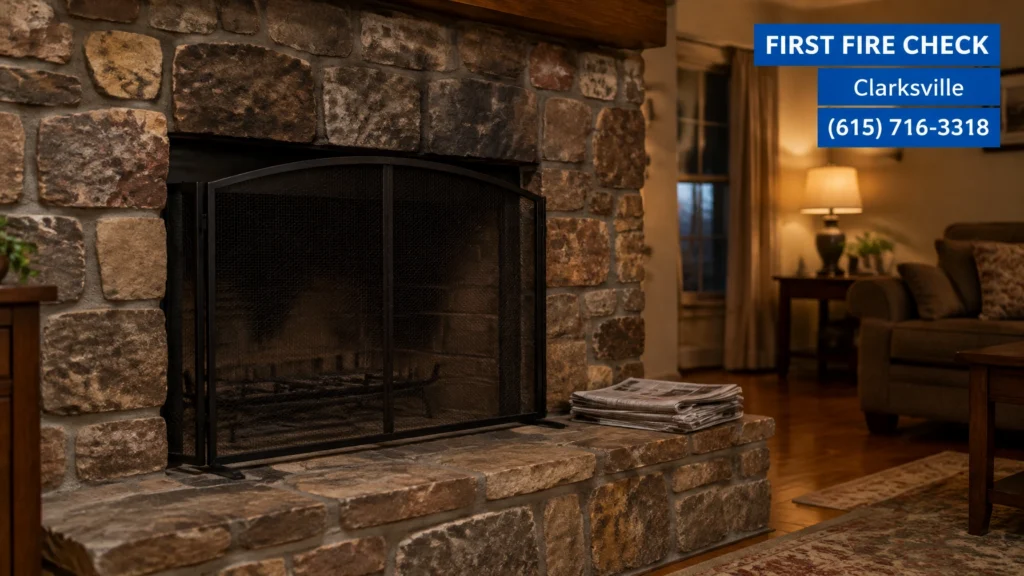
The first cold evening makes a fireplace feel inviting, but a quick look before lighting up can help keep smoke where it belongs. Fix It Quick Network is a referral network serving Clarksville and Montgomery County. We match homeowners with vetted local pros, and the pros in our network are licensed and insured.
1. Why the first fire of the season causes trouble
Summer can leave a fireplace less ready than it looks. Birds may nest in the flue, the damper can stay half closed after months without use, and creosote from last winter can remain inside the chimney. Cold air sitting in the flue may also push smoke back into the room when a fire starts.
Picture a Sango family lighting their first fire of November. Within a minute, smoke rolls into the living room because the damper is still half closed from spring, and a quick flashlight check spots gray nesting material near the top of the flue. The fix there is simple. Open the damper all the way before you light anything.
Don’t assume last winter’s fireplace condition tells you everything about this one. For more seasonal steps, see our fall fireplace and chimney prep guide. The Chimney Safety Institute of America’s homeowner resources also explain why regular inspection matters.
2. What to check before lighting
Check the firebox and hearth before you light a fire. Open the damper fully by hand, if it’s safe to reach. Look up the flue with a flashlight for daylight and anything that shouldn’t be there, including gray nesting material. Don’t reach into the flue or try to pull out a nest.

Make sure the hearth is clear for at least three feet. Check that the spark screen is in place and has no bent corners, the grate sits level, and there are no cracked firebox mortar lines. If the fireplace has glass doors, follow the manufacturer’s directions for their position during use. Don’t force a stiff damper or light a fire if anything looks blocked or damaged.
A hairline crack in the firebox or a screen that no longer sits square may seem minor, but it’s worth noting before the first burn. In Clarksville, a quick visual check is a good start, not a substitute for chimney inspection or cleaning.
3. Gas fireplace checks
Check the controls and visible parts before using a gas fireplace. Confirm the pilot lights and stays lit, the logs sit in their correct positions, and the wall switch or remote works as intended. Keep the manufacturer’s instructions handy, especially if you’re unsure how the unit should start.

White mineral film on the inside of the glass can make the fireplace look cloudy. Let the glass cool completely and follow the appliance manual for cleaning and removal. Don’t use a household glass cleaner or abrasive pad unless the manufacturer specifically allows it.
Check that a working carbon monoxide detector is in the room or nearby, following the detector’s instructions for placement. Test alarms as directed. Our smoke and carbon monoxide detector guide covers seasonal checks for Clarksville homes and rentals. If the gas flame pattern looks wrong, stop using the fireplace and get a specialist to check it.
4. Wood and ash habits
Burn seasoned wood only. Wet or green wood can create more smoke and residue, and green wood stacked against the siding can hold moisture against the house. Keep firewood stored safely away from the home.
Treat ashes as hot even after the fire looks out. Put them in a metal can with a lid, let them cool for several days, and keep the can off the deck and away from the house. Keep the can at least ten feet from the home. Never dump ashes in a trash can or plastic bin, and don’t assume a cool-looking ash bed is safe to handle.
If you’re getting a Clarksville home ready for colder weather, add ash disposal and wood storage to your routine. It doesn’t have to be complicated. Use the right container and give ashes time to cool.
5. Small fixes worth doing before holiday guests
Take care of small fireplace-area issues before the room fills up with guests. A loose hearth tile, cracked firebox mortar, a spark screen with a bent corner, or a fireplace tool set that tips can make the area feel less ready. So can a rug sitting too close or a wobbly mantel shelf.
These are often handyman-sized jobs a matched local pro can review. The fix depends on what’s loose or damaged, so note the concern and share a clear photo when asking for help. Don’t cover a crack or loose tile just to make it look better.
For realtors, a smoky or cracked fireplace on a cold-day showing can spoil the cozy moment, and a stained firebox can read as deferred maintenance in listing photos. Get the fireplace checked before photos and showings. Property managers can add a quick fireplace look to turnover walk-throughs, including a check for ashes left in trash cans and scorched hearth floors.
Investors with rentals around Sango, Fort Campbell, and Woodlawn can treat visible fireplace concerns as practical turnover items. A little attention before a new lease may help avoid a last-minute scramble.
6. When to get matched with a pro
Get a specialist for chimney sweeping, creosote removal, flue damage, gas logs, and anything above the roofline. These jobs call for the right training and equipment. If you see a blockage, cracked firebox mortar, or signs of smoke coming into the room, pause use until the issue is checked.
Fix It Quick Network can point homeowners in Montgomery County to the right specialist for chimney or gas fireplace concerns. For suitable smaller repairs around the hearth, we can match you with a vetted local pro. The Network makes referrals and does not perform the work.
If you’d like help finding the right next step in Clarksville, call or text (615) 716-3318, or request a free match. Share whether the fireplace is wood burning or gas, what you noticed, and when you need help. That’s a useful place to start.
FAQ
Does a fireplace need a check before the first fire of the season?
Yes. Check the visible firebox, damper, hearth, and screen before use, and arrange regular professional inspection of the chimney or vent. Don’t light a fire if the damper won’t open fully or you see a blockage or damage.
Can you burn a fire if the chimney was not cleaned this year?
A missed cleaning doesn’t tell you by itself whether the chimney is safe to use. Have it inspected to check for buildup, blockage, or damage, and follow the specialist’s advice on whether it needs cleaning before use.
Why does a fireplace smell smoky on cold mornings even when nobody has lit it?
Cold air in the flue can sometimes flow down into the room and carry stale soot or smoky odors with it. A blocked flue or ventilation issue may also be involved. If the smell continues, have the fireplace and chimney checked before lighting a fire.
Should gas fireplace glass be cleaned with anything special?
Follow the fireplace manufacturer’s instructions. Let the glass cool completely, and use only the cleaning method and products the manual permits. Avoid ordinary glass cleaner or abrasive pads unless the manufacturer says they’re safe.
When should chimney work go to a specialist instead of a handyman?
Chimney sweeping, creosote removal, flue damage, gas logs, and work above the roofline should go to a specialist. A matched local pro may be a fit for smaller repairs around the hearth, such as a loose tile or wobbly mantel shelf.