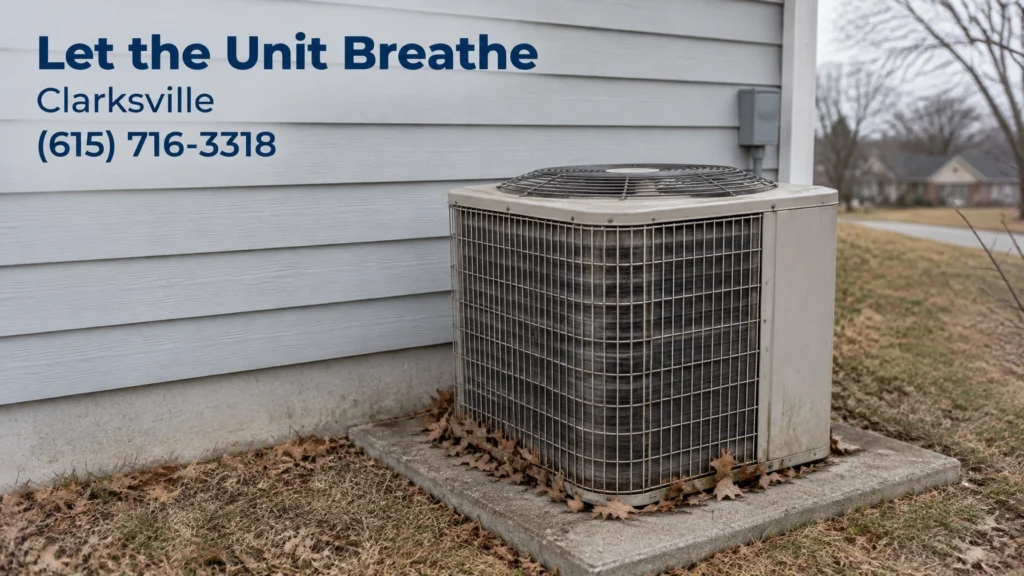
Most outdoor AC units do fine through a Clarksville winter with the top left open and air moving around the sides. A full vinyl wrap from the hardware store can trap moisture, encourage rust or pests, and do more harm than good. The important exception is a heat pump, which must stay uncovered and powered because it runs in winter.
1. First, Find Out What Kind of Unit You Have
Identify the outdoor unit before covering it or shutting off its power. A cooling only air conditioner sits idle in winter. A heat pump keeps running when the thermostat calls for heat, and it needs open airflow to warm your home.
Read the data plate on the outdoor cabinet. Look for wording that identifies a heat pump, along with the make and model. If the label isn’t clear, check the manufacturer’s information for that model or ask an HVAC technician.
You can also observe what happens during a heat call. Set the thermostat to heat and raise the temperature a few degrees above the room temperature. A heat pump’s outdoor unit should run, though its fan may pause briefly during a defrost cycle. A cooling only unit stays idle. For more seasonal context, see these heating season checks for Clarksville homes.
2. Skip the Full Wrap and Let the Top Breathe
Leave the unit uncovered unless its manufacturer or an HVAC technician recommends a specific shield. Outdoor equipment is made to handle ordinary weather, and open air helps moisture dry instead of lingering against the cabinet and coil.
A St. Bethlehem homeowner once wrapped the whole outdoor unit in a tarp for winter, then found standing moisture and a mouse nest inside the wrapper in March. The lesson came the hard way. The unit needed air, not a blanket.
Avoid vinyl or plastic wraps that close off the sides. If branches or falling debris are a real concern, ask an HVAC technician whether a top shield made for that unit is suitable. Keep the sides open, and never cover or wrap a heat pump. It needs airflow to heat the house.
3. Clear the Leaves and Rinse the Fins the Right Way
Remove loose leaves around the unit and keep the coil openings clear. A condenser coil packed with dry cedar elm leaves along the bottom edge of the fins can hold damp debris against the metal and block airflow.

Clear loose debris by hand from the outside only. Don’t reach through the grille or remove panels. If the manufacturer allows rinsing, use a gentle garden hose, not a pressure washer, which can bend the delicate fins. For a cooling only unit, shut it down as directed in the next section before rinsing. Don’t rinse a heat pump while it’s running.
This outdoor check is separate from indoor upkeep. See the guide to winter HVAC filter changes for the filter side of maintenance. In Sango, as elsewhere around Clarksville, a quick leaf check is useful, but a deep coil cleaning belongs with an HVAC technician.
4. Shut the Power Off at the Disconnect, Not Just the Thermostat
Only consider disconnecting power for a confirmed cooling only air conditioner, and follow the unit’s manual. Turning the thermostat off stops a normal cooling call, but may leave power connected at the outdoor unit. Some equipment needs power for a compressor heater, so check the manual first. If it’s unclear, leave power on and ask an HVAC technician.

If the manual says to disconnect power, use this order.
- Confirm the unit is cooling only. Do not disconnect a heat pump.
- Set the thermostat to off.
- Stand on dry ground and check that the disconnect box looks intact.
- Use only the labeled external switch or pull handle. Don’t touch wiring.
- Close the box cover and make a note to restore power as directed before cooling season.
If the box is damaged, wires are visible, or the controls aren’t clear, stop and get a qualified technician. Keep a heat pump powered through winter. That applies in Fort Campbell area homes just as it does elsewhere.
5. Check the Line Set and Seal the Hole in the Wall
Look at the insulated refrigerant lines where they run from the outdoor unit to the wall. A line set where the foam insulation has split open and gone chalky from two summers of sun can leave the copper showing through.

Don’t pull on the lines or handle the copper. Note damaged insulation for an HVAC technician to assess. The small wall opening around the line sleeve should also be checked for a gap. Seal around the sleeve with an appropriate exterior product, without covering the lines or any drainage opening. For related exterior checks, see fall caulking and sealing guidance.
Replacing insulation on the outside of a line is different from fixing the sealed refrigerant circuit. A refrigerant problem is not a handyman repair. It needs a licensed HVAC technician.
6. Look at the Pad, the Grade, and What Falls From Above
Check that the concrete pad feels stable and the unit sits level. Look for pooling water, soil washing away, or a low spot that directs runoff toward the house. Remove leaves around the base, but don’t pile them against the cabinet.
Look up, too. A branch overhanging the unit or ice dropping from a roof edge can be a bigger concern than ordinary cold weather. Don’t store items beside the unit or build a barrier that blocks airflow. If water runs toward the house, these grading and drainage checks may help you spot the next step. Check the pad and nearby grade in Woodlawn or anywhere in Montgomery County.
Fix It Quick Network is a referral network that matches homeowners with vetted local pros. The network does not do the repairs itself. The pros in our network are licensed and insured. A refrigerant problem or bad compressor is a job for a licensed HVAC technician, and we will point you to the right specialist.
If you’d like help with a seasonal repair, call or text (615) 716-3318, or request a free match. We’ll match you with a vetted local pro, free. Note whether the unit is a heat pump or cooling only, then get it looked at before the first hard freeze if something seems off.
Common Questions About Winter AC Care
Should an outdoor AC unit be covered for winter?
Usually, no. Leave the top and sides open unless the manufacturer or an HVAC technician recommends a specific shield. Avoid full vinyl wraps that can trap moisture.
Can a heat pump be covered in winter?
No. A heat pump runs in winter and needs airflow across its outdoor coil to heat the home. Keep it uncovered and powered.
How can a homeowner tell whether the unit is a heat pump?
Check the data plate and model information, then observe the unit during a thermostat call for heat. If those clues don’t make the type clear, ask an HVAC technician before covering or disconnecting it.
Is frost on a heat pump a reason to cover it?
Not by itself. A heat pump can frost during cold weather and may pause its fan during defrost. Keep the unit clear and ask an HVAC technician about heavy or persistent ice.
What should be done if the copper line is visible?
Avoid touching the copper or trying to repair the refrigerant lines. Have an HVAC technician check the split insulation and confirm whether it needs replacement.