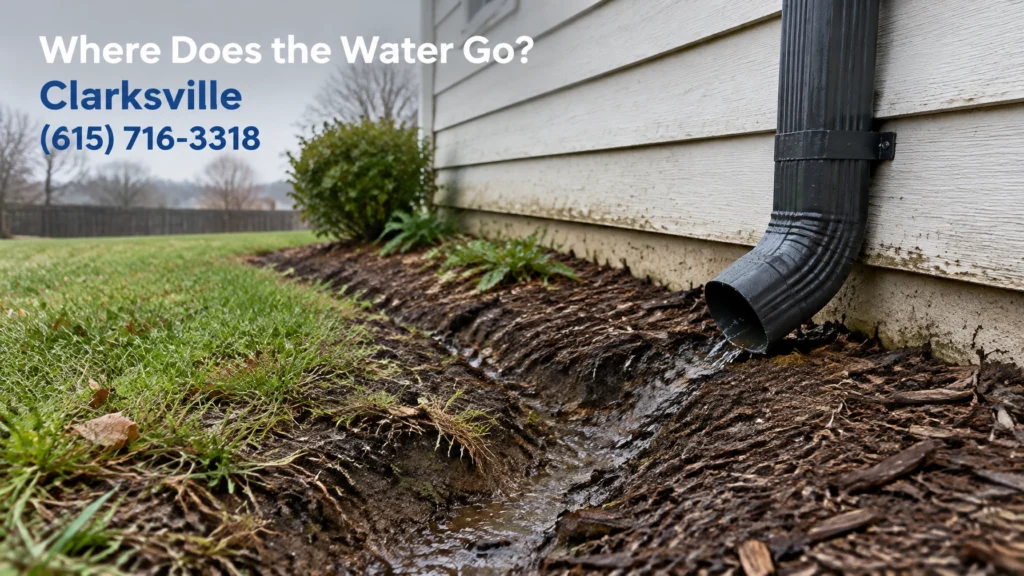
A downspout can look fine while water keeps landing too close to the house. This guide covers how to choose and place a downspout extension in Clarksville TN, or use a splash block when the yard already drains well. Start by watching where the water goes.
1. Figure out where the water is going
Follow the water before buying parts. After a steady rain, look for soil washed into a shallow trench, mulch floating away from the outlet, or mud spatter on the siding. A sour, damp smell near the foundation is another reason to notice where the water collects.
In Woodlawn, a homeowner kept raking mulch back into a trench every month. The downspout was dumping straight beside the porch footing, so the mulch kept washing away.
Check whether the ground slopes away from the house or dips near the discharge point. A chalky dirt line on the foundation after hard rain can show where runoff is splashing, but it doesn’t prove a foundation problem by itself. Note which downspout was running and take a photo.
If the gutter itself is loose or pulling away, check how to spot a gutter that pulls away from a Clarksville home. A sound gutter and a clear outlet are the starting point.
2. Decide between an extension and a splash block
A splash block slows and redirects water right at the downspout base. It can be enough when the ground already slopes away and water doesn’t pool near the house. It won’t carry water very far, so it’s not a fix for a flat patch, a low spot, or a soggy strip beside the foundation.
An extension carries discharge farther, often about 4 to 10 feet, depending on the yard and the route. Choose a length that sends water where it can soak in without running back toward the home, a walkway, or a neighbor’s property. In Montgomery County, check the slope and where water will go instead of relying on distance alone.
Homes in Sango with a crawlspace may have different drainage needs than a house with a basement. If water needs to travel through a buried drain line, that’s a specialist job. The Network can point you to the right specialist rather than treat buried drainage as a simple snap on extension.

3. Pick hardware that fits the outlet
Match the attachment to the downspout size and shape. Snap on vinyl extensions are simple to fit and can be moved for mowing. Flexible roll out styles can stretch during rain and retract afterward, while rigid pipe holds its shape and tends to stay put.
Plastic splash blocks are light and easy to reposition. Concrete blocks are heavier and less likely to shift, though they still need firm ground. Some blocks have knockouts or connection openings for extensions, so check the model before choosing one.
Measure the outlet and the route before shopping. Extension length, hardware type, and whether the outlet needs replacing affect the cost. Ask for a written estimate if you’d rather a pro handle the choice and fit.
Clarksville winters bring freezing nights after rain. Keep the outlet and extension clear so water doesn’t sit and freeze into a slick patch. This gutter and downspout winter prep guide covers seasonal checks.
4. Install or swap the extension
A basic snap on extension can be a manageable DIY task if the outlet is reachable and the ground is stable. Clear leaves and grit from the downspout outlet first. Measure the route, then check that the extension points away from the house and ends where water can drain safely.
- Fit the extension over the outlet as directed by its maker.
- Check that it sits securely and slopes gently away from the wall.
- Use a landscape pin if the extension shifts or lifts.
Don’t force a connector that doesn’t match the downspout. A loose fit can send water onto the siding or straight back toward the foundation. If the outlet is crushed, badly rusted, or awkwardly positioned, have it checked before attaching new hardware.
Watch the area during the next rain. Water should run through the extension, not leak at the connection or collect underneath it. In St. Bethlehem, a small slope change makes the difference between water draining toward the lawn and gathering beside the house.

5. Place the splash block right
Set the block under the downspout outlet, or at the end of an extension if the block is meant to catch water there. Point its channel downhill and away from the house. If it has a raised lip at one end, place that end under the outlet so the water lands in the channel.
Set it on firm, fairly even soil so it doesn’t rock or sink after rain. A lightweight plastic block may need a pin or packed soil to keep it from shifting. Check for knockouts before connecting an extension, since openings vary by model.
The block won’t correct a yard that slopes toward the foundation or solve persistent pooling by itself. After a hard rain, look for water jumping over the sides, soil washing out around the block, or the block settling out of position. Adjust it only when the ground is safe to work on.
Near Fort Campbell, a splash block that shifts onto a path can leave a wet, slippery spot. Aim it toward a permeable part of the yard, not across a walkway or driveway.

6. Know when to get matched with a pro
Get matched with a pro if water still pools beside the house after you extend the discharge. Soft soil along the foundation line, a damp basement, or a musty crawlspace smell that returns after rain deserves a closer look. Those signs can have more than one cause, and a short extension may not be enough.
A pro can check the outlet, the slope, and the drainage route, then explain what work makes sense. The pros in our network are licensed and insured. If the issue points to buried drainage or a larger water problem, the Network can point you to the right specialist.
For more on moisture checks, see this guide to fall crawlspace moisture in Clarksville homes and rentals. Fix It Quick Network is a referral network, not a repair crew.
If you’d like help, call or text (615) 716-3318, or request a free match. We can match you with a vetted local pro. Walk the downspouts after the next rain and watch where the water goes.
Frequently Asked Questions
How far should a downspout extension reach?
A common range is 4 to 10 feet, but reach depends on the slope, where water can soak in, and whether it might flow toward a walkway or another home.
Can a splash block replace an extension?
Sometimes. A splash block works where the ground slopes away and water doesn’t pool. It only redirects water a short distance.
How do I know if the extension fits?
Measure the downspout outlet and compare it with the connector size listed by the manufacturer. Don’t force a mismatched part into place.
Should I bury a downspout extension?
Buried drainage needs a suitable route and outlet. If the water must travel through a buried line, get matched with a specialist rather than treating it like a basic extension.
What should I check after installing one?
Watch the discharge during rain. Look for leaks at the connection, shifting hardware, water flowing back toward the foundation, or pooling at the end.