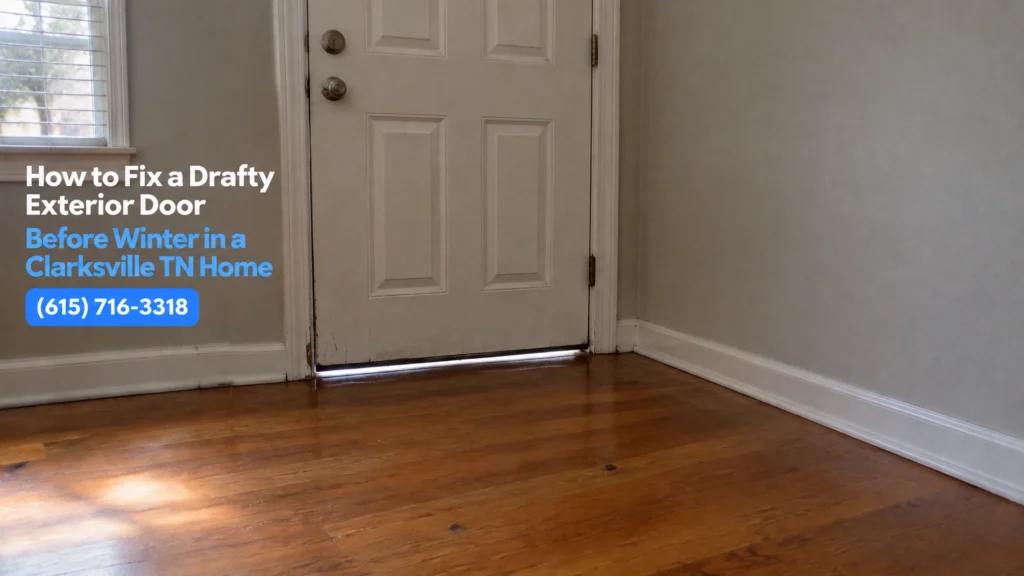
A cold spot near the entry can make a whole room feel chilly. Before blaming a window or turning up the heat, check the exterior door. A small gap at the latch side or a flattened sweep at the bottom can let in a surprising amount of cold air.
In Clarksville, fall is a good time to check the door before colder nights settle in. You don’t have to replace the whole door just because you feel a draft. Start by finding exactly where air is getting through.
1. Find where the draft is coming from
Check the door all the way around. Look for a thin line of daylight at the latch side, gaps at the top corners where the jamb meets the head, split weatherstripping, or a sweep that no longer touches the threshold. A door that wobbles in the jamb when you push it can also point to loose hinges or a poor fit.
Try the dollar bill test with the door closed. Place a bill between the door and the seal, then pull gently. Repeat every foot or so around the sides and top. Firm, fairly even resistance suggests the seal is making contact. If the bill slides out easily in one spot, you’ve found a place to inspect more closely.
For a nighttime check, have someone shine a flashlight along the door edges while you look from the other side. A sliver of light can reveal a gap that’s hard to see during the day. The U.S. Department of Energy also recommends checking the fit and repairing loose hardware before adding weatherstripping. Read its exterior door weatherstripping guide.
2. Read the clues before buying a seal
A cold draft at floor level can feel like it’s coming from a nearby window. Check the door first, especially if the cold spot is strongest near the entry. In Clarksville homes, the two common trouble spots are a hairline gap along the latch side and a flattened sweep near a bottom corner.
A Sango homeowner kept noticing the living room felt cold by the entry, even though the window nearby checked out fine. A closer look found a thin daylight line at the latch side and a tired sweep below the door. Those are two different gaps, so they may need two different fixes.
Also watch how the door closes. If it rubs the frame, won’t latch without a shove, or has a wide gap at one corner, the issue may be alignment rather than worn sealing material. Adding thicker weatherstripping can make a poorly fitted door harder to close without fixing the cause.

3. Choose the right type of weatherstripping
Match the repair to the gap. Foam tape is easy to apply to a clean, dry surface and can suit small, even gaps. It’s a straightforward choice for some older doors, but too much thickness can keep the door from latching.
Check the jamb for a narrow groove called a kerf. If the old seal fits into that groove, replacement kerf weatherstripping is usually the right match. Pull out a small section to confirm the style before buying. Don’t force foam tape or another surface-mounted strip into the groove.
The bottom needs its own seal. A door sweep mounts to the inside face of the door, with its flexible edge just touching the threshold when the door is closed. If the gap under the door is small and the threshold has an adjustable riser, raising it a little may be the simplest fix. A sweep that drags hard or bends against the threshold is set too tight.
4. Make a small repair and test the fit
If the door closes smoothly and the gap is minor, a careful DIY repair may be enough. Remove worn adhesive or loose pieces, then clean and dry the surface before applying new foam tape. Measure the gap first and choose a thickness that seals without making the latch difficult to use.
For a kerf seal, measure the jamb and head, remove the old material, and press the replacement into the existing groove. For a sweep, follow its instructions and install it on the inside face of the door. Set the flexible edge for light, even contact across the threshold.
Make small adjustments, then close and latch the door. It should seal without dragging, sticking, or needing a hard push. Repeat the dollar bill test and check both lower corners. If you’re also doing fall sealing around the house, review these fall caulking and sealing checks for Clarksville homes and rentals.

5. Know when the door needs more than a new seal
Fix the fit before adding more material. Tighten loose hinge screws and check whether the latch lines up with the strike plate. If the door has rubbed and won’t latch, the hinges, strike plate, or jamb may need adjustment. Thick foam won’t correct a door that’s out of alignment.
A threshold that sits too low may need a careful adjustment or repair. A gap at the top corner, a visibly crooked door, or a draft that remains after new seals can point to a worn jamb or a door that needs a closer look. Don’t keep stacking weatherstripping to cover a larger fit problem.
Costs depend on the type of seal, the door’s condition, and whether hardware or threshold work is needed. Basic materials may cost a few dollars to several dozen dollars. A straightforward pro visit for new seals or minor adjustment may run from around $100 into the low hundreds, while damaged framing or a door that needs substantial repair can cost more. The actual scope and local labor rates make a difference.
For related seasonal checks, see fall freeze prep for Clarksville rental properties, how to fix a leaking outdoor faucet before winter, and fall entryway and mudroom repairs. These checks can help homeowners and property managers in Montgomery County, St. Bethlehem, Fort Campbell, and Woodlawn plan related upkeep.
If you’d rather have a vetted local pro check the door, Fix It Quick Network can match you for free. Call or text (615) 716-3318, or request a free match. Share where you feel the draft and whether the door latches easily. That’s a practical place to start.
6. FAQs about drafty exterior doors
Can a draft under the door feel like a window leak?
Yes. Cold air at the floor can move through the room and make a nearby window area feel chilly. Check the bottom sweep and both lower corners before assuming the window is the source.
How can I tell if weatherstripping needs replacement?
Look for splits, missing sections, flattened material, or spots where the door no longer presses against the seal. The dollar bill test can help you locate weak contact.
Should I use foam tape or kerf weatherstripping?
Use foam tape for a suitable surface-mounted repair on a clean jamb. If the jamb has a groove holding the old seal, look for a replacement kerf style that fits that groove.
What if the door rubs or won’t latch after adding a seal?
Remove or reduce the added thickness and check the hinges, strike plate, and door alignment. A rubbing door may have a fit problem that needs attention before adding more seal.
What if the draft remains after replacing the seals?
The jamb or door itself may be worn, warped, or out of alignment. A pro can check the full fit and identify whether the next step is an adjustment, repair, or a referral to the right specialist.