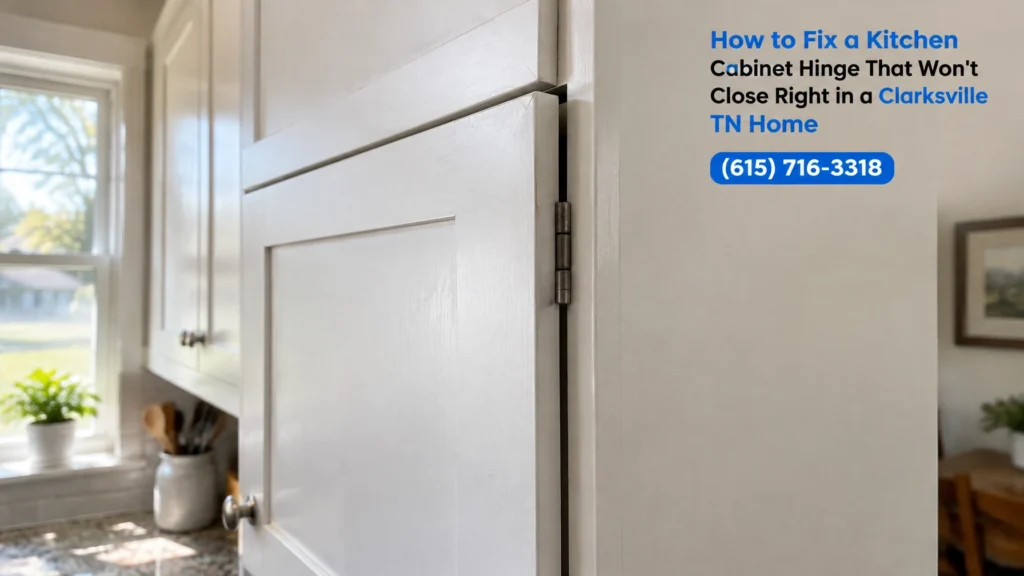
A cabinet door that hangs crooked gets on your nerves every single morning. The good news is, a door that won’t close right often needs an adjustment, not a new cabinet. Start with what you can see, then decide whether a small fix feels manageable.
1. Check Whether the Door Is Out of Adjustment
Look at the gap before you touch a screw. If the cabinet door sits proud at the top corner and there’s a gap you could slip a coin into, the hinges may simply be out of line. A door that rubs its neighbor or hangs a little low can also point to loose screws or a small adjustment.
Open and close it slowly. Check whether the hinge arms are bent, a screw is missing, or the door catches on the cabinet frame. Look for signs of swelling near the sink or range, too. A swollen or warped door won’t always respond to hinge adjustments.
In Clarksville and across Montgomery County, kitchen cabinets see daily use, steam, and seasonal changes in indoor air. That can loosen hardware over time. Start by checking the hinge and its screws, not by assuming the whole cabinet is broken.
If the door is intact and the hinge looks straight, try the simple checks first. You don’t need to take the door off just to find out whether a screw is loose.
2. Tighten Loose Screws and Repair a Stripped Hole
Support the door as you check its screws. Use a hand screwdriver and gently tighten any loose screw on the door or cabinet side. Stop as soon as it feels snug. Forcing it can strip the hole.
A hinge screw that spins without tightening may have a stripped hole in the particleboard. For a small, localized hole, remove the screw and hinge, then pack the hole with wood glue coated toothpicks. Break them flush, let the glue cure fully, and reinstall the screw. This can give the threads fresh material to grip, but it may not hold well if the particleboard is crumbled or swollen.
A slightly longer screw may work if it can safely reach solid wood in a face frame. Check the screw length first so it won’t poke through the frame or damage something behind it. Don’t keep driving a screw into a hole that won’t hold.

For a damaged hinge area, a repair plate or a more solid wood repair may be needed. The simple takeaway is to stop when the board gives way, rather than making the hole worse.
3. Adjust a European Style Hinge in Small Steps
Make small changes, then test the door. Many newer cabinets use a concealed European style hinge with screws that shift the door in different directions. The exact layout varies, so look at how your hinge is built before turning anything.
Usually, one adjustment moves the door side to side to even out the gap. Another changes how far the door sits in or out, which can help when it sits proud. Height adjustment is often made at the mounting plate, where loosening the plate screws slightly lets you lift or lower the door.
Try just a small turn, then close the door and check the reveal. If both hinges need adjustment, make similar changes at the top and bottom so the door stays level. Keep a hand under the door if you loosen mounting screws.
A door that hangs low may need a slight height adjustment. A top corner sticking out may need a depth adjustment instead. Don’t force the screws past their natural stop. Small, even changes are usually easier to judge than big turns.
4. Replace a Worn Hinge With the Right Match
Replace the hinge if it’s bent, cracked, badly rusted, or no longer holds its position after tightening and adjustment. A hinge that swings freely but won’t keep the door aligned may be worn. Check whether the hinge arm or closing spring looks damaged.
Match the replacement to the old hinge. Cabinet doors may be overlay style, where the door covers part of the cabinet side, or inset style, where the door sits inside the opening. Hinge cup size, opening angle, mounting plate, and screw pattern can matter too. A hinge that looks similar may still place the door too far in or out.
Take a clear photo of the hinge and its mounting plate before removing anything. If you can, compare the new hinge against the old one before installation. Don’t discard the old hardware until the door closes properly with the replacement.

In Sango, Woodlawn, or near Fort Campbell, matching a hinge matters just as much as it does anywhere else. Older homes in Montgomery County often carry hinges nobody stocks anymore, so a photo saves a wasted trip. If you can’t identify the hinge type, pause before buying a set. A correct match makes the adjustment much simpler.
5. Consider Humidity and Kitchen Steam
Seasonal indoor air can change how a cabinet door fits. Wood and wood-based cabinet materials respond to moisture, and a door may shift slightly as indoor conditions change. If several doors start rubbing around the same time, look beyond one hinge.
Clarksville kitchens can get steamy during regular cooking, especially when the exhaust fan isn’t used. Grease and moisture can also collect around hardware over time. Use the range hood when cooking creates visible steam, and check that it vents as intended. Our fall indoor humidity checks cover seasonal changes around the house, including kitchen exhaust use. Our fall kitchen exhaust and range hood checks are worth a look if steam is part of the problem.
A St. Bethlehem homeowner told us her corner cabinet door drifted open every night, just enough to catch the light from the hallway. The hinge screws had worked loose in the older particleboard doors, and one had started to spin without gripping. Tightening the screws and freshening the holes solved it, and the cabinet never needed replacing.
Give the kitchen time to return to normal conditions before making repeated adjustments. If the door shifts again, note whether other doors are moving too. That can help separate a loose hinge from a broader moisture issue.
6. Know When to Get Matched With a Pro
A single loose hinge is often a reasonable DIY fix. Get matched with a pro if several doors are sagging, hinge plates are torn out of the cabinet frame, or the particleboard is soft and breaking apart. Those signs may need a repair plate, a more involved rebuild, or a different approach.
Full cabinet refacing or replacement is a bigger specialty job. Fix It Quick Network is a referral network, not a repair crew. We can point you to the right specialist when the work goes beyond a hinge adjustment. The pros in our network are licensed and insured.
Cost depends on how many hinges need attention, whether the holes are damaged, and whether replacement hardware is easy to match. A simple adjustment or one hinge replacement may fall in a broad range of about $75 to $200, while multiple doors or damaged cabinet material can cost more.
If you’d like a vetted local pro to handle it, call or text (615) 716-3318 or request a free match. Share a photo of the hinge and say whether one door or several are affected. That’s a practical place to start.
Frequently asked questions
Why does the door sit proud at the corner
The hinge depth may be out of adjustment, or a screw may be loose. If the door is swollen or warped, hinge adjustments may not be enough.
Can a stripped hinge hole really be fixed without replacing the door
Sometimes. A small hole may hold after a toothpick and wood glue repair, but crumbling particleboard may need a repair plate or a stronger fix.
How do I know if the hinge is worn out
Look for a bent or cracked hinge, a damaged closing spring, or a hinge that won’t hold its position after tightening and adjustment.
Will humidity keep knocking the door out of adjustment
It can contribute to movement, especially if the kitchen gets steamy or indoor conditions change. Check the exhaust fan and watch whether several doors shift together.
Can any hinge be swapped for another
No. Overlay or inset style, cup size, opening angle, and mounting plate all affect fit. Match the replacement to the existing hinge.
How much does a handyman charge to adjust or replace cabinet hinges
A simple adjustment or one hinge replacement may fall in a broad range of about $75 to $200. The number of doors, damaged screw holes, hardware match, and access can change the cost.