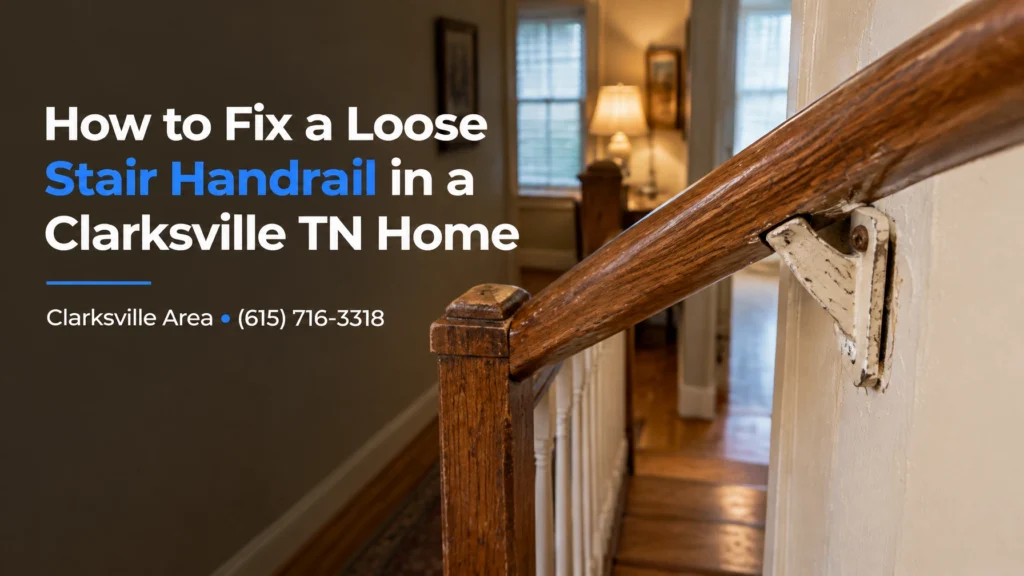
A loose stair handrail can start as a small rattle. Then one day, someone leans on it and feels the rail shift toward the wall.
That is not something to ignore. A handrail is there to help you catch yourself, especially when carrying laundry, helping a child, or walking down the stairs at night. The good news is that some loose handrails only need a simple adjustment. Others need stronger anchoring or carpentry repair.
This guide covers the honest DIY path first. If the rail still moves, Fix It Quick Network can match you with a vetted local pro for free in Clarksville and Montgomery County.
1. Find where the handrail is loose
Start by checking the rail without putting your full body weight on it. Hold it at several points and gently move it up, down, and side to side.
Pay attention to what moves.
- If the wall bracket shifts, the fasteners may be loose or the bracket may not be anchored into solid wood.
- If the bracket stays firm but the rail moves, the connection between the rail and bracket may be loose.
- If the newel post moves, the issue may involve the post base, stair framing, or the rail connection.
- If the wall flexes around the bracket, the drywall or plaster may be damaged.
Look closely at the wall around each bracket. A hairline crack in the paint, a narrow gap behind the mounting plate, or scuffed paint can show where the movement is happening.
Do not keep using the rail normally while you diagnose it. Use the opposite side of the stairs if there is another safe option. If there is no stable handhold, treat the stairs as a safety concern until the rail is checked.

2. Try the simple tightening fix
A loose stair handrail may only have loose screws. Check the visible screws at the wall bracket and the screws underneath the rail.
Tighten each one until it feels snug. Do not force it. Overtightening can strip the screw head, crush older wood, or pull the bracket farther from the wall.
Some brackets have a small set screw underneath the rail. That screw holds the rail in the bracket saddle. If it has loosened, the rail may rattle even though the wall plate feels solid.
After tightening, test the rail again with firm hand pressure. Check every bracket, not just the one that made noise. Movement at one point can place extra stress on the other connections.
If a screw spins without tightening, stop there. The hole may be stripped. A longer screw is not always the answer, especially if you do not know what is behind the wall.
In an older Clarksville home, the wood behind the bracket may be sound, soft, or missing altogether. That difference matters more than the appearance of the screw.
3. Repair stripped holes and weak wood carefully
A stripped hole in the oak handrail can sometimes be repaired by removing the screw, packing the hole with glued wood slivers, and allowing the repair to cure before drilling a small pilot hole.
That approach may work for a rail to bracket connection in solid wood. It does not solve a bracket that is fastened only into drywall.
Check the material behind the wall before choosing a fastener. A bracket needs to connect to a wall stud or solid blocking if it is expected to support someone leaning on the rail. Drywall anchors may not be suitable for this use, depending on the rail design and local requirements.
A stud finder can help locate framing, but older walls can be tricky. Plaster, trim, wiring, and irregular framing can make the reading less clear. Never drill deeper or move a bracket without considering hidden wiring and plumbing.
If a stud is close to the existing bracket, the bracket may be repositioned slightly. If no framing lines up with the bracket, the wall may need to be opened so blocking can be added. That moves the repair beyond a quick tightening job.

4. Check the rail, brackets, and newel post together
Do not look at the loose bracket in isolation. The full stair system needs to work together.
Check the rail for splits, soft spots, or a loose joint near the newel post. Look at the bracket plates for bent metal, pulled screw holes, or a gap where the plate should meet the wall. Check the newel post at the floor and at the rail connection.
A rail with a cracked end or damaged joint may need carpentry repair instead of new screws. The same is true if the post rocks when pressure is applied near its base.
A homeowner in Sango recently described a rail that rattled near the top landing. The wall bracket had scuffed paint around its edge, while the rail joint near the newel post had a narrow split in the old finish. Those details suggested that more than one connection needed to be checked before anyone simply tightened a screw.
This kind of inspection is useful for homeowners, landlords, and realtors. A loose stair handrail can show up during a home inspection and may distract buyers from the rest of the property.
For a broader pre sale walk through, see the pre listing repair checklist for Clarksville home sellers.
5. Know when DIY stops making sense
Simple tightening is reasonable when the screws are accessible, the wood is solid, and the rail becomes firm after the adjustment.
Get matched with a pro if you find any of these conditions.
- The bracket is attached only to drywall or loose plaster.
- The wall has a wide crack, soft area, or visible water damage.
- The rail, newel post, or stair framing is split.
- Several brackets move at the same time.
- The rail still shifts after tightening.
- The stair layout needs a new bracket or additional blocking.
- You feel unsure about drilling into the wall.
Costs for handrail repair in Clarksville TN depend on the number of brackets, wall access, fasteners, wood damage, and whether the rail needs to be removed and reset. A small adjustment may be a modest service call. Rebuilding damaged wood or opening a wall for blocking will take more time and materials.
The same thinking applies to other common home repairs in Clarksville. A sticky door may only need a hinge adjustment, while a shifting frame needs carpentry work. A loose handrail may only need a screw tightened, or it may need proper structural support.
You can read more about a sticky door repair in a Clarksville home if you are working through a larger punch list.
6. Get the repair checked before regular use
Once the repair is complete, test the rail at every bracket and connection. Push down, pull toward you, and move it side to side with firm pressure.
The rail should feel solid. It should not click, shift, pull away from the wall, or make the bracket plate move. Look again for fresh cracks in the paint or a gap that opens when pressure is applied.
Do not cover a loose connection with caulk or fresh paint. That can hide the movement without fixing the support. Paint is a finish, not a fastener.
If the stairs are part of a rental near Fort Campbell, add the inspection to the property maintenance record. A property manager in St. Bethlehem or Woodlawn can also include handrails in regular turnover checks. A few minutes of attention may catch a problem before a tenant, buyer, or inspector does.
While building a home safety list, it also helps to know where the main water shutoff is. The main water shutoff guide for Clarksville homes covers that separate but useful repair preparation step.
Fix It Quick Network is a referral network, not a repair crew. We can match you with a vetted local pro who handles carpentry repair Clarksville TN homeowners and property managers can feel good about. The pros in the network are licensed and insured, and the match is free for homeowners.
If you would like help, call or text (615) 716-3318 or request a free match through Fix It Quick Network. Share a photo if you can, explain which part moves, and mention whether the home is in Clarksville, Sango, St. Bethlehem, Fort Campbell, Woodlawn, or elsewhere in Montgomery County. That is the practical next step.
7. FAQs about loose stair handrails
Can I fix a loose handrail by tightening the screws?
Sometimes. Tightening may solve the problem if the screws are still biting into solid wood and the bracket is in good condition. If a screw spins or the bracket pulls away from the wall, tightening alone is not enough.
Should a stair handrail be attached to drywall?
A stair handrail needs dependable support. In many setups, that means fastening into a wall stud or solid blocking rather than relying only on drywall. The right repair depends on the wall, bracket, rail, and local requirements.
How do I know if the newel post is part of the problem?
Hold the rail near the post and apply gentle pressure. Then look at the post base and the rail joint. If the post rocks, the joint opens, or the wood is split, the repair may need more than a bracket adjustment.
Is a loose stair handrail a home inspection issue?
It can be. A wobbly rail is a visible stair safety concern, especially if the bracket is loose or the rail cannot support normal use. Realtors and property managers should check handrails before inspections, showings, and tenant turnover.
Can Fix It Quick Network repair the handrail directly?
No. Fix It Quick Network connects homeowners with vetted local pros. The Network does not perform the repair or set the price, but the match is free for homeowners in Clarksville and nearby Montgomery County communities.