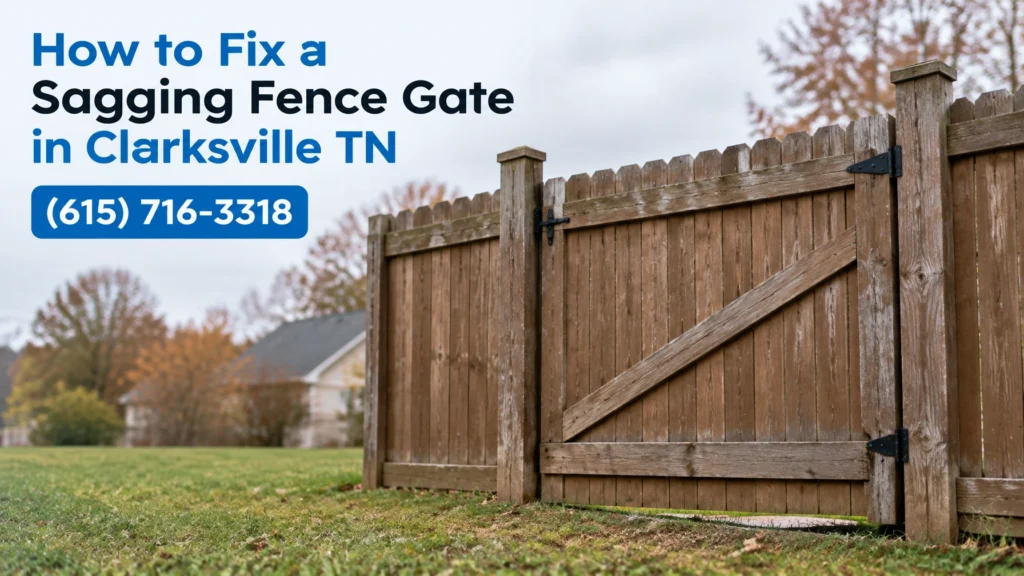
A sagging gate usually starts small. The latch misses. The bottom drags. You lift the gate with your foot just to get it closed.
The fix depends on what moved. The hinge side, gate frame, post, wood, and latch can all cause the same problem. Before tightening random screws, find the part that actually failed.
This guide walks through common causes of a sagging gate in Clarksville and Montgomery County. You may be able to handle a simple adjustment yourself. If the post is rotten or moving, it may be time to get matched with a vetted local pro.
1. Find out which side is causing the sag
Start with the hinge side and the post side. A gate that hangs low at the latch may have worn hinges, a loose hinge post, a twisted frame, or swollen wood after fall rain.
Open and close the gate slowly. Notice where it drags and where the gap changes.
Check these areas first.
- Look for loose screws or hinge plates pulling away from the wood.
- Push gently on the hinge post near ground level.
- Check whether the latch post leans toward or away from the opening.
- Look along the gate rails for a dropped corner or loose joint.
- Watch for a narrow spot where the gate rubs the post.
- Check whether the latch catch lines up with the latch bolt.
A simple test helps. If the gate drags a half inch on the latch side but the hinge post stays firm, the gate frame or hinges may be the issue. If the post base moves when you push on it, tightening the hinges will only be a short term fix.
Homes in Sango and St. Bethlehem can have different soil, drainage, and weather exposure, but the inspection is the same. Find the movement before deciding what to replace.
2. Inspect the hinges and gate frame
Worn hinges are a common cause of gate trouble. A heavy wooden gate puts constant weight on the upper hinge, especially when the frame lacks a strong diagonal brace.
Look for rust, bent plates, loose fasteners, and screw holes that no longer hold. If a screw spins without tightening, the wood may be stripped or soft. Longer exterior screws may help if the surrounding wood is still solid.
The gate frame matters too. A diagonal brace should generally run from the top hinge side down toward the bottom latch side. That brace carries weight and helps keep the latch corner from dropping.
If the frame is out of square, measure the two diagonals from corner to corner. If the measurements differ noticeably, the gate has shifted. A brace, corner hardware, or a replacement frame may be needed.

A simple hinge adjustment may be reasonable for a capable homeowner. Support the gate before removing hinge screws. A heavy gate can drop suddenly.
For a broader look at common gate and post problems, see the fence post and gate repairs guide for Clarksville homes.
3. Check for a heaved or rotten fence post
The post carries the gate’s weight. If it has heaved, leaned, or rotted at the base, the gate may not stay aligned until the post is repaired.
Look closely where the post meets soil, mulch, or concrete. Dark staining, soft fibers, peeling finish, and a musty smell can point to water damage. Push the post gently near the base. Movement is a warning sign.
A post can also shift after wet weather and soil movement. The opening may change enough for the latch to miss, even if the hinges still look fine.
If the wood is soft below the surface, more screws will not solve it. The post may need to be reset or replaced while the gate is supported. Posts tied into a larger leaning fence line may need more extensive fence post repair in Clarksville TN.

A homeowner near Fort Campbell noticed the gate scraping after several rainy days. The latch looked loose, but the real issue was a hinge post that moved at the base when tested.
Wood rot can affect more than a gate post. The fall wood rot repair guide covers other exterior areas that may show the same dark staining and soft spots.
4. Account for swollen fall wood and latch alignment
Fall rain can make a wooden gate swell. That can close up the normal gap between the gate, post, and ground. It can feel like the gate suddenly sagged, even if the frame has not moved much.
Look for scraped paint, fresh rub marks, or a tight area along the bottom rail and latch edge. Do not remove a large amount of wood right away. The gate may shrink again after a drier stretch.
If the gate is otherwise sound, a small amount of careful trimming may restore clearance. Seal any freshly exposed wood with a suitable exterior finish. Avoid creating a large gap that lets pets out or leaves the gate unstable.
Fix the latch last. Hold the gate in its normal closed position and see where the latch meets the catch. If the gate is still sagging, moving the latch first may hide the real problem.

Once the gate is level and supported, reposition the catch so the latch engages without lifting, forcing, or slamming. A good latch should close smoothly and hold without extra pressure.
5. Decide what you can fix yourself
A simple hardware adjustment may be a fair DIY repair. You may be able to tighten sound hinge screws, replace a worn latch, or add exterior fasteners to a solid gate frame.
Stop and get matched with a pro if you find any of these conditions.
- The hinge post moves at the base.
- Wood crumbles when pressed with a screwdriver.
- The gate is too heavy to support safely.
- The fence line leans along with the gate.
- The gate frame has broken or separated joints.
- The post footing is cracked or shifting.
- The gate blocks a pool, pet area, or other safety boundary.
The cost depends on the cause. A basic hinge or latch adjustment may fall in the low hundreds. Replacing one damaged post may run from several hundred dollars upward, depending on concrete removal, post depth, access, and whether nearby fence sections need support. A custom gate rebuild or multiple post repair can cost more.
Those are planning ranges, not firm quotes. A pro needs to see the gate and surrounding fence before giving a clear estimate.
Clarksville homeowners may only need a hinge correction. A property manager in Montgomery County may need several gates checked during a turnover. The right repair should match the condition, not just the symptom.
6. Get a clear next step for the repair
You do not need to rebuild the entire fence because one gate drags. Start with the hinge side, post base, gate frame, swollen wood, and latch. Take a few photos with the gate open and closed, then note where it rubs.
The Fix It Quick Network is a referral network, not a repair crew. We can match homeowners, realtors, property managers, and investors with vetted local pros for common home repairs in Clarksville. The pros in the network are licensed and insured.
If the problem involves major structural damage or another specialty concern, the network can point you toward the right specialist instead of treating it like a simple handyman repair. For related exterior maintenance, the fall deck and porch prep guide for Clarksville homes covers soft wood, post bases, rails, and water concerns.
If you would like help, call or text (615) 716-3318, or request a free match at /contact/. Share the gate location, what it is dragging on, and whether the post moves. That gives the matched pro a useful place to start.
7. Frequently asked questions about sagging fence gates
Why does a fence gate sag on the latch side?
The usual causes are worn hinges, a loose or rotten hinge post, an out of square frame, or a missing brace. Swollen wood and a shifted latch can make the problem feel worse.
Should I adjust the latch first?
No. Check and correct the hinges, post, and gate frame first. Adjust the latch after the gate sits at the right height and swings without dragging.
Can I fix a sagging gate with longer screws?
Longer screws may help if the wood is solid and the hinge is only loose. They will not hold well in rotten wood, stripped framing, or a post that moves at the base.
How do I know if the fence post needs replacement?
Look for soft or crumbling wood, dark rot near the soil line, leaning, and movement when you push on the post. A post with serious base damage usually needs more than a hinge adjustment.
Can rain make a gate drag?
Yes. Wooden gates can swell after repeated fall rain, especially along the bottom edge and latch side. Check for rub marks and tight clearances, then avoid over-trimming before the wood has had time to dry.
Does Fix It Quick perform the repair?
Fix It Quick is a referral network. We match customers with vetted local pros for suitable fence, gate, and home repair needs. Major structural or specialty work can be directed to the appropriate specialist.