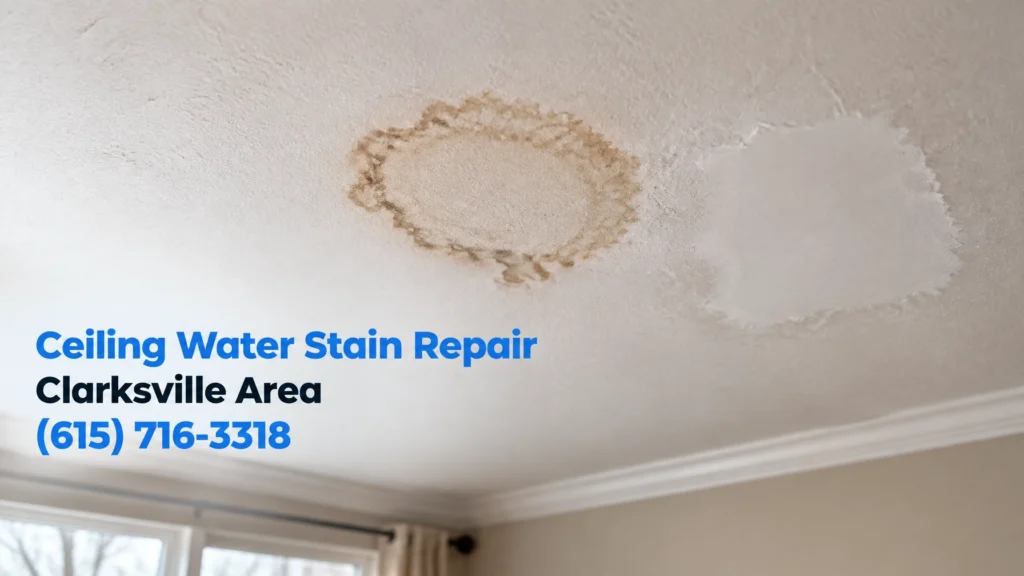
A brown ring on the ceiling is hard to ignore. You may wonder if it is old, active, or a sign of bigger damage above the drywall.
Here's the deal. Paint is not the first fix. Find the water source, make sure the ceiling is dry, then repair and seal the stain.
1. Find the leak before touching the stain
Start above the stain if you can do so safely. A ceiling mark may come from a roof leak, a bathroom supply line, a drain connection, or an HVAC condensate issue. Water can travel along framing, so the stain may not sit right below the source.
Check the attic or upper floor for damp insulation, dark wood, or a fresh water line. If the stain is below a bathroom, look around the tub, toilet, or supply lines. If it is near an air handler, the issue may need the right HVAC specialist.
Water near a light fixture needs extra care. Turn off the circuit at the breaker before inspecting, and do not touch a wet fixture. A roof leak, structural concern, or active plumbing problem should go to the right specialist, not get covered with paint.
Homeowners in Clarksville and Montgomery County often see ceiling stains after a hard storm or an upstairs plumbing issue. Fix the source first, or the stain will usually come back.
2. Check whether the ceiling is safe to repair
Look closely at the stained area after the water source has been fixed. A dried brown ring with a darker outer edge may only need cleaning, stain blocking, and paint. Peeling paint, bubbling drywall, a soft spot, or a sagging section points to a deeper repair.
Press very lightly around the stain with a clean fingertip. The surface should feel firm and dry. Do not press hard on a bulging ceiling. A sagging section can release water with little warning.
One Clarksville homeowner in Sango noticed a small ring over the hallway and assumed it was old. A week later, the paint had bubbled around the edge after another storm, which showed the leak had not really stopped.
Give the area time to dry fully. Open windows when weather allows and use normal ventilation. Do not close up damp insulation or paint over moist drywall. If the ceiling stays soft, musty, or wet, the damaged section may need to be removed and replaced.

3. Know the signs of damaged drywall
A popped nail head with a hairline crack in the ceiling finish can be a small repair, but it still matters after a leak. Water can loosen drywall fasteners and weaken the paper layer around them.
Look for these details around the stain.
-
Peeling or flaking paint.
-
A soft or spongy area.
-
Crumbling drywall or exposed paper.
-
A growing crack near a seam.
-
A sagging section or visible bulge.
-
A musty smell that returns after the room has aired out.
Small surface damage can often be scraped clean, filled with joint compound, sanded, and repainted. Larger damage may require cutting back to dry, solid drywall and adding a replacement patch. Texture matching can be harder than the patch itself, especially on older ceilings.
The drywall repair guide for Clarksville TN homes covers small cracks, nail pops, larger holes, and moisture damaged drywall in more detail.
If the stain is near an attic hatch, inspect the attic side only if access is safe and easy. Do not step between framing members.
4. Inspect the attic side without creating a new problem
The attic can show where water entered, but it is not always safe for a quick inspection. Watch for damp insulation batting, dark marks on a joist, wet roof decking, or a water line that follows the framing.

Do not walk on loose insulation or drywall between the joists. Keep clear of electrical wiring and avoid moving insulation if it is wet or contaminated. A roof leak may need a roofer, especially if the source involves flashing, roof penetrations, or damaged shingles.
You may also find that the stain is below a bathroom vent. A weak or disconnected exhaust fan can send moist air into the attic instead of outdoors. That moisture can condense on cold surfaces and stain the ceiling.
The bathroom exhaust fan repair guide explains basic airflow checks and when ventilation work should go to a pro. In St. Bethlehem and around Fort Campbell, this is worth checking in bathrooms that stay damp after showers.
5. Clean, seal, and repaint the stain
Only finish the ceiling after the leak is fixed and the surface is fully dry. Remove loose paint carefully and clean the area without soaking the drywall. If you see extensive mold, stop and contact the right remediation specialist.
Regular ceiling paint is not enough for most brown stains. Water marks can bleed back through a fresh coat. Use a stain blocking primer made for water stains, then follow the product directions for drying time and ventilation.
Apply primer beyond the visible ring so the whole stained area is sealed. A patched area may need primer too. Once the primer dries, apply ceiling paint that matches the existing finish. Flat ceilings can be hard to blend with a small touch up, so painting the full ceiling may look more even.

A stain blocking primer ceiling repair usually costs more when the job includes drywall replacement, texture matching, high ceilings, or a full ceiling repaint. Small surface stains are usually less involved, while active leaks and hidden damage raise the cost.
For another seasonal moisture reference, see the fall basement moisture checks for Clarksville homes. The source is different, but the same rule applies. Find the water path before repairing the finish.
6. Know when to get matched with a pro
A small, dry stain with firm drywall may be a reasonable DIY repair. Keep it simple. You do not need to open the ceiling if there is no soft drywall, active moisture, or spreading damage.
Get matched with a pro when the stain returns, the ceiling sags, the drywall feels soft, or the leak source is unclear. Get help too if the repair involves roof access, electrical wiring, plumbing above the ceiling, HVAC drainage, or a large drywall section.
The pros in our network are licensed and insured. Fix It Quick Network is a referral network, not a repair crew, so we connect homeowners with vetted local professionals who can assess the source and provide their own written recommendation.
If the stain is part of a larger fall maintenance concern, the fall wood rot repairs guide may also help homeowners in Woodlawn and nearby Clarksville neighborhoods spot moisture damage outside the home.
If you'd like a vetted local pro to review the ceiling issue, call or text (615) 716-3318 or request a free match at /contact/. Send a photo if you can, describe when the stain appeared, and note whether it changed after rain.
Frequently asked questions
Can a ceiling water stain be painted over?
Not with regular paint alone. Fix the leak, dry the ceiling, repair damaged drywall, and apply stain blocking primer before repainting.
Why does a brown ring keep coming back?
The water source may still be active, or the ceiling may not have dried fully. A recurring ring needs a closer inspection above the stain.
Is a small ceiling crack after a leak serious?
It may be a minor drywall repair, but a crack with a popped nail head, soft drywall, or sagging should be checked before painting.
Should a roof leak be repaired by a handyman?
Roof leaks involving shingles, flashing, or roof penetrations should go to the right roofing specialist. A matched local pro can help identify the next step.
Can a bathroom fan cause a ceiling stain?
Yes. A disconnected duct, weak fan, or vent that does not exhaust outdoors can send damp air into the attic and contribute to ceiling moisture.
How long should a ceiling dry before repair?
Drying time depends on the amount of water, ventilation, insulation, and weather. The drywall should feel firm and completely dry before patching or priming.