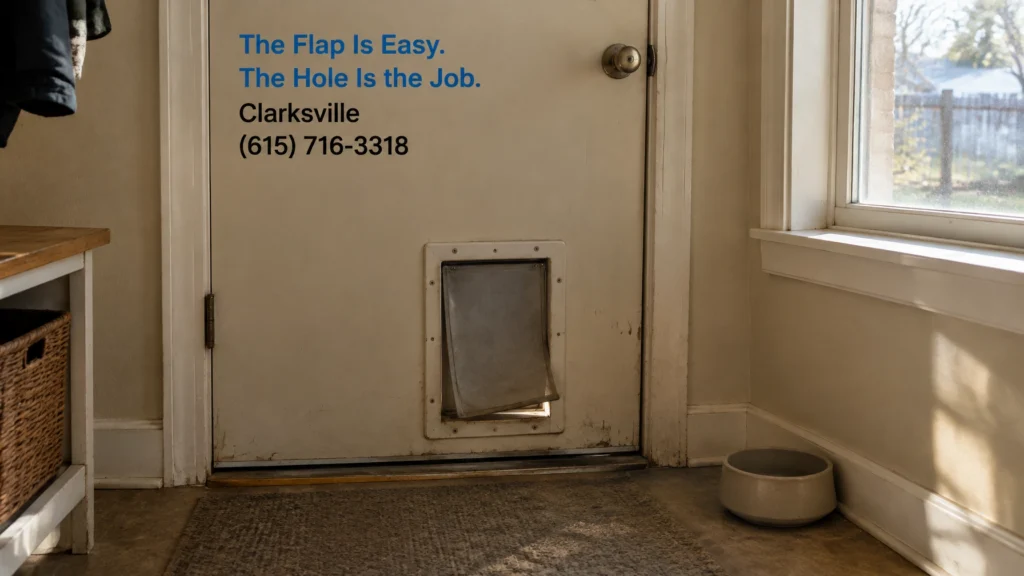
1. What a pet door really asks of a door
The flap is the easy half. The hole is the job. A pet door cuts through part of the door’s structure and the home’s weather seal, then relies on a small frame to hold the cut edges together. In Clarksville, a leaky flap can turn into a cold draft that’s hard to ignore all winter.
Two things tend to go wrong. The opening lands where the door can’t spare the material, or the flap never seals well enough to keep out cold air. That’s why the real work is choosing the right spot and sealing the frame, not showing off your carpentry skills.
A neat-looking frame won’t fix a poor location or a flap that sits crooked. In Montgomery County, where cold mornings make a small gap noticeable, the seal matters as much as the fit.
2. Measure the animal, not the door
Measure your pet before choosing a flap. The opening needs to clear the widest part of the dog, usually the chest or shoulders, with about an inch of extra room.
Check the opening height against your dog’s body and the step from the floor. Keep it low enough to walk through without a big climb, but high enough to clear the threshold and door sweep. Follow the maker’s measurement guide, since frame dimensions can differ from the clear opening.
A growing puppy may outgrow the smallest size sooner than expected. If two dogs vary a lot in size, choose an opening that suits the larger one. In St. Bethlehem, a quick look at the dogs standing beside the door helps picture the step before buying.
3. Pick the door and the spot before buying anything
Choosing the location first can save a door. The bottom rail is often the strongest, most forgiving area, but not every door has enough room there. Some exterior doors have a bottom rail barely a couple inches tall, so a frame sized for a forty pound dog won’t fit without cutting into the panel above it.
Here’s what to check before ordering.
- Look for a flat section with enough room for the full frame.
- Check the door swing and make sure the flap won’t hit a wall, step, or storm door.
- Confirm the sweep and threshold won’t block the opening.
A raised panel or deep molded panel in the lower third can rule out the spot. Hollow core interior doors contain a cardboard honeycomb rather than a solid core, so they’re not a suitable choice for an exterior pet door. Steel and fiberglass exterior doors can work with a compatible frame that covers the cut edge.
A storm door may limit the location or swing. Read about storm door clearance before deciding. If the main door already drags or won’t latch, cutting won’t solve that problem. See how to check a sticky door first.
Renters shouldn’t cut the door. A patio panel insert that sits in the sliding door track can be a removable option. Learn about sliding patio door issues before choosing a panel.

4. Cut the opening without wrecking the door
Tape over the outline to help protect paint or veneer from chips, mark the template level, and drill the corner holes first so the saw blade can turn. Support the door well. If it’s heavy, take it off the hinges and lay it flat, which is easier than working while it hangs.
Cut just inside the marked line, then test fit the frame. A dull blade can wander, and the frame won’t hide a cut that runs outside the outline.

On a hollow core door, the inside is empty except for the cardboard honeycomb. The frame has to bridge that gap and hold both door faces securely. That construction is one reason a hollow core interior door isn’t a good exterior door choice. A matched pro can help if the door material or cut edge doesn’t match the pet door instructions.
In a Sango home, a dog had been scratching the back door paint to be let out, so the homeowner cut in a pet door. The flap left a gap at the top corner, and the laundry room stayed cold until the frame was reset and sealed.
5. Seal the frame and set the flap
Tighten the screws until they’re snug, not crushed. Apply sealant at the outside edge as the label directs, and keep it clear of the moving flap. The frame should sit evenly against the door without pinching the edges.
Check that the flap hangs square and that the magnet or seal strip touches all the way around. Close the door and feel for air at the corners. A flap that sits just a hair out of square can let a thin cold line of air in at one corner. You may feel the draft on the back of your hand and notice a damp strip on the floor after a cold morning in Fort Campbell.
Sun and heat can affect some flap materials. A south facing door may get enough direct sun to make the flap curl over time, so check it now and then.

6. Test it for a week, then watch the first cold snap
A few days of use will tell you whether the opening and flap suit your dog. Watch for hesitation, a flap that sticks, or one that swings open and hangs. Check the floor inside after rain and after a cold morning.
Run the back of your bare hand around the flap edge with the door closed. A thin draft means the seal needs attention. If the air seems to come from the bottom of the door instead, check the door sweep and threshold. In Woodlawn and across Clarksville, separating a flap leak from a threshold gap helps avoid fixing the wrong thing.
If the flap won’t seal or the chosen spot cuts into a panel, don’t start a second cut. That is a good reason to get matched with a pro.
If you’d like help with the door choice or the cut, call or text (615) 716-3318, or request a free match at this contact page. Fix It Quick Network matches homeowners with vetted local pros at no cost, and the pros in our network are licensed and insured. A practical next step is to check the door’s construction and take the pet’s measurements before choosing a unit.
Frequently asked questions
Can any exterior door take a pet door?
No. Check the door construction and the instructions first. A paneled door may not have a safe flat area, and the frame must suit the door’s material and thickness.
How wide should the flap opening be?
Measure across the widest part of your dog, usually the chest or shoulders, then allow about an inch of extra room.
What does a pet door usually cost?
Many basic to insulated door models cost roughly $40 to $300 for the unit. Larger, custom, or electronic models can cost more, and installation adds to the total. The door material, frame style, and cut complexity all affect the cost, so treat online ranges as guidance rather than a quote.
Will a pet door make the room colder?
It can if the flap or frame doesn’t seal well. A square flap, an intact seal strip, and a sealed frame help limit drafts, though any opening allows some air exchange.
What can renters do instead?
Avoid cutting the exterior door without the owner’s permission. A patio panel insert that sits in the sliding door track may provide access without making a permanent change.