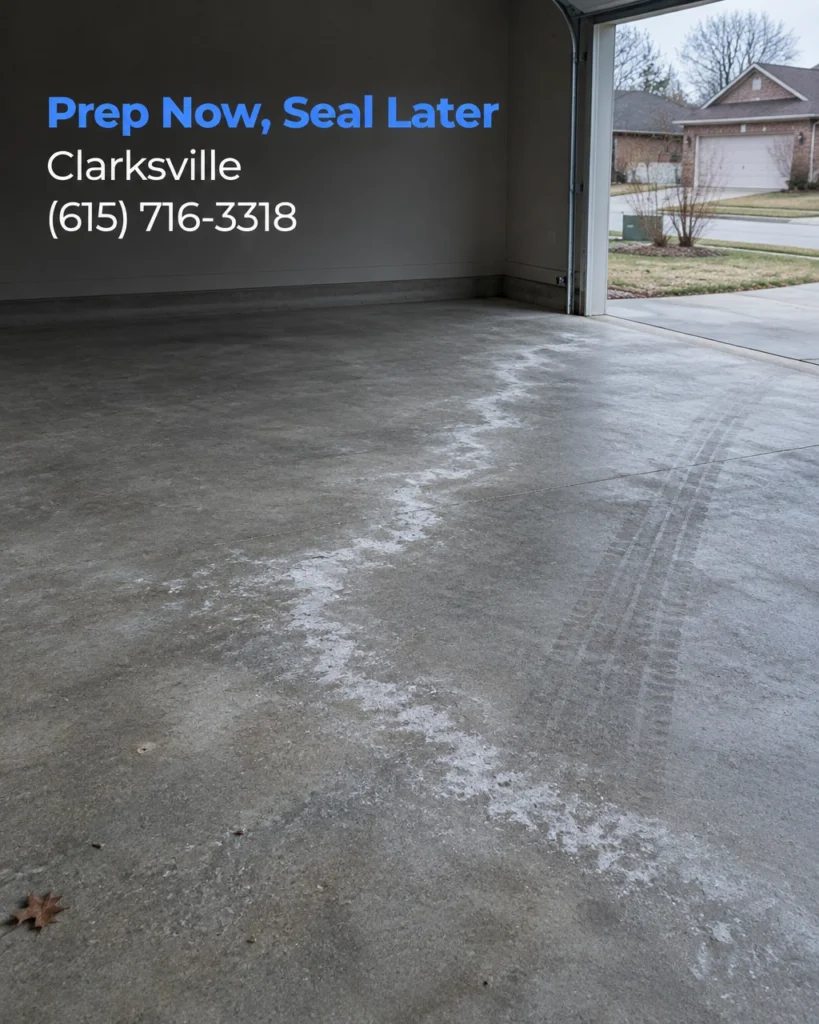
1. Know what a Clarksville winter does to bare concrete
A garage slab takes a beating from water and salt. Meltwater drips off a car, road brine gets tracked in, then puddles can sit and refreeze. Freeze and thaw cycles work on small cracks and weak spots, gradually opening cracks or flaking the surface.
A slab can stay wet longer than a driveway because the garage blocks much of the sun and wind. In a Clarksville winter, that moisture may linger under a parked car or near the door after the outside pavement has dried. The floor doesn’t need to look dramatic to deserve a quick check.
The goal isn’t automatically to coat every slab. Most garage slabs don’t need a coating at all if water is managed and the surface is sound. Start by looking for standing water and salt buildup, then decide what, if anything, needs attention.
2. Inspect the slab before buying anything
Look closely before choosing a cleaner, patch, or sealer. Under the usual parking spot, check for a white salty tide line, with concrete that feels chalky and a little rough where brine has sat. Look along the wall for round white powder, called efflorescence, which can appear when moisture moves through concrete.
Notice whether cracks are thin, branching hairlines or wide enough to catch a coin edge. A small map of hairline cracks may be surface wear, while a crack that grows after each thaw deserves more attention. Check for oil shadows and tap any questionable patch by the garage opening gently with a shoe. A hollow sound can mean the surface has separated below.
A familiar Sango scenario is a homeowner spotting a small flake at the garage entrance, then noticing the crack beside it looks wider after a cold snap. That’s a good reason to document it and watch for change, not cover it up. In St. Bethlehem, too, a slab that slopes toward the wall instead of the door deserves a closer look at where water is collecting. For more on concrete cracks, see fall concrete crack repair for Clarksville homes and driveways.

3. Decide whether sealing can wait
In November, a Clarksville garage floor is often cold and damp. Many film forming coatings and epoxies call for mild temperatures and a dry slab. Follow the product label, not the calendar. Applied to cold, damp concrete, a coating can blister, turn cloudy, or lift by spring.
Penetrating sealers are different, and some allow lower temperatures. Even so, check the label for minimum surface temperature, moisture limits, and time needed before another coat or foot traffic. The concrete surface matters, not just the air temperature in the garage.
For many homeowners, the practical November move is to clean and protect the slab now, then consider coating in spring. It’s fine to wait. A properly prepped slab in April beats a rushed coat in December. Fort Campbell area homeowners can also review ice melt salts and winter walkway repairs for related winter salt concerns.

4. Clean as if a coating might come later
Start with a dry sweep. Don’t hose down the floor first, because that can spread grime toward the wall base and make it harder to see where water is sitting. For an oil stain, use a concrete-safe degreaser, scrub it in, and give it the dwell time on the label.
Cat litter or another absorbent can help lift the bulk of fresh oil before cleaning. Sweep up the used absorbent, then rinse the treated spot as directed and let the slab dry completely. Test any cleaner in a small hidden area first. Skip acid washing unless the coating product specifically calls for it.
Clean salt residue before it builds up through winter, but don’t leave rinse water pooled at the wall or under stored items. The slab should be fully dry before any coating is considered. Right now, a clean surface and less standing water may be all that’s needed.
5. Patch stable damage, not a moving problem
A shallow flake or small spall at the apron may be suitable for a concrete patching product, provided the material matches the repair and surface conditions on its label. At the garage door opening, look for a spalled apron edge where the top quarter inch of concrete has flaked away and aggregate shows. Remove loose debris and follow the patch product’s surface preparation and curing directions.
Don’t treat a growing crack, soft or hollow area, or settled slab as a simple patch. A patch or coating can hide the warning signs without stopping the movement underneath. If a crack is wider after each thaw, or a section feels unstable, pause and get the cause assessed.
The target is simple, a clean and stable surface. For larger coating work, slab lifting, structural concerns, or drainage problems, a specialist may be the right fit.
6. Send meltwater away from the slab
Check the garage door sweep and threshold so snow and meltwater aren’t blowing or running inside. Watch where the car drips, and see whether that water moves toward the door or collects at the wall. A boot tray and a squeegee are inexpensive ways to catch and move everyday water.
Look outside, too. Check whether the ground slopes away from the garage door and whether a downspout dumps water near a corner. Standing water at the wall base is a bigger concern than a harmless stain on the middle of the slab. In Woodlawn, as elsewhere in Montgomery County, a damp corner may call for a drainage check before any floor coating.
See fall drainage and grading checks and late fall garage house door weatherstripping checks for related steps. Fix It Quick Network is a referral network that matches homeowners with vetted local pros. The pros in our network are licensed and insured.

If you’d like help deciding whether the slab needs a small repair, a coating, or a drainage specialist, call or text (615) 716-3318, or request a free match. Share the property location and a photo of the slab or spalled edge. A practical next step is simply to document what’s there before buying a product.
Frequently asked questions
Can a garage floor be sealed in November in Clarksville?
Sometimes, if the product label allows the air and surface temperatures and the slab is dry enough. Many film forming coatings need mild conditions, so waiting for spring is often the safer choice. Check the specific label before applying anything.
Is garage floor sealer the same as epoxy?
No. Many sealers penetrate the concrete or leave a thinner protective film. Epoxy is a coating system that sits on the surface and usually has stricter preparation and temperature requirements.
How do oil stains come out before sealing?
Use an appropriate concrete degreaser, scrub, and allow the product to dwell as directed. Absorbent granules can help pull up the bulk of an oil spill first. Old stains may remain visible even after cleaning.
Is a cracked garage floor a structural problem?
Not always. Thin hairline cracks can be common, but a crack that widens, shifts, or comes with a soft or settled area should be assessed before patching or coating.
How much does garage floor prep and sealing usually run?
Basic cleaning and prep may fall in the low hundreds, depending on floor size, oil buildup, salt residue, and needed patching. Coatings generally cost more, with the total shaped by surface repairs, moisture testing, coating type, and preparation.