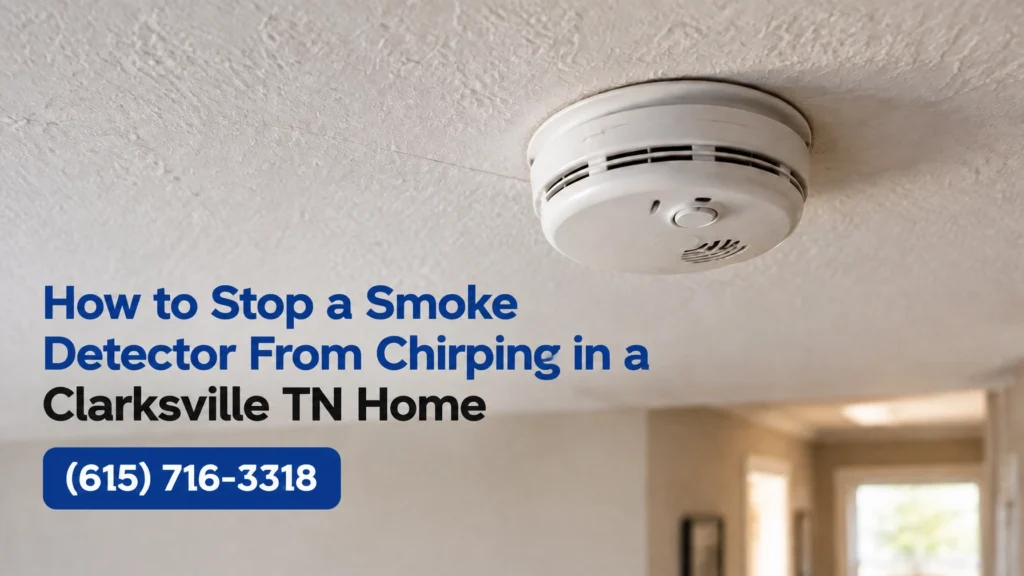
A smoke detector chirping in the middle of the night can make the whole house feel unsettled. Most of the time, the cause is simple. The battery is weak, the detector needs a reset, dust has entered the vents, or the unit has reached the end of its service life.
If you searched for smoke detector chirping Clarksville TN, start with the steps below. You do not need to replace every alarm right away. First, find the chirping unit and check the easy causes.
1. Make sure it is a chirp and not an alarm
A single chirp every 30 to 60 seconds usually points to a maintenance problem. A loud, continuous alarm is different. Check the home for smoke or fire, get everyone outside if needed, and call 911 if there is any danger.
Walk through the house and listen near each detector. Sound can bounce off ceilings and walls, so the loudest alarm is not always the one making the noise. Check bedrooms, hallways, the kitchen area, and any detector near the garage.
A homeowner near Sango once thought the chirp was coming from the upstairs hallway. It turned out to be a quieter detector near the laundry room, where the sound was carrying through the ceiling. Finding the right unit saved a lot of unnecessary battery changes.
Press the Test, Silence, or Hush button only as a temporary step. It may quiet the unit for a short time, but it will not fix a weak battery or an old detector.
2. Replace the battery and reset the unit
A low battery is the most common reason for smoke detector chirping in a Clarksville home. Battery-only detectors usually twist or slide off their mounting plate. Check the label or battery compartment before buying a replacement.
Use the correct battery type and match the positive and negative markings. Common types include 9-volt and AA batteries, but the right choice depends on the detector. Make sure the battery is fully seated and that the compartment door closes completely.
After replacing the battery, press and hold the Test or Reset button for about 10 to 20 seconds. Then press the button once more to make sure the alarm sounds loudly. That reset can clear a stored low-battery warning.
If the chirp continues, remove the battery again and hold the Test button for about 15 to 30 seconds. Reinstall the fresh battery, close the compartment, place the detector back on its base, and test it again.
Do not leave the detector without a battery while you wait. A quiet detector is not useful if it is not powered.

3. Check a hardwired detector’s backup battery
Hardwired smoke detectors still have backup batteries. A power outage, an aging battery, or a loose battery door can cause the detector to chirp even when it is connected to the electrical system.
If you are comfortable identifying the correct breaker, turn off power to the alarm circuit before removing the detector. Twist the unit from its mounting plate and check for a wiring harness. Do not pull on the wires or force the detector from the base.
Replace the backup battery with the correct type. Check that the battery door is fully closed, reconnect the detector, restore power, and press the Test button. The exact steps can vary by model, so follow the instructions printed on the detector.
If you are not comfortable working around a hardwired alarm, skip the electrical work. The pros in the Fix It Quick network are licensed and insured, and we can match you with a local pro who handles small electrical and general repair needs in Clarksville and Montgomery County.
4. Clean dust from the detector vents
Dust and small insects can collect around the openings in a smoke detector. That buildup may cause a false alarm, intermittent chirping, or a detector that reacts too easily to normal household conditions.
Turn off power or remove the battery before cleaning. Use a vacuum with a soft brush around the outside vents. A few short bursts of compressed air may help clear debris, but do not spray liquid into the detector.
Wipe the outside with a dry or slightly damp cloth. Do not paint over the unit, cover the vents, or tape the detector to stop the noise. Those shortcuts can keep the sensor from working properly.
Pay attention to detectors near construction dust, a recently painted room, or a dusty attic access. Homes around St. Bethlehem can see plenty of seasonal dust and pollen, especially when doors and windows stay open.
After cleaning, restore the battery or power and test the detector. If it keeps chirping, the problem is probably not dust alone.

5. Replace a detector that has reached the end of its life
Smoke detectors do not last forever. Check the manufacture date printed on the back or side of the unit. Many detectors are designed to be replaced after about 10 years, but the manufacturer’s instructions should guide the decision.
End-of-life chirping often continues after a new battery and a thorough cleaning. That is the detector telling you that replacement is due. Do not rely on a detector that is old, discolored, damaged, or missing its manufacture date.
Replace the alarm with a compatible model and test it after installation. If your home has interconnected detectors, use compatible units so the alarms can communicate properly.
If the detector is mounted high over a stairwell or in a difficult spot, a local handyman may be able to help with the general installation. For wiring concerns, the right electrical specialist should handle the work.
6. Know when to get matched with a pro
A battery change is usually a reasonable DIY task. Hardwired alarms, repeated chirping, missing mounting parts, and detectors that will not test properly are good reasons to ask for help.
Fix It Quick connects homeowners in Clarksville, Sango, St. Bethlehem, and the Fort Campbell area with vetted local pros. Tell us what the detector is doing, whether it is battery-powered or hardwired, and how old the unit appears to be.
If you would like help, call or text (615) 716-3318 or request a free match through the contact page. You can also review the available handyman services before you send a request. The next step is simple. Find the alarm, check the battery, and do not leave the home without a working detector.
7. Frequently asked questions
Why does my smoke detector chirp after I replace the battery?
The battery may not be seated correctly, the compartment door may be loose, or the detector may need a reset. Remove the battery, hold the Test button for several seconds, reinstall the battery, and test the unit. If the chirp returns, check the manufacture date.
Why is my hardwired smoke detector chirping?
Hardwired alarms still use backup batteries. A weak backup battery is a common cause. The detector may also have a loose wiring connection, a closed battery door, or an end-of-life warning. Turn off the correct breaker before checking the unit, or get matched with a qualified local pro.
Can dust make a smoke detector chirp?
Yes. Dust, insects, and debris can interfere with the sensor and vents. Clean the outside with a soft brush or vacuum attachment while the unit is powered down. If the chirping continues afterward, replace the battery or check the age of the detector.
Should I press the hush button to stop the noise?
The hush button can quiet the detector for a short time, but it is not a permanent fix. Use it only while you identify the cause. Never remove the battery or cover the alarm just to make the chirping stop.
How do I know if the detector needs to be replaced?
Check the manufacture date and the instructions for the expected service life. Replace a detector that is past its rated age, damaged, discolored, or still chirping after a fresh battery and reset. A working alarm is worth the small amount of time it takes to install a new one.