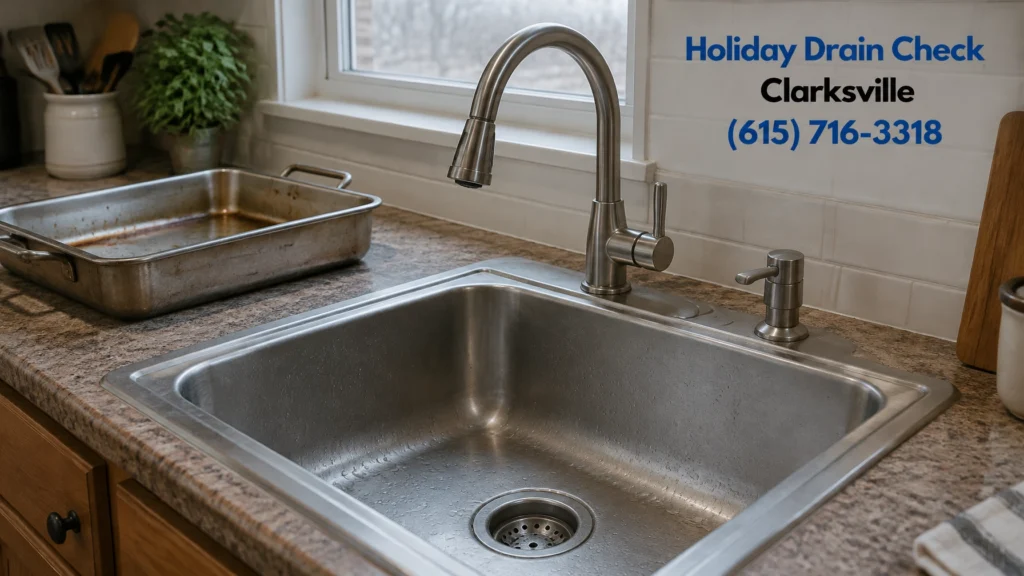
1. Why kitchen drains give up in late fall
A slow kitchen drain can seem harmless until holiday cooking puts it to work. Thanksgiving falls on November 26 this year, and the weeks leading up to it bring more roasting pans, greasy dishes, and sink use to many Clarksville kitchens.
A drain that barely kept up in October may struggle when everyone is cooking. In some homes, parts of the drain line run through a chilly cabinet or an outside wall, where cooler pipe surfaces help grease firm up sooner.
That doesn’t mean cold weather alone causes every clog. A slow kitchen drain usually has buildup already, and a busy week exposes it. For broader cold weather pipe checks, see our guide to keeping exposed pipes from freezing in Clarksville homes and rental properties.
In Sango and St. Bethlehem, that first heavy stretch of holiday cooking can be the moment an ignored drain finally backs up. Rental owners around Fort Campbell, Woodlawn, and rural Montgomery County can add a sink check to turnover prep, too.
2. What grease really does inside the line
Grease doesn’t vanish when hot dishwater carries it past the drain opening. As it cools, some clings to the pipe wall. Over time, sticky layers narrow the opening and catch food particles, until one pan of turkey drippings finishes the job.
A greasy film is hard to see farther down the pipe, but you might notice it on the strainer basket. In one Clarksville home, the basket had a sticky film after a weeknight dinner and the sink gave a slow gurgle from the P trap on the last rinse. Those small clues suggest the line is having trouble, even if it hasn’t stopped yet.
Wipe grease from pans and plates with a paper towel before washing. Let cooking fat cool in a container, then throw it in the trash. The EPA’s SepticSmart kitchen guidance also advises keeping grease and food waste out of drains, especially in homes with septic systems.
3. Signs the drain is heading for a holiday backup
A drain usually gives you clues before it stops. Watch for these changes during ordinary dishwashing.
- Water lingers around the drain instead of clearing at its usual pace.
- The sink gurgles during the last rinse.
- A sour smell returns after cleaning the basin.
- Water rises in one side of a double sink when the other side drains.
A single slow sink often points to a local clog. If a bathroom sink, tub, or toilet is also slow, the issue may sit farther along the main drain or on the septic side.
For owners managing rentals in Montgomery County, note which fixtures are affected and when the problem started. If you’re checking around the home for seasonal issues, our fall basement moisture checks for Clarksville homes and rental properties can help you spot other areas worth a look.

4. A safe at home routine
Start with the habits that keep new grease and scraps out of the line. A basket strainer catches food bits, and emptying it takes only a moment. Wipe pans with a paper towel before washing, especially after bacon, gravy, or a roast.
For a mildly slow drain, run hot tap water while washing dishes, then use a little dish soap to rinse residue near the opening. This helps with everyday film. It won’t remove a thick clog farther down.
Never pour oil, drippings, butter, or pan grease into the sink or disposal. Keep coffee grounds and food scraps out, too. For septic homes, be careful about what goes down the drain.
Quick tip for holiday cooking drain prep. Set out a container for cooled grease before you start cooking, then scrape and wipe pans before they reach the sink. A strainer, a paper towel, and a place for cooled grease can prevent a lot of buildup.
5. What not to do when the sink slows down
Don’t pour chemical drain opener into a kitchen sink that is fully stopped. It can sit in standing water, creating a hazard for anyone who later clears the line. Never combine drain chemicals with other cleaners.
A drain snake can help with some clogs, but it can also scratch a fixture or damage piping when used the wrong way. If it catches or jams, stop rather than pushing harder.
Skip the disposal overload on Thanksgiving. A disposal isn’t a grease solution, and large amounts of scraps can add to the blockage. Feed it only small amounts of food waste, with water running, and keep grease and starchy leftovers out.
A full blockage is not the time for stronger chemicals or harder plunging. Stop and get matched with a pro if water stands, backs up, or returns after a careful attempt.

6. When to stop DIY and get matched with a pro
Get help when the drain is fully blocked, keeps slowing again, or backs up into another fixture. A sewage smell or several slow drains may point to a main line issue rather than a simple kitchen clog. Don’t keep adding chemicals or running a snake if the signs point to a larger problem.
Main line and septic side concerns need the right specialist. Fix It Quick Network is a referral service, not a repair crew. We can match you with a vetted local pro for suitable drain work, or point you to the right specialist for a main line or septic issue. The pros in our network are licensed and insured.
Cost depends on where the clog sits, how easy the line is to reach, and whether the issue involves a branch drain, main line, or septic system. A sink clog and a deeper line problem can require different equipment, so a pro needs to assess the situation before giving you a clear estimate. Sharing when the drain slowed and whether other fixtures are affected is a practical first step.
If you’d rather have help, call or text (615) 716-3318 or request a free match. We can match you with a vetted local pro, free. You choose whether to move forward.
Frequently Asked Questions About Slow Kitchen Drains
Does hot water and dish soap actually clear grease in a drain?
Hot tap water and a little dish soap may rinse light residue near the drain opening. They won’t remove heavy grease buildup farther down the line. Wipe fat from pans and keep it out of the sink.
Is it safe to pour chemical drain cleaner down a kitchen sink?
It’s best not to use chemical drain cleaner on a stopped sink. It can sit in standing water and create a hazard during later work. Avoid it altogether in a septic home.
Should a landlord handle slow drains before holiday tenants arrive?
Yes, a slow drain is worth checking before holiday turnover or a lease end walkthrough. Ask whether one sink or several fixtures are affected, and arrange an assessment if the drain keeps slowing or backs up. A note in the property record helps later.
Why do kitchen drains slow down more in cold weather?
Grease cools and clings to pipe walls, gradually narrowing the opening. Cooler sections of the line make that buildup more noticeable, while holiday cooking sends more greasy dishwater through the pipe. Cold weather exposes an existing problem rather than causing it.
Can a garbage disposal cause a kitchen drain clog?
Yes. A disposal can send food scraps and grease into the drain, where they collect and restrict flow. Use a strainer, scrape food into the trash, and never treat the disposal as a way to get rid of cooking fat.