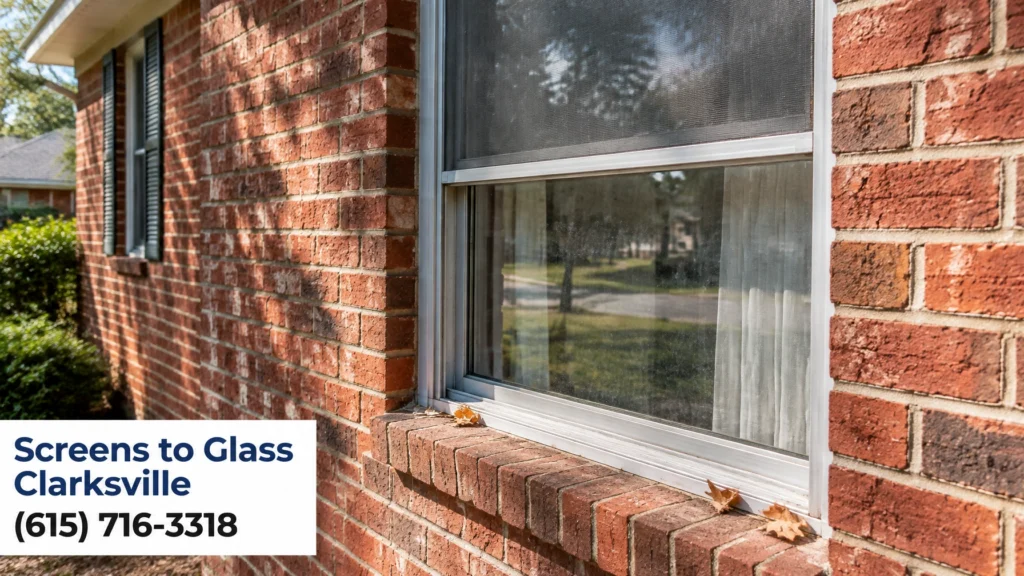
1. The screens are still in
Late November has arrived in Clarksville, the house has been cooling since early November, and the upstairs storm windows still have their screens in. The glass panels are leaning against a wall in the garage. Before the first hard freeze, it’s worth checking what kind of storm sash is on each window and whether its glass is ready to go back in.
An exterior storm sash adds a second layer of glass, with a still pocket of air between it and the original window. It protects the primary sash from weather and helps cut air coming through an older single pane opening. A good storm can reduce air infiltration about as well as many replacement windows, for much less upfront cost, as This Old House explains. It can make a noticeable difference without replacing the old window.
2. Find out what kind of storm is on the house
The panel layout determines how the seasonal swap works. Triple track units hold a screen and two glass panels on separate tracks, so the panels slide up and down in the frame. A typical double track unit has an upper glass panel and a lower screen on the outer track, with another glass panel on an inner track. Older wood storms usually come out of the frame entirely and hang on turn buttons or clips at the head.
Removable panels need careful handling and a place to rest while they’re out. That can make a simple swap feel like a Saturday job, especially upstairs. A mix of storm styles is common in older Clarksville neighborhoods, where a few windows may have been updated while the rest still use older panels. For more on different window issues, see the Clarksville window repair and weatherproofing guide.
3. The panel that will not move
A stuck panel usually has a reason. Paint may have crept into the channel, grit may be packed at the bottom of the track, or a ladder may have bent the frame. Look for a locking clip that has been pried flat, too. Start gently with a stiff brush to clear loose dirt, then use a dry lubricant spray made for tracks and clips. Never pry against the glass or force a panel that binds at one corner.
A Sango homeowner started the screen to glass swap on a Saturday in late November, but the lower panel on the front bedroom window stopped a third of the way up. Old paint had been brushed straight over the channel, holding the panel in place. A bent clip or a strip of blue painter tape baked onto the aluminum frame can also catch a panel; if a light touch doesn’t free it, stop before the glass or frame is damaged.

4. Weep holes and the sill line
Aluminum storm frames have small weep holes or slots along the bottom rail. They let trapped moisture drain out, but pollen, grit, and old caulk can block them over a season. Clear the openings with a piece of wire, taking care not to widen or damage them. When caulk is needed around the storm frame, the top and sides get a bead, but the bottom rail stays open so water can drain.
Check the interior sill for a grey water line, peeling paint, or wood that feels soft. Those signs may point to water that wasn’t draining as it should. Damage around a storm window often shows in the bottom few inches of the frame, not beside the glass. If morning moisture is part of the concern, this guide explains why windows fog up on cold mornings in Clarksville homes and rentals.
5. Cracked glass, a missing panel, or a loose clip
A cracked storm pane can often be replaced on its own, which may cost far less than replacing the whole unit. As a general planning range, glass or panel work may run around $100 to $300 per window, while a new storm unit can cost several hundred dollars or more. Those aren’t quotes. Panel size, low e glass, frame condition, access, and whether the unit is a standard size all affect the cost. The guide to replacing a broken window pane can help explain the difference between a storm pane and the home’s primary window glass.
Before storing the screens, mark each frame with a marker so it goes back to the right window. A screen that’s half an inch off may not seat, and forcing it can bend the frame. In a basement, keep the label visible when the screen is set aside. Store acrylic and glass panels flat, with no more than a few in a stack. Panels stood on a corner are more likely to get damaged.

6. Listings, showings, and rentals
A realtor walking up to a Clarksville listing may notice screens still in during a cold November photo, loose storm panels stacked in the garage with no labels, or a missing lower panel on the front window. Buyers can read those details as deferred maintenance, even if the fix is only a weekend of sorting and swapping. A quick check before photos or showings can make the home feel cared for.
The same task matters during a St. Bethlehem rental turnover or for an investor tracking storms missing from three units. Fort Campbell households with a lease ending in winter may want the glass panels ready before move out. In Woodlawn and across Montgomery County, a clear list of which windows still have screens in and which panels are missing helps keep the work manageable. Fix It Quick Network is a referral network, not a repair crew. The pros in the network are licensed and insured, and the Network can match homeowners and property managers with a vetted local pro.
If you’d like a vetted local pro, call or text (615) 716-3318, or request a free match. A practical next step is to count which windows still have screens in and note any missing or stuck panels.
Frequently asked questions
Do all storm windows have removable panels?
No. Triple track panels usually slide in their tracks, while some older wood storms come out of the frame for seasonal storage. Check the panel style before trying to remove anything.
Should the bottom of a storm window be caulked?
No. Keep the bottom rail and its drainage openings clear so trapped moisture can escape. Caulk the top and sides when needed.
What if a storm panel is stuck?
Clear loose dirt with a stiff brush and try a dry lubricant made for window tracks. Don’t force the panel or pry against the glass. Stop if it still binds.
Can a cracked storm pane be replaced separately?
Often, yes. The right option depends on the panel size, glass type, and condition of the frame.
How should glass panels be stored?
Store panels flat and limit the stack to a few panels. Avoid standing them on a corner, where they can be damaged.
Do screens need to be labeled before storage?
It helps. Mark each screen with its window location so it can go back to the right opening without forcing a poor fit.