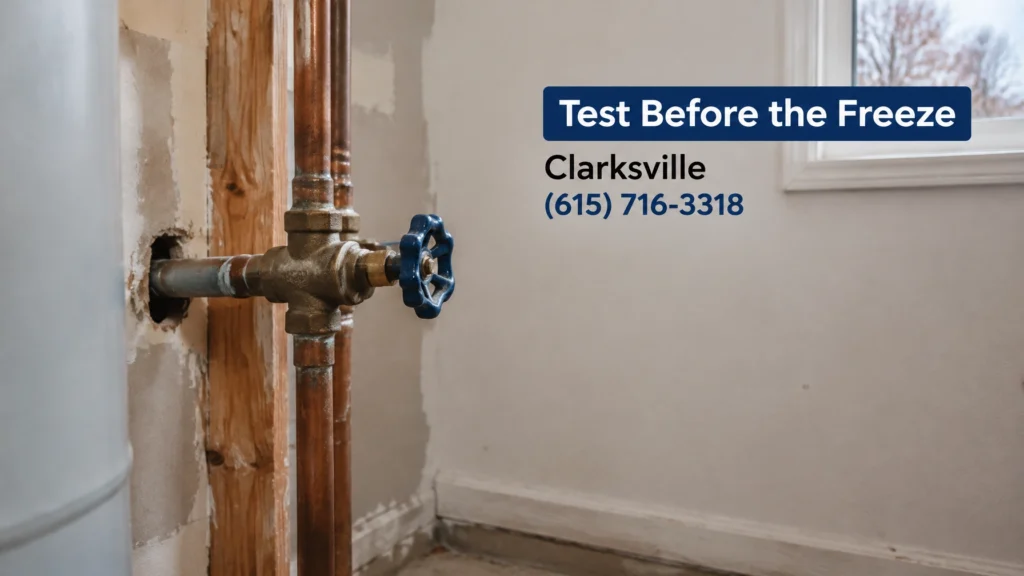
In late fall, a freeze plan is only as useful as the main water shutoff behind it. If a pipe starts leaking on a cold night, you want to know the valve turns, the water stops, and someone else can find it if you’re away.
This is different from locating the valve. If you need help finding it first, start with the home’s plumbing layout or ask a vetted local pro to identify it. Then test it gently, label it, and keep clear instructions with the property records.
1. Check the valve before you turn it
A little caution now can prevent a bigger headache. Before testing, make sure the valve and nearby pipe look sound. Look for rust, greenish corrosion, a damp ring, a hairline crack, or signs of an old leak around the stem and fittings.
If you see active moisture, damaged piping, or a valve that looks badly worn, don’t try to test it yourself. A stuck or weakened valve can start leaking when moved. The pros in the Fix It Quick Network are licensed and insured, and the Network can match you with a local pro to assess it.
If the valve looks intact and you’re comfortable proceeding, let everyone in the home know you’re testing the water. Keep a clear path to the valve and know how to reach the property’s plumbing help if something goes wrong.
2. Test it gently, then check the water
Use your hand only. Don’t grab pliers or a wrench to force a stubborn handle. If it won’t move with normal pressure, stop there.
A lever style ball valve usually turns one quarter turn between open and closed. A wheel style valve typically closes clockwise. Move it slowly, without forcing it against a hard stop. If you’re not sure which way yours works, or the handle feels seized, let a plumber check it rather than guessing.
Once closed, briefly open a nearby faucet. The flow should stop after any water already in the line drains away. Then return the valve slowly to its fully open position and check the valve body, stem, and joints for drips. Confirm that water has returned at the faucet.
A slow drip, a rattly handle, or a valve that won’t fully open or close is a reason to arrange service before freezing weather. Don’t leave the valve partly open as a workaround. If water begins leaking during the test, stop and get plumbing help.

3. Label it so someone else can act
A label saves time when you’re stressed. Add a durable tag near the correct valve that says it’s the main water shutoff. Keep the label clear and easy to read, but don’t cover the handle or block access.
Make sure the directions identify the home’s valve, not a different shutoff nearby. Some properties have separate valves for outdoor faucets, water heaters, or irrigation. If the setup is confusing, ask a pro to confirm which valve controls the whole home before labeling it.
For rentals, leave a short written note where a tenant can find it, such as in the welcome folder or maintenance instructions. Include the location, what the valve looks like, and who to contact if it’s stuck or leaking. Tell tenants not to force it.
In a Clarksville rental, imagine a tenant noticing water spreading across the utility room floor during a freeze. A simple note that points to the right valve and gives the correct contact can take some of the panic out of that moment. It doesn’t have to be fancy. It just has to be clear.
4. Photograph and record each property
A photo can be more useful than a vague note like “valve in basement.” Take one wide photo that shows the surrounding room, then a closer photo of the valve itself. Make sure the label and nearby landmarks are visible.
Keep the photos with the property’s maintenance records, organized by address. Add the date of the test, whether the valve opened and closed, and whether you noticed any moisture or other issue. Don’t mark a valve as working if you didn’t test it.
This routine helps homeowners, realtors, and property managers keep handoff details straight. It’s especially handy for investors coordinating multiple homes around Sango, Woodlawn, St. Bethlehem, and Fort Campbell. A photo tied to the right address can save a search when a manager or new owner needs the shutoff quickly.

5. Use a short freeze readiness checklist
The main shutoff is one part of the plan, not the whole plan. Before the first hard freeze, check that the valve is accessible and labeled, the test date is recorded, and anyone responsible for the property knows what to do if a leak starts.
Then look at the other usual trouble spots. Disconnect outdoor hoses, check exposed pipes in cold areas, and make sure tenants know how to report a drip or loss of water. For outdoor faucets, see the guide to protecting a leaking outdoor faucet before winter. For broader rental steps, use the Clarksville fall freeze prep checklist.
If the property has a sump pump, include its discharge line and backup power in your seasonal check. The sump pump freeze prep guide covers those checks. Clarksville’s cold weather precautions offer additional local guidance.

6. Keep the next step simple
A shutoff that turns easily, stops the water, and is clearly labeled gives you one less thing to worry about as temperatures drop in Montgomery County. If the valve is stuck, begins to leak, or you’re unsure which one controls the home, don’t force a test. Get it checked before the first hard freeze.
Fix It Quick Network matches homeowners, realtors, property managers, and investors with vetted local pros. The Network doesn’t perform repairs. If you’d like a pro to check a shutoff or help with other freeze prep, call or text (615) 716-3318 or request a free match. A good next step is to take a photo of the valve and note the property address before you reach out.
7. Frequently asked questions
How often should I test the main water shutoff?
A gentle check once a year, before cold weather, can help you spot a problem while there’s still time to address it. Don’t repeatedly turn an old or questionable valve just to exercise it.
What if the valve handle won’t move?
Stop. Don’t use tools or extra force. Ask a plumber to inspect it so a stuck valve doesn’t turn into a leak.
How do I know the valve works?
When safely tested, water at a nearby faucet should stop after the remaining water drains from the line. Once you reopen the valve, check for drips and confirm the faucet has normal flow.
Should tenants test the main shutoff?
Give tenants clear written directions and tell them not to force a valve. A property manager or plumber can arrange testing and keep the result with the rental’s records.
What should I include in a shutoff record?
Record the property address, valve location, date checked, test result, and any follow up needed. Add a wide photo and a close up so someone unfamiliar with the home can identify it.