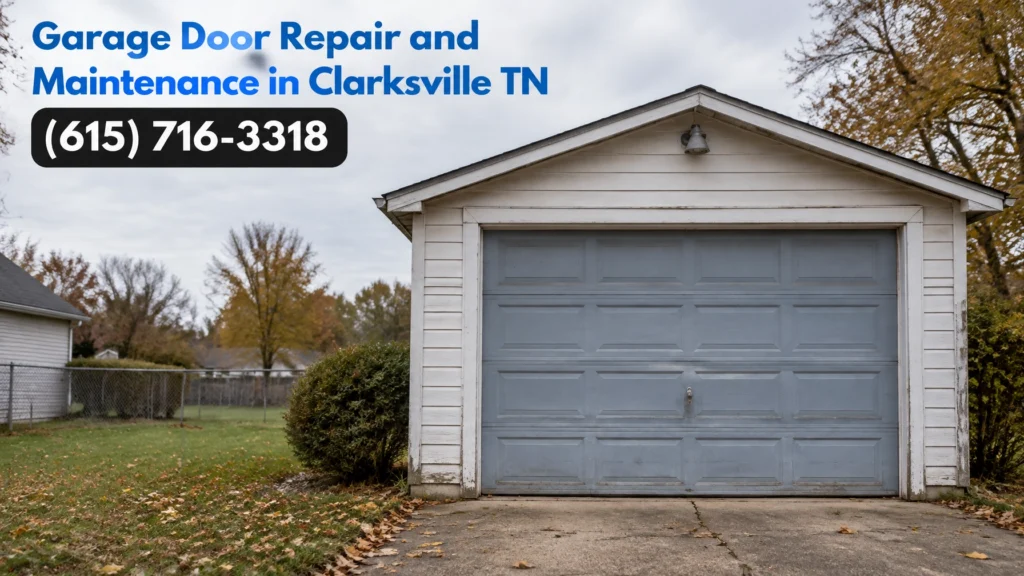
A garage door usually gives you warning before it stops working completely. It may shudder on the way up, grind along the track, or close halfway before reversing. Sometimes the issue is simple. A trash can bumped the safety sensor, or dirt built up on the photo eye lens.
Other problems are not safe for a homeowner or a general handyman to handle. Torsion springs, lift cables, and door panels need a garage door specialist.
Fix It Quick Network helps homeowners in Clarksville and Montgomery County sort out the difference. The Network does not perform garage door repairs. It matches homeowners with vetted local pros for the right kind of work and points them to a garage door specialist for specialty repairs.
1. Start With the Symptom You Can Feel
The sound and movement usually tell you where to start looking. A smooth garage door should not grind, jerk, slam, or lean noticeably to one side.
Watch the door from a safe position while it opens and closes. Look for these common problems.
- The door shudders or grinds during movement.
- The opener starts down, then reverses.
- One safety sensor has a blinking or dark light.
- The bottom weather seal is cracked, split, or flattened.
- The vertical track looks bent after contact with a trash can or vehicle.
- Rollers look flat, cracked, or worn.
- A remote or keypad no longer works.
- The door closes unevenly on one side.
- The door feels unusually heavy when disconnected from the opener.
A door that closes unevenly deserves attention. It may have a damaged roller, a bent track, a cable problem, or a spring that is no longer balancing the door.
A homeowner near Sango noticed a hard bang each time the garage door reached the floor. The bottom seal had split, and the concrete apron had settled slightly under one side. The seal was a simple maintenance issue, but the uneven closing needed a closer inspection before the door was used again.
2. Know What You Can Safely Check
Simple maintenance is reasonable if the door is stable and you stay away from high tension parts. Start with the door fully closed, keep children and pets away, and do not stand under a moving door.
Safe homeowner checks include the following.
- Look for loose debris in the tracks.
- Wipe the photo eye lenses with a soft, dry cloth.
- Check that the sensors face each other and sit at the same height.
- Clean and lightly lubricate the rollers and hinges with a garage door lubricant.
- Inspect the bottom weather seal for cracks and gaps.
- Test the remote batteries and keypad battery.
- Check whether the wall button has power.
- Test the opener reversal features.
Do not remove a spring cover, loosen a cable drum, pull on a lift cable, or unbolt a bottom bracket. Unplugging the opener does not remove the stored force in the springs or cables.
If a part is under tension, leave it alone. That one decision can prevent a serious injury.
3. Fix the Simple Sensor Problem First
Safety sensors cause many opener complaints, especially after storage items move around the garage. A trash can, broom, bicycle, or box can knock one sensor out of line.
The photo eyes sit near the bottom of the garage door opening. Each sensor should face the other directly. Most systems show a steady light when the sensors are aligned and connected.
Start with these checks.
- Close the door fully.
- Clear boxes, bins, and other items from the sensor path.
- Wipe both lenses with a clean, dry cloth.
- Check that each sensor is firmly attached.
- Look for a loose wire near the sensor or wall.
- Gently adjust the sensor until both indicator lights are steady.
Do not bypass the sensors or tape them in place. They are part of the opener safety system.
If cleaning and alignment do not restore normal operation, the issue may involve wiring, the sensor brackets, or the opener control board. That is a good time to get matched with a pro for garage door sensor repair in Clarksville TN.
4. Test the Auto Reverse Carefully
The opener should reverse when its photo eye beam is interrupted. It should also reverse when the door touches a solid object on the floor.
Test the photo eye function with the door open and the area clear. Press the wall button to close the door, then interrupt the sensor beam with a long object. The door should stop and reverse. If it continues down, stop using the opener until the problem is checked.
Test the contact reverse with a solid piece of wood, such as a two by four, laid flat in the center of the opening. Start with the door fully open, then activate the close cycle. When the door touches the wood, it should reverse and reopen.
Do not use your hands, feet, or a loose object for this test. If the door does not reverse, disconnect the opener from use and get help.
Some openers also lose their travel settings after a power interruption or a disconnected trolley. With the door fully closed, reconnect the carriage according to the opener manual, then restore the travel adjustment as directed by the manufacturer. Do not turn force or travel screws at random. Incorrect settings can make the door unsafe.
5. Clean and Lubricate the Moving Parts
Dirt on the tracks can make a garage door sound rough, but the tracks are not supposed to carry the door weight. The rollers ride inside them, and heavy grease can collect dust that makes movement worse.
With the door closed, wipe loose dirt from the inside edges of the tracks. Do not bend the tracks, remove their mounting bolts, or spray thick grease inside them.
Apply a small amount of garage door lubricant to the roller bearings, hinges, and other moving joints listed in the owner manual. Keep lubricant away from the photo eye lenses and the belt or chain unless the manufacturer specifically says otherwise.
Listen during the next cycle. A light squeak may improve after cleaning. A grinding sound, repeated pop, or metal scraping usually points to worn or damaged parts.
The same approach works in older homes throughout Montgomery County. Basic cleaning can reduce noise and wear, but it cannot correct a track that has shifted or a door that is out of balance.

6. Replace a Cracked Bottom Weather Seal
A bottom weather seal has a simple job. It helps close the gap between the garage door and the floor, keeping out rain, leaves, insects, and drafts.
Over time, the rubber becomes hard and brittle. You may see a long split, small gaps at the corners, or daylight under the door. A dry rotted seal can also leave the garage feeling damp after a storm.
Replacing the seal is often a reasonable DIY task when the retainer is intact and the door is stable. Measure the existing seal and buy the correct profile and length for the door. Keep the door closed while removing and installing the seal, and avoid removing brackets connected to cables or springs.
If the retainer is bent, the door is closing unevenly, or the seal pulls out because the bottom panel has shifted, stop there. The seal may not be the real problem.
For broader door and hardware concerns, the door lock and hardware repair guide covers the same basic idea. Check the visible condition first, then address the part causing the trouble instead of covering it up.
7. Treat Bent Tracks and Worn Rollers Seriously
A bent track can happen after a trash can, ladder, or vehicle bumps the side of the opening. A roller may develop a flat spot after years of carrying the door through the same path.
These problems often show up as a rattly handle would on an entry door. The door moves, but it feels rough, uneven, or forced. You may also see black dust near the track or a roller that does not turn smoothly.
You can clean the tracks and apply light lubricant to the rollers. Do not try to straighten a bent track with a hammer. Do not remove the bottom rollers or cable hardware to make the door move more freely.
A damaged upper roller may be a manageable repair for a trained garage door technician. Bottom rollers and cable connections are different. They can be connected to the door balance system and are not a casual handyman repair.
If the door is off the track, crooked, or pulling hard to one side, stop operating it. A garage door specialist should inspect the track, rollers, cables, and balance together.

8. Do Not Work on Springs, Cables, or Door Panels
This is the firm line. Torsion springs, extension springs, lift cables, drums, bottom brackets, and door panels are not DIY work and not general handyman work.
Springs hold a large amount of stored force. Cables can snap, jump from a drum, or pull the door out of balance. A damaged panel can affect the weight and movement of the entire door.
Do not adjust spring tension because a video makes it look simple. Do not replace a cable with the opener plugged in. Do not remove a panel while the door is unsupported. Do not keep using a door with a broken spring or a cable hanging loose.
Fix It Quick Network will point homeowners to a garage door specialist for springs, cables, and panel replacement. The Network does not perform that work, and the pros matched for general handyman repairs should not be presented as a substitute for a garage door specialist.
The same rule applies in St. Bethlehem, Fort Campbell, Woodlawn, and every other part of the service area. A short delay is better than turning a repair into an emergency.
9. Understand What Drives Garage Door Repair Cost
Garage door repair costs depend on the part, access, door size, brand, damage, and whether the opener or door system needs adjustment. A simple remote battery or sensor cleaning is different from a bent track or failed opener motor.
For general planning, small opener or hardware issues may fall in the low hundreds. Track, roller, weather seal, or opener repairs can move into a few hundred dollars. Spring, cable, and panel work may cost more because they require a garage door specialist, specific replacement parts, and careful balancing.
These are broad planning ranges, not quotes. The Network does not set repair prices or perform the work. The matched pro or garage door specialist reviews the actual condition and explains what drives the cost.
Costs may increase because of the following.
- A door is oversized or unusually heavy.
- Several rollers or hinges are worn.
- A track is bent at more than one point.
- The opener needs new safety components.
- The panel is no longer available from the manufacturer.
- The door has a balance or cable problem.
- The repair requires a specialist visit.
If you are comparing home repair Clarksville TN options, ask what is included, what parts are needed, and whether the work requires a garage door specialist.
10. Build a Simple Garage Door Maintenance Routine
A short routine can help catch problems before the door refuses to open on a cold morning or before a showing near Fort Campbell.
Once a month, look at the cables, springs, rollers, hinges, tracks, and mounting points without touching high tension parts. Listen for new sounds and watch for uneven movement.
Every few months, clean the photo eye lenses and test both auto reverse functions. Check the bottom weather seal after periods of heavy rain and inspect the concrete apron for new cracks or settling.
Keep storage items away from the sensors and the door path. Make sure the opener light works and keep the remote in a dry place. If the keypad fails, replace its battery before assuming the opener itself has failed.
Homeowners planning to sell can add the garage door to their broader pre listing repair checklist for Clarksville home sellers. A door that opens smoothly, seals at the floor, and responds to its safety tests feels like one less concern during a showing.
For exterior water issues near the garage, review the gutter repair and drainage guide. Overflowing gutters and short downspouts can leave the apron, siding, and foundation area wet.
11. Know When to Get Matched With a Pro
You do not need to become a garage door technician to take care of your home. Clean the safe parts, check the sensors, replace a worn seal when the door is stable, and test the opener carefully.
Get matched with a pro when the door shudders, grinds, reverses without a clear sensor problem, closes unevenly, or feels heavier than normal. Stop using it if a cable is loose, a spring is broken, a panel is damaged, or the door has come off the track.
Fix It Quick Network matches homeowners with vetted local pros for home repair needs in Clarksville and Montgomery County. The pros in the network are licensed and insured. For springs, cables, and panel replacement, the Network will point you to the right garage door specialist instead of treating the work like a general handyman repair.
If you would like help sorting out the next step, call or text (615) 716-3318. You can also request a free match through the contact page. Share the symptom, your location, and a photo if it is safe to do so. That gives the right local pro a better starting point.
12. Frequently Asked Questions
Can I fix a garage door that starts down and reverses?
Start by checking the photo eyes. Clear anything blocking the beam, wipe the lenses, and confirm both sensors face each other. If the door still reverses, test the opener settings and get help if you cannot correct the issue safely.
Is garage door opener repair in Clarksville TN a handyman job?
Some small surrounding repairs may be suitable for a general repair pro, such as replacing a remote battery or addressing a simple wall control issue. Opener wiring, control boards, force settings, and safety failures may require a garage door specialist. The Network can help point you in the right direction.
Can I replace garage door rollers myself?
Cleaning and lightly lubricating visible rollers is usually a reasonable maintenance task. Replacing rollers can be more involved, especially at the bottom of the door where cable and spring forces may be present. Get matched with a garage door specialist if the door is crooked, off track, or difficult to support.
How often should I test the auto reverse?
Test the photo eye and floor contact reversal about once a month and after a repair or opener adjustment. Use a solid piece of wood for the floor contact test. Stop using the opener if the door fails to reverse.
Should I repair or replace a damaged garage door panel?
That depends on the panel design, door age, damage, and whether replacement parts are available. Panel replacement is not general handyman work. Fix It Quick Network will point homeowners to a garage door specialist for that evaluation.
Can a Montgomery County handyman repair a broken torsion spring?
No. A broken torsion spring needs a garage door specialist with the right training and equipment. Do not attempt to adjust or replace it yourself, and do not keep operating the door.