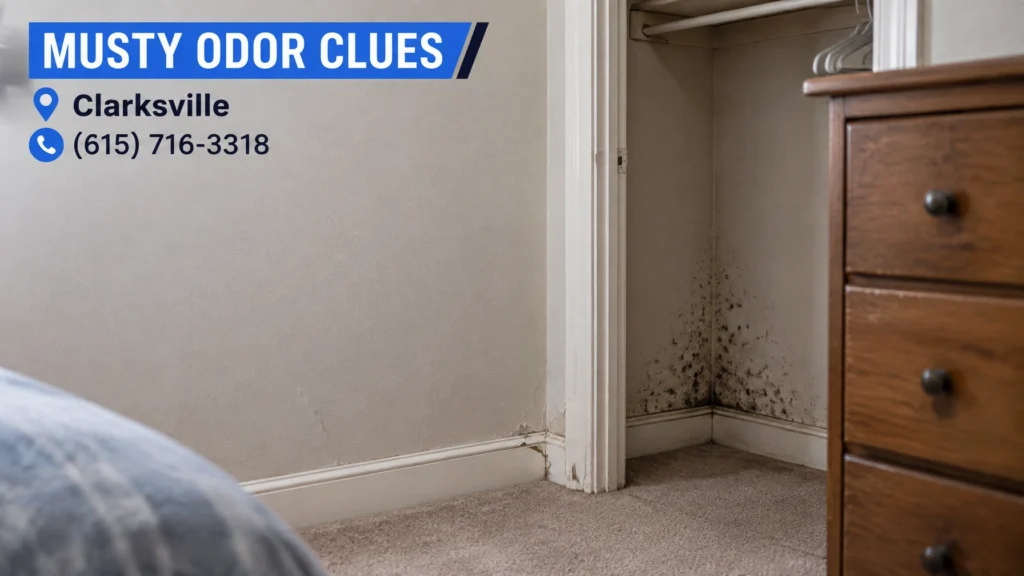
A musty smell usually means moisture has been sitting somewhere longer than it should. You may notice dark speckling in a closet corner behind furniture, peeling paint at a baseboard, or a damp smell under a sink. The visible mark may be small, but the moisture behind it still needs attention.
Mold and mildew repair in Clarksville, TN starts with finding the moisture source. Cleaning the surface without correcting that source often leads to the same odor and staining later. Fix It Quick Network is a referral network, not a repair crew. The Network can match you with a vetted local pro for suitable home repair work and point larger specialty concerns to the right specialist.
1. Know what the smell is telling you
A musty odor is a clue, not a diagnosis. Damp drywall, wet wood, carpet padding, cardboard, insulation, and mold growth can all create a stale smell. The odor may be strongest in a closed closet, near a bathroom vanity, or around a floor register.
Walk slowly through the home and notice where the smell gets stronger. Check places that stay cool, shaded, or poorly aired out. Furniture pushed tight against an outside wall can hide dark speckling, while a swollen cabinet toe kick may point to a slow plumbing leak.
Look for these details.
- Dark spots at a wall corner or ceiling edge
- Peeling paint near a baseboard
- A soft spot beside a tub or toilet
- Condensation on a cold water pipe
- A rust stain beneath a kitchen sink
- Damp cardboard or fabric in a closet
- A smell that returns after the room is aired out
Homes across Montgomery County deal with warm, humid stretches that can keep building materials damp. That does not mean every musty smell is a major mold problem. It does mean the moisture deserves a closer look.
2. Find the moisture before cleaning the surface
The source matters more than the stain. A small leak, trapped humidity, condensation, or water entering through an exterior opening can keep feeding mildew. Cleaning first may make the area look better while the material underneath stays damp.
Start with the simplest checks. Look under nearby sinks, around toilet bases, beside tubs, and along exterior walls. Check whether a bathroom wall feels cool and damp, or whether a closet has limited air movement because furniture is pressed against the wall.
A homeowner in Sango noticed a musty smell in a spare bedroom after several wet weeks. Dark speckling had formed in the closet corner behind a dresser, and the paint near the baseboard was beginning to peel. The issue felt less mysterious after the furniture was moved and the wall was checked for moisture.
Do not open a wall or pull up flooring just to investigate on your own. Take photos, note the location, and watch for changes. If the odor continues or the material feels soft, get matched with a pro who can inspect the area safely.
3. Separate bathroom mold from ordinary bathroom staining
Bathroom mold often begins where moisture stays trapped. Shower steam, a slow plumbing leak, damp grout, and poor air movement can all contribute. A dark line in a corner may be surface mildew, but recurring staining can point to moisture behind the finish.
Check the areas that receive regular water.
- Tub and shower corners
- The ceiling above the shower
- Caulk lines around the tub
- The wall behind a vanity
- The cabinet toe kick
- Flooring near the toilet
- Baseboards beside the bathroom door
A swollen cabinet toe kick deserves attention even if the sink appears to work normally. Water can collect under a loose drain connection or drip from a supply line without forming a large puddle. A soft spot near the tub can also indicate that water has moved beyond the surface.
The goal is not to scrub harder. The goal is to identify whether the area is staying wet. If the mold returns quickly after cleaning, the room may need plumbing repair, material replacement, improved air movement, or a mold specialist.

4. Keep indoor humidity from feeding the problem
Humidity control in Clarksville, TN is part of mold prevention. Warm indoor air can hold moisture, then release it as condensation when it touches a cooler wall, pipe, window, or cabinet surface. That repeated dampness can create a good place for mildew to grow.
A basic humidity monitor can help you understand what is happening. Check the reading in bedrooms, bathrooms, laundry areas, and rooms near crawlspaces or exterior walls. If the home feels sticky, windows collect moisture, or closets smell stale, the indoor humidity may be higher than it should be.
Simple steps may help.
- Keep furniture a few inches away from outside walls
- Open closet doors periodically
- Dry wet towels instead of leaving them bunched up
- Use a dehumidifier where damp air persists
- Run the bathroom fan during showers and afterward
- Keep air returns and supply vents clear
- Repair plumbing drips promptly
Do not seal every vent or opening in an attempt to control humidity. Some openings serve a required purpose, and closing the wrong one can create another problem. If humidity stays high after basic changes, an HVAC or indoor air quality specialist may need to evaluate the home.
5. Check under sinks and around cold pipes
Condensation can look like a leak. A cold water supply line may collect beads of water when warm, humid air reaches the pipe. That moisture can drip onto the cabinet floor and leave a rust-colored stain, swollen wood, or a musty smell.
Look under both kitchen and bathroom sinks. Feel the cabinet floor for soft areas, but do not force your hand around sharp or crowded plumbing. Check for water marks, loose connections, damp insulation, and staining on the back wall.

A small leak can damage cabinet materials before the floor outside the cabinet feels wet. A condensation problem can do the same if the pipe stays wet day after day. The repair may involve a plumbing connection, pipe insulation, cabinet replacement, or broader humidity control.
This is a common home repair concern, especially in kitchens that stay warm while cold water lines remain exposed. If the source is not obvious, avoid painting over the stain or covering the cabinet floor. Document the area and have the condition reviewed.
6. Treat crawlspace moisture as a source, not the whole job
Crawlspace moisture can affect the way the first floor feels and smells. Damp air may move through gaps around plumbing, wiring, ducts, or flooring. In some homes, a musty odor becomes noticeable in bedrooms, closets, or hallways before anyone sees visible mold.
This does not mean every odor requires crawlspace repair. It does mean the area below the home should not be ignored when the smell is strongest on the first floor. Look for signs such as damp insulation, darkened wood, standing water, or condensation on ductwork if the space can be viewed safely.
Do not enter a tight, dark, or unstable area just to inspect it. A specialist may be needed for standing water, damaged support wood, major insulation problems, or persistent moisture. The Network can point you toward the right crawlspace, foundation, HVAC, or mold professional when the concern falls outside ordinary handyman work.
For a broader look at basement moisture and the water path around a home, review the fall basement moisture checks for Clarksville homes and rental properties. That guide covers related moisture clues without treating every odor as a foundation problem.
7. Know what can be cleaned and what needs a specialist
Small surface mildew in a nonporous area may be reasonable to clean if the source is corrected and the material is not damaged. Wear proper protection, follow the product instructions, and keep the area ventilated. Never mix cleaning products.
Porous materials are different. Drywall, insulation, carpet padding, particleboard, and some unfinished wood can hold moisture below the surface. A dark mark that keeps returning may need material removal, drying, or professional remediation rather than repeated surface cleaning.
Get matched with a specialist if you see any of the following.
- Mold covering a broad area
- Mold in several rooms
- Repeated growth after cleaning
- Water damage inside a wall or ceiling
- A persistent odor with no visible source
- Mold near HVAC equipment or ductwork
- Structural wood that feels soft
- A home with extensive previous water damage
Full remediation, major water damage, HVAC contamination, roofing leaks, and structural work need the right specialty provider. A handyman Clarksville TN referral may fit smaller related repairs, such as replacing damaged trim or drywall after the moisture issue is handled. The pros in the Network are licensed and insured.
8. Plan the repair without guessing at the cost
The cost depends on the source, the size of the affected area, the materials involved, and whether specialty work is required. A small plumbing correction and cabinet repair may fall in the low hundreds. Drywall replacement, flooring damage, repeated moisture, or multiple rooms can move the cost into the high hundreds or more.
Mold testing and full remediation are separate cost categories. Testing may be useful when the source is unclear, the affected area is large, or a property transaction requires documentation. Remediation costs rise when materials must be removed, contained, dried, replaced, or tested afterward.
These are planning ranges, not quotes. A matched pro needs to review the actual condition before explaining the work.
For homeowners in St. Bethlehem, a small bathroom moisture issue may be handled differently than a recurring odor throughout an older home. For property managers in Woodlawn, the best plan may include several units, tenant timing, and records of previous complaints. Realtors preparing a home for sale can also use the pre listing repair checklist for Clarksville home sellers to organize moisture concerns with other visible repairs.
9. Prevent the smell from coming back
Mold prevention works best as a short routine instead of a major seasonal chore. Check under sinks every few months, watch for condensation, and keep an eye on places where paint or caulk has started to fail. A quick photo can help you compare the same area later.
Pay attention after heavy rain, long humid periods, and plumbing work. A musty smell that appears only after rain may point to exterior water entry. A smell that gets stronger after showers may point to bathroom moisture. A smell that follows the heating or cooling system needs an HVAC specialist to review the equipment and air path.
For homes near Fort Campbell, keep tenant and maintenance reports in one place. Repeated comments about a stale bedroom, damp closet, or soft floor can reveal a pattern that one service call may miss. A written record also helps investors plan work across Montgomery County instead of treating each complaint as a surprise.
Related exterior gaps and failed sealant can sometimes allow water into wall areas. The fall caulking and sealing checks for Clarksville homes and rental properties can help with that separate inspection.
10. Get matched with the right local pro
You do not need to identify the exact type of mold before asking for help. Describe the smell, the location, what the material looks like, and whether the issue returns after cleaning. Photos of dark speckling, swollen wood, peeling paint, or condensation can help the referral start in the right direction.
Fix It Quick Network can match homeowners, realtors, property managers, and investors with a vetted local pro. The Network does not perform mold removal, repairs, or specialty work as its own crew. The pros in the network are licensed and insured, and major remediation, roofing, HVAC, foundation, and structural concerns can be directed to the appropriate specialist.
If you'd like help sorting out a musty odor, bathroom moisture issue, or related home repair in Clarksville, call or text (615) 716-3318. You can also request a free match at the contact page. Share the property location, the area affected, and what you have already noticed. That is a practical first step without pressure.
11. Mold and mildew repair FAQs
Does a musty smell always mean mold?
No. Damp wood, carpet, cardboard, insulation, and concrete can all smell musty. If the odor continues after the area is dried and cleaned, have the source inspected.
Can small bathroom mold be cleaned by a homeowner?
Small surface mildew on a nonporous area may be cleaned if the moisture source is corrected. Do not keep cleaning the same spot if it returns, spreads, or involves drywall, flooring, insulation, or hidden water.
What humidity level helps prevent mold?
Many homes feel more comfortable when indoor relative humidity stays around 40 to 50 percent. The right level depends on the home and season, but persistent condensation or sticky air deserves attention.
Is condensation on a cold water pipe a leak?
Not always. Warm humid air can create water beads on a cold pipe. A plumber or qualified pro can help tell the difference, especially if the cabinet floor is stained or swollen.
Should moldy drywall be painted?
No. Paint may hide the mark briefly, but it does not correct moisture inside the drywall. Damaged porous material may need to be removed after the source is fixed.
Can Fix It Quick Network perform mold remediation?
No. Fix It Quick Network is a referral network, not a repair crew. The Network can match you with a vetted local pro and point full remediation, HVAC, roofing, structural, and other specialty work to the right provider.