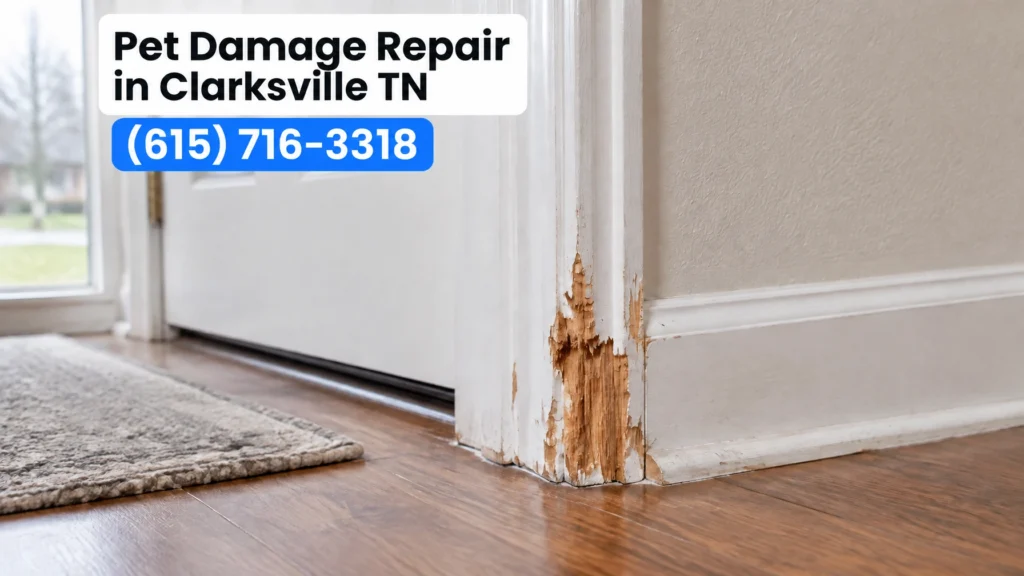
Pet damage rarely stays in one small spot. A puppy chews the door casing, then starts on the baseboard corner. A cat scratches the lower door edge and leaves claw marks across a wood stair tread. A pet gate gets installed into the wrong spot, or a pet door leaves damaged trim and a loose screen behind.
For homeowners, the damage feels frustrating. For realtors and property managers, it can affect a move-out deadline. Investors may find several repair issues waiting inside one rent-ready unit.
Pet damage repair in Clarksville TN usually goes better when the work follows the right order. Stop the source first. Address moisture, odor, and damaged subfloor next. Then repair or replace trim, doors, flooring, screens, and paint.
1. Start with the damage you can see
The pattern usually tells you what needs attention. Look closely before filling, sanding, or painting anything.
Dog damage often shows up on lower door trim, baseboard corners, and the inside edge of a door. The wood may be chewed down to raw material about an inch off the floor. Cat scratches may run vertically along a door casing or collect near the bottom corner where the animal jumps or stretches.
Other common signs include these.
- Claw marks across a wood floor or stair tread.
- A torn screen near a pet door.
- A hollow core door with a chewed bottom edge.
- Scuffed or stained paint at nose height.
- A kennel that has damaged drywall, baseboard, or flooring.
- Carpet pulled loose at a doorway threshold.
- A pet gate installed into weak trim or drywall.
- Urine stains that have soaked through carpet and pad.
A surface repair may be enough when the wood is solid and the damage is shallow. Replacement makes more sense when the trim profile is gone, the door skin is broken, or the damaged material feels soft.
For a closer look at trim decisions, see the interior trim, baseboard, and door casing repair guide.
2. Stop the source before repairing the finish
A fresh repair will not hold if the pet can reach the same spot. This sounds obvious, but it is easy to focus on the chewed wood and forget why it happened.
Move the kennel away from the damaged wall. Add a properly placed barrier if the pet keeps pawing at a door. Check whether a pet gate is rubbing against trim or whether a pet door is leaving a loose edge that invites more scratching.
Look at the height of the damage. Paint worn off at nose height may come from repeated rubbing, not chewing. A scratched door bottom may point to a pet pushing through a tight opening. A torn screen may be the result of a pet trying to follow someone outside.
Pet door and pet gate installation can create extra problems when fasteners go into hollow trim, thin drywall, or an area with wiring and plumbing behind it. The damaged opening may need to be secured, patched, or rebuilt before the gate is installed again.
For rental properties in Montgomery County, take dated photos before changing anything. This helps separate tenant damage, normal wear, and an older repair that failed.
3. Handle urine odor and subfloor damage first
Odor usually needs more than surface cleaning. If urine has reached the carpet pad or wood subfloor, painting the room will not solve the problem.
Pull back the carpet at the affected area and inspect the pad and subfloor. Look for a dark urine stain ring on the subfloor under a pulled-up carpet corner. Check for swelling, soft wood, dark edges, and an odor that becomes stronger when the room is warm or humid.
The repair order usually looks like this.
- Remove soaked carpet pad and any carpet that still carries odor.
- Clean the exposed area with a product made for pet urine.
- Let the subfloor dry fully.
- Check whether the subfloor is firm or soft.
- Seal persistent stains and odor with a suitable odor-blocking coating.
- Replace the pad and evaluate whether the carpet can be reused.
- Replace the carpet or flooring if odor remains in the backing or seams.
Do not cover a damp subfloor with new flooring. Moisture trapped below carpet, laminate, or other materials can lead to swelling and a musty smell.
A pet odor subfloor repair may stay fairly contained when the wood is solid and the affected area is small. Full subfloor replacement is a bigger matter and may require a flooring or structural specialist.

4. Repair chewed trim and scratched casing
Solid wood trim can often be repaired. The decision depends on how much material is missing and whether the original shape can be rebuilt.
Small bites, shallow scratches, and rough edges may respond to cleaning, sanding, filler, primer, and paint. Deeper damage at a corner may need a two-part filler that can be shaped after it cures. The repair should follow the original trim profile instead of leaving a flat patch.
Replacement is usually cleaner when the dog chewed through a large section or destroyed the rounded edge of the casing. A replacement piece needs to match the existing width, thickness, and profile. Older homes in Clarksville may have trim that is difficult to find at a local home center.
Door casing repair often includes more than the visible scratch. Check whether the casing is loose, whether the door is rubbing, and whether the latch still lines up. A rattly handle or sticky door can keep putting stress on the repaired area.
The usual finish steps include these.
- Remove loose fibers and peeling paint.
- Clean and dry the surface.
- Fill gouges and missing corners.
- Sand until the repair feels even.
- Prime exposed wood and filler.
- Paint the full trim face when a small touch-up would stand out.
This is the heart of dog scratched door repair. Make the surface sound first, then make it look right.
5. Check floors, stairs, carpet, and thresholds
Pet damage on flooring can be cosmetic, or it can signal movement beneath the finish. Look at the full area before deciding on a patch.
Claw marks on a wood floor may only affect the finish. Deeper scratches can expose raw wood and collect dirt. A stair tread deserves extra attention because a damaged edge can become a catching point underfoot.
Carpet damage often appears at doorways. A pet may pull at a loose edge until the carpet separates from the tack strip. The transition may also be damaged by a pet gate, kennel, or repeated scratching. A small torn section may be secured or repaired, while widespread pulling may call for replacement.
Check for these details.
- Loose carpet at the threshold.
- Frayed backing or exposed tack strip.
- A lifted LVP seam.
- A soft spot below stained carpet.
- Scratches that run across several boards.
- A stair tread edge that feels loose.
- A transition strip that has pulled away.
The flooring repair guide for Clarksville homes explains why movement below a finished floor matters. Flooring repairs may involve LVP, laminate, tile, carpet, or a squeaky section that needs support below.
6. Do not paint over pet stains too soon
Paint comes last for a reason. Odor, moisture, and damaged material need to be handled first.
Pet stains can show through fresh paint if the surface is not cleaned and sealed properly. Scuffed paint at nose height may only need cleaning and touch-up. A dark stain near a baseboard may point to urine, water, or repeated rubbing. Each cause needs a different fix.
Use light pressure around the lower wall and trim. If the drywall feels soft, swollen, or crumbly, the damage may extend behind the paint. If the baseboard is soft, do not hide it with caulk or another coat of paint.
After the source is controlled and the material is repaired, the finish work becomes simpler. Prime repaired areas, use a compatible paint, and match the sheen as closely as possible. A larger section may need to be painted so the repair blends with the rest of the room.
This matters during a sale or rental turnover. Uneven paint, stained corners, and damaged trim can make a home feel less cared for even when the major systems are in good shape.
The pre-listing repair checklist for Clarksville home sellers can help sort visible pet damage by safety, function, moisture, and buyer attention.

7. A Clarksville home may need several repairs in one visit
A homeowner near Sango recently found more than one pet issue before listing. The bedroom door casing was chewed at the lower corner, the hallway paint was scuffed at nose height, and carpet near the laundry room had a persistent odor. The repairs made more sense as one coordinated list rather than three separate calls.
That type of list is common in Clarksville. Pet damage often collects in high-use areas, especially near bedrooms, back doors, stairs, kennels, and feeding spaces.
For a realtor, the priority may be a clean showing and a short pre-closing repair window. For a property manager near Fort Campbell, the main concern may be getting the unit ready before the next tenant arrives. An investor may want to compare repair costs against replacing one damaged door, one section of flooring, and several pieces of trim.
The right plan depends on the condition. A matched local pro can help separate simple finish work from repairs involving subfloor, framing, wiring, or plumbing.
8. Follow the right repair order
The repair order matters because each step affects the next one.
First, stop the source
Move or secure the kennel, gate, pet door, or access point. Keep the pet away from the damaged area until the repair is complete.
Second, address moisture and odor
Remove soaked pad and damaged carpet. Dry the subfloor completely. Treat and seal odor before installing new flooring or painting.
Third, repair the underlying material
Replace soft subfloor, damaged door sections, loose casing, torn screen frames, or broken transitions as needed.
Fourth, replace trim, doors, and flooring
Install matching casing, baseboard, door material, carpet, LVP, laminate, or other finish materials after the underlying surface is sound.
Fifth, finish with primer and paint
Fill nail holes, sand repairs, prime exposed material, and paint after the dusty work is finished.
This order keeps odor from returning through new finishes and keeps sanding dust away from freshly painted surfaces. It also helps property managers document what was repaired during a rental turnover pet damage visit.
The fall turnover preparation guide for rental properties near Fort Campbell includes a broader inspection process for doors, flooring, paint, fixtures, and safety items.
9. Plan around the cost drivers
Pet repair costs depend on the size of the damage, the material involved, access, and whether hidden problems are present. These are general planning ranges only, not firm quotes.
A minor trim or paint repair may fall around $150 to $400 when the work includes filling, sanding, priming, and touch-up paint. Replacing one standard interior door or a short section of casing may run roughly $250 to $700, depending on the door style, trim profile, hardware, and finish work.
Small flooring repairs may fall around $250 to $800. Carpet replacement, odor treatment, or repairs that involve pad and subfloor can move from several hundred dollars into the $1,000 to $2,500 range or higher.
Common cost drivers include these.
- How much material the pet damaged.
- Whether the original profile or flooring can be matched.
- Whether the carpet pad and subfloor are affected.
- The amount of odor treatment and drying time.
- Whether the door, frame, or casing is out of alignment.
- Whether several rooms can be grouped into one visit.
- Whether specialty work is needed.
Full subfloor replacement, structural framing, major electrical work, and significant plumbing are big specialty jobs. The Network can point customers to the right specialist for those repairs rather than treating them like a basic handyman visit.
For exterior pet damage and moisture around doors, the fall wood rot repair guide for Clarksville homes may also be useful.
10. Know when to get matched with a pro
Simple DIY work may be reasonable when the trim is solid, the damage is shallow, and the repair only involves light sanding, filler, caulk, or paint. A homeowner does not need to replace an entire door casing because of one small scratch.
Get matched with a pro when the damaged area involves any of these conditions.
- The wood feels soft or crumbles under light pressure.
- Urine odor remains after the carpet and pad are removed.
- The subfloor is stained, swollen, or uneven.
- A door no longer latches or lines up.
- A pet gate or pet door has damaged framing or wiring areas.
- Carpet has pulled away at a threshold.
- A stair tread feels loose.
- The same spot keeps getting damaged.
- Several repairs need to be completed before a showing or move-in.
- The job may involve structural framing or full subfloor replacement.
Fix It Quick is a referral network, not a repair crew. The Network matches homeowners, realtors, property managers, and investors with vetted local pros for home repair in Clarksville TN. The pros in the network are licensed and insured, and the Network can point customers toward the right specialist for larger work.
If you'd like help with pet damage repair, call or text (615) 716-3318, or request a free match at Fix It Quick. Share the property location, the damaged areas, and any odor or moisture concerns. That gives the matched pro a practical place to start.

11. FAQs about pet damage repair
Can chewed door trim be repaired instead of replaced?
Often, yes. Shallow bites and small missing areas can usually be filled, shaped, sanded, primed, and painted. Replacement is usually better when the trim profile is badly damaged or a large section is missing.
How do you remove pet odor from a wood subfloor?
The affected carpet pad usually needs to be removed first. The subfloor should be cleaned, dried, inspected, and sealed with a suitable odor-blocking product if the smell or stain remains. New flooring should not be installed over a damp or soft subfloor.
Can scratched wood flooring be touched up?
Light scratches may respond to cleaning and a compatible finish touch-up. Deep claw marks that expose raw wood may need sanding, board repair, or replacement. The depth and location of the scratches affect the right option.
Should carpet be replaced after pet urine damage?
Not always. Carpet may be reused if the backing is sound and the odor is fully gone. Soaked pad usually needs replacement, and carpet that still smells after cleaning may need to be replaced.
Who handles full subfloor replacement or structural framing?
Those repairs belong with the right flooring, carpentry, or structural specialist. Fix It Quick can point homeowners, realtors, property managers, and investors toward an appropriate specialist when the work is beyond a standard handyman repair.
Is pet damage common during rental turnover?
Yes. Door trim, baseboards, carpet thresholds, flooring, paint, screens, and kennel areas often show damage after a pet-occupied rental. A room-by-room inspection helps identify the full list before cleaning and painting begin.