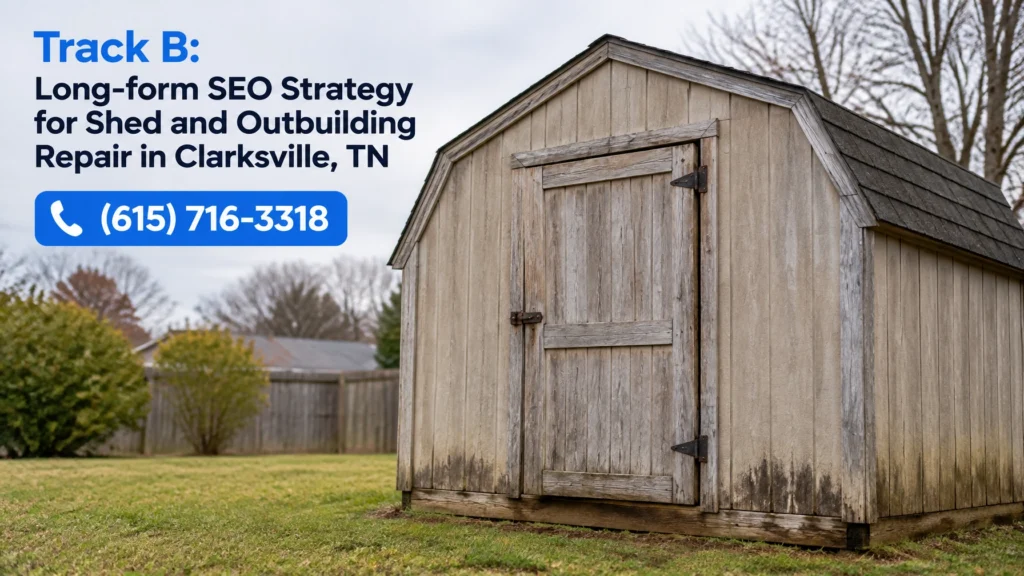
A shed can look fine from the driveway and still have trouble starting at the floor edge, door frame, or roof line. Small outdoor buildings take steady weather, splashback, shifting soil, and repeated opening and closing. Fall is a good time to check those details before wet weather and freeze thaw cycles make them harder to ignore.
This matters for homeowners, realtors, property managers, and investors in Clarksville and Montgomery County. The goal is not to make an older shed look new. It is to keep a manageable repair from becoming a rebuild.
Fix It Quick Network is a referral network, not a repair crew. We can match you with a vetted local pro for appropriate shed and outbuilding work. The pros in our network are licensed and insured, while major specialty work goes to the right specialist.
1. What Usually Fails First
Shed doors often show trouble before the rest of the building does. A wooden door may swell and drag across the threshold after rain, or the latch may stop lining up because the frame has shifted. Rusted hinge straps can also pull away from soft wood around the jamb.
Look closely at the bottom of the door and the frame corners. Check for split caulk, peeling paint, dark stains, and a gap that changes after wet weather. A door that feels heavy may have a simple hardware issue, or it may be telling you that water has reached the frame.
Other common trouble spots include the following.
- Lower siding and corner trim
- Floor edges near the outside wall
- Skids that sit in wet soil
- Roof edge boards and flashing
- Vents and ridge areas
- Ramps, steps, and threshold boards
- Loose latch plates and hinge screws
A shed in Clarksville may face direct rain on one side and damp shade on the other. That uneven exposure can make one corner fail well before the rest of the building. Do not assume the whole structure needs to be replaced because one door or floor edge feels soft.
2. Check Water and Grade Before Wood
Water is often the reason a shed repair keeps coming back. Roof runoff may dump beside the base, soil may sit higher than the floor edge, or mulch may be piled against the siding. A missing drip edge can also send water behind the roof trim and down the wall.
Walk around the building after a rain if it is safe to do so. Look for muddy soil, standing water, splash marks, and a wet line along the lower siding. Check whether the shed sits below the surrounding lawn grade, especially on a sloped lot.
In Sango, a shed may sit at the bottom of a backyard slope and receive water from more than its own roof. In St. Bethlehem, older outbuildings may have settled slightly, leaving one side closer to the soil. A property near Fort Campbell may also have a rental turnover schedule that makes a drainage problem easy to postpone.
Keep soil and mulch back from the siding. Clear leaves from the roof edge and make sure water has a reasonable path away from the building. For related drainage concerns around the main house, see the gutter repair and drainage guide for Clarksville homes.

3. Inspect the Floor Edge and Skids
The floor edge deserves a careful look because it is close to the ground and often hidden by grass or stored items. A soft spot at the shed floor edge where the siding meets the base can mean water has reached the flooring, rim board, or supporting materials.
Do not press hard into questionable wood. Look for crumbling fibers, a darkened edge, sagging, or a floor that feels uneven under normal foot traffic. If the shed has skids, check whether they remain supported or whether one side has sunk into wet soil.
Here is what to check.
- The bottom edge of each wall
- Floor areas beside the door
- Corners where siding meets the base
- Skids, blocks, or piers under the building
- Gaps that allow rain to blow underneath
- Evidence of animals or water moving below the floor
A soft floor edge is different from a faded board. Paint can hide surface wear, but it cannot restore strength to damaged wood. If the softness extends beyond the surface, the repair may involve removing part of the floor or rebuilding a section of the support.
Owners in Montgomery County should photograph the four corners before the weather turns colder. Take one wider photo of each side and one close photo of any soft, split, or stained area. Clear records help a pro understand the condition before a visit.
4. Look at the Roof Edge Without Climbing
The roof does not need to be climbed for a basic seasonal check. From the ground, look for a sagging roof line, missing edge material, lifted flashing, damaged shingles, and water stains below the roof wall connection.
A shed roof may be small, but leaks can still damage rafters, ceiling panels, siding, and stored belongings. Pay close attention to the area where the roof meets the wall. Wind driven rain can enter through a loose flashing edge or an open joint.
You can safely clear light leaves from the roof edge by hand from the ground with a leaf blower or rake, if you can do so without reaching overhead or standing on a ladder. Do not climb onto a roof that feels unstable. Do not pull at flashing or roofing materials just to see what is underneath.
For a broader fall exterior check, the guide to fall wood rot repairs for Clarksville homes and rental properties covers soft trim, peeling paint, dark stains, and other signs that also apply to outbuildings.
Full roof replacement is specialist work. If the roof line is sagging, the damage covers a large area, or the roof structure feels unsafe, we would point you to the right roofing or structural specialist rather than suggesting a routine handyman repair.
5. Prepare Doors, Ramps, and Steps
A shed is only useful if you can open it and reach it safely. Check whether the door drags, the latch catches, or the hinges pull away from the frame. Test the ramp and steps without placing heavy equipment on them.
A gap at the bottom of the ramp can let water wash beneath the boards and may create a trip point. A worn threshold board can also hold moisture against the door. Look for loose boards, soft edges, exposed fasteners, and movement at the connection to the shed.
A simple check can include the following.
- Open and close the door slowly.
- Confirm that the latch lines up without lifting the door.
- Look for daylight around the frame.
- Check whether the hinge screws hold firm.
- Step lightly on the ramp and watch for movement.
- Make sure the ramp does not separate from the threshold.
- Keep leaves and mulch from blocking the lower door edge.
One Clarksville area homeowner noticed a door dragging after several rainy days. The lower frame had softened near one hinge, and the ramp had a small gap where it met the threshold. The problem was not the whole shed, but both areas needed attention before winter storage went inside.
A homeowner may be comfortable tightening a clean, accessible screw. A loose frame, damaged hinge support, or shifting ramp needs a closer review.

6. Use Safe Fall and Winter Steps
Fall maintenance does not need to become a long weekend project. Start with the parts you can see from the ground and avoid opening walls, lifting the shed, or taking apart the roof.
Move stored items away from the walls so you can see the interior floor edges. Keep equipment dry and off a damp floor where possible. Photograph the four outside corners, the door, the ramp, and any place where water collects.
The fall freeze preparation guide for Clarksville rental properties also covers seasonal checks that can help around detached storage areas. Remove hoses and standing water near the building, keep access paths clear, and watch for areas that may become slick after freezing weather.
A property manager near Fort Campbell may want the tenant or caretaker to send the same photos after each turnover. That creates a simple record of whether the floor edge, door, and ramp are getting worse. Investors can use those photos to decide whether to repair the current shed or budget for replacement.
Do not enter an outbuilding with a damaged roof line, exposed wiring, unstable flooring, or a strong musty smell without getting the condition reviewed. Keep children and pets out of a structure that may have a weak floor.
7. Decide Between Repair and Replacement
The right choice depends on the building’s frame, floor, roof, and location. Replacing one door, a short siding section, or part of a ramp may make sense when the rest of the shed is sound. Replacement may be more practical if several major parts have failed at the same time.
Repair first if these conditions are true.
- The roof line is straight.
- Most of the floor feels solid.
- The walls remain plumb.
- Damage is limited to a few boards or hardware points.
- The shed has a useful size or location.
- Water can be redirected away from the base.
Consider a replacement discussion if the floor is soft across a large area, the wall frame has shifted, the roof sags, or rot reaches multiple corners. A new shed does not solve poor drainage by itself. The site still needs attention.
For a seller, a clean and functional outbuilding may be enough before listing. The pre listing repair checklist for Clarksville home sellers can help sort safety, moisture, function, and appearance in the main home and around secondary structures.
For an investor, the decision may depend on use. A rental shed that stores lawn equipment may only need a safe door and dry floor. A larger outbuilding used as a workshop may need a more detailed review of the structure, roof, ventilation, and electrical service.
8. Know When to Get Matched With a Pro
You do not need to diagnose every hidden problem yourself. A clear photo and a short description are usually enough to start a conversation about the right type of pro.
Get matched with a pro if you notice a soft floor edge, a sagging roof line, a door frame that has racked, or rot that extends past the surface. The same applies when a ramp moves under light pressure or the shed has settled enough to affect the door.
Electrical work needs special care. If wiring runs out to the shed, a light flickers, an outlet is warm, or the service appears damaged, the work should go to the appropriate electrical specialist. We do not present the Network as an electrical contractor.
Full roof replacement, major structural repair, foundation or slab work, and large concrete repairs also fall outside ordinary handyman scope. We can point homeowners, realtors, property managers, and investors toward the right specialist for those conditions.
A shed repair can feel easy to postpone because it is separate from the house. That is usually why small water problems have time to spread. A short inspection now gives you better choices later.
9. Plan for Cost Without Guessing
Shed and outbuilding repair costs depend on the size of the structure, access, materials, and the amount of hidden damage. A small hardware adjustment may be a modest repair. Rebuilding a floor edge, matching siding, or correcting a roof wall connection can cost much more.
For general planning, a minor repair visit may fall in the range of about 150 to 400 dollars. Repairs involving several boards, a door frame, a ramp, or a floor edge may move into the 500 to 1,500 dollar range or higher. These are planning ranges only, not quotes.
Common cost drivers include the following.
- Shed size and condition
- Travel and access to the backyard
- Whether the structure can be reached without moving fences or stored items
- Door frame or floor edge rebuilding
- Roof edge or flashing repair
- Matching siding, trim, paint, or roofing materials
- Drainage work needed around the base
- Hauling damaged materials away
- Whether a specialist must review the condition
Grouping several repairs may make scheduling more practical, especially for property managers and investors. A pro can explain the actual cost after reviewing the shed and identifying what needs to be removed, replaced, or left alone.
The fall curb appeal repair guide for Clarksville homes also explains why small exterior details affect how cared for a property feels. That applies to a visible shed, detached garage, or backyard outbuilding.
10. Take the Next Practical Step
Start by photographing the door, floor edge, four corners, ramp, and roof line from the ground. Note when the problem appears, especially after rain, strong wind, or a freeze. Do not cover soft wood with paint or caulk before the cause is understood.
If you would like a vetted local pro to review the condition, call or text (615) 716-3318 or request a free match at Fix It Quick. Share the property location, shed size, visible damage, and a few clear photos. That gives the matched pro a useful starting point and helps keep the next step simple.
Frequently Asked Questions
Can a swollen shed door be adjusted by a homeowner?
Sometimes. Tightening accessible hardware may help if the frame and hinge wood are sound. If the door keeps dragging, the frame has shifted, or the hinge screws pull out, the condition needs a closer review.
How can someone tell if a shed floor is unsafe?
Look for a soft or springy area, sagging, crumbling wood, water staining, or a floor edge that moves under light pressure. Do not keep testing a weak area. Stay out of the shed and get matched with a pro if the floor feels unstable.
Should mulch touch the shed siding?
No. Keep mulch and soil back from the siding so the lower boards can dry and remain visible. If the shed sits below the lawn grade, moving mulch alone may not solve the water problem.
Does a shed need its own gutters?
Not always. Gutters may help on a larger outbuilding or a site where roof runoff is washing against the base. A pro can review the roof size, grade, and drainage path before recommending a solution.
Can the Network handle electrical wiring to an outbuilding?
The Network does not perform electrical work or present itself as a licensed electrical contractor. We can point the homeowner to the right electrical specialist when wiring, service upgrades, outlets, or unsafe connections are involved.
Should a badly damaged shed be repaired or replaced?
That depends on the condition of the floor, roof, walls, frame, and site drainage. A vetted local pro can help compare repair and replacement after reviewing the visible damage, access, and likely hidden work.