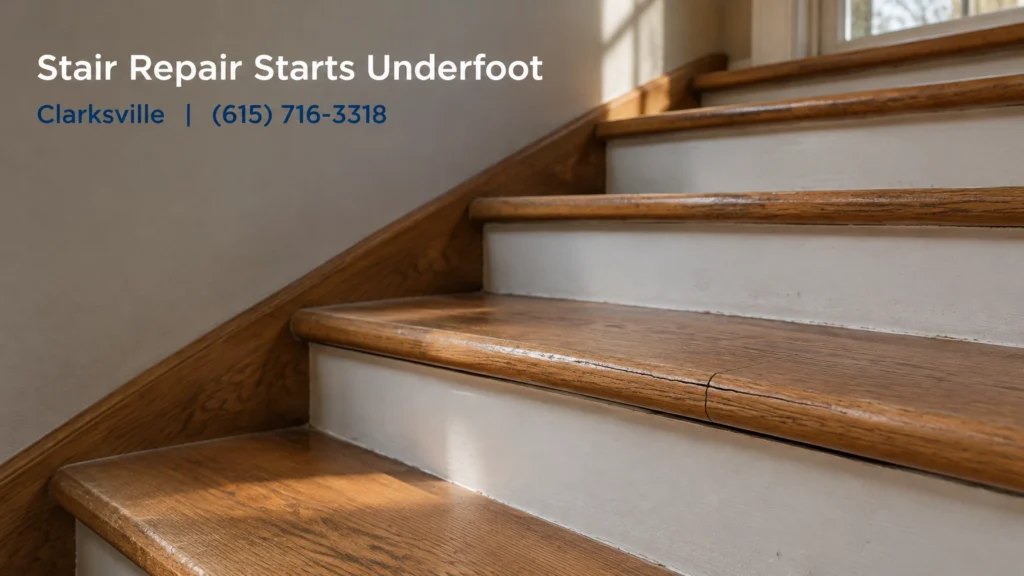
Stairs can give you clues before anything feels seriously wrong. A squeak, a cracked tread edge, or a post that shifts when touched may be a small fix, or a sign that the support needs a closer look.
Fix It Quick Handyman Network is a referral network, not a repair crew. It matches homeowners, realtors, property managers, and investors in Clarksville and Montgomery County with vetted local pros. The pros in the network are licensed and insured.
1. Know the Parts Before You Judge the Problem
A stairway is a group of connected parts. The treads are the surfaces you step on. The risers are the upright boards between them. The nosing is the front edge of a tread, and it takes plenty of foot traffic over the years.
The stringers are the sloped supports that hold the treads and risers. A skirt board runs along the side of the stairway and covers the edge where the steps meet the wall. Balusters, sometimes called spindles, fill the open space between the stair treads and upper guard. A newel post is the larger post that anchors the railing at a turn or at the end of a run.
A landing is the flat platform at the top, bottom, or turn in the stairs. If a step feels loose, the cause might be the tread, but it could also be the riser, a fastener, or the support underneath.
Knowing the names helps you describe what you see. You don’t need to take anything apart to get started.
2. Separate Surface Wear From a Support Problem
Scuffed finish, shallow dents, or worn stain on a tread are usually cosmetic. They can make an older stairway look tired without making it unsafe. A surface finish won’t, however, tighten a loose board or repair a cracked support.
Pay attention to changes in how the stairs feel. A soft or spongy tread, movement through a whole step, a widening gap, or a split riser board deserves more than a quick dab of filler. A squeak at the stringer can be a sign of rubbing or a loose connection, especially if the stair also flexes underfoot.
Check the full run from the side if it’s safely visible. Look for a cracked or separated stringer, a skirt board pulling away from the wall, or a tread that has dropped at one end. Don’t crawl under an unstable stairway or climb around to get a better view.
If a step moves noticeably or the support looks damaged, limit use until a pro can assess it. In an older Clarksville home, worn finish may be ordinary; movement is the clue to take seriously.
3. Understand Why Stairs Squeak
A squeak usually comes from two surfaces rubbing as a step moves. The tread may shift against the riser, a fastener may have loosened, or the tread may move slightly against the stringer. Changes in indoor humidity can also make wood expand or shrink, which can make a quiet stair noisy.
Start with a simple check. Walk slowly, one step at a time, and notice exactly where the sound happens. If there’s safe access underneath, a second person can step gently while you listen from below. Don’t pull off finished boards just to find the noise.
The lasting fix depends on the cause. A pro may secure a loose connection, add support or a shim where the wood meets, or fasten the tread from below when the underside is accessible. A surface screw or filler may quiet the sound briefly, but it won’t help if the stringer is damaged or the tread is moving for another reason.
A single squeak with a firm step is often less concerning than squeaking paired with flex. That difference helps point the repair in the right direction.
4. Repair a Tread or Replace It
One damaged tread doesn’t always mean the whole staircase needs to go. If the support is sound and the damage is limited, a pro may be able to secure the tread or make a localized repair. A hairline crack across the tread nosing or a narrow gap where the tread meets the riser can be useful clues, but they don’t tell the whole story by themselves.
Replacement may make more sense if the tread is split through, worn deeply, loose across much of its width, or damaged where it connects to the supports. Matching the wood, thickness, nosing profile, and finish also matters. A replacement board that sits at a different height can create an awkward step and a safety concern.
Ris ers need the same careful look. A split riser board may be a finish issue, but a loose or damaged riser can affect how the treads hold together. The right choice depends on how many steps are involved and whether damage is isolated or repeated.
A pro can explain whether the visible wear is limited to the board or points to a support problem underneath. For more on carpentry work, see carpentry installation and repair.
5. Check Balusters and Newel Posts
Balusters should feel secure, and the gaps between them should be consistent. Look for a spindle that turns or shifts when lightly touched, a loose connection at the tread, or a wider opening than the ones beside it. Don’t test a loose component by leaning your full weight against it.
Spacing is about more than appearance. Current residential code rules and local requirements can vary, and the rules for existing stairs may differ from those for a new or substantially changed stairway. If balusters are missing, widely spaced, or being replaced, ask a qualified pro to check the opening size and applicable local code before work begins.
A newel post should not rock at its base or move when the adjoining railing is used. The post anchors the stairway’s guard, so movement can point to a loose connection below the finish. A loose railing connection can be part of the same assembly, but the post and balusters should get the attention first.

A stair handrail’s attachment should be checked as part of the larger stair assembly, not treated as a separate fix if the post or balusters are loose. In St. Bethlehem, picture an older home where one lower spindle has started to shift and the newel post moves slightly at its base. The sensible next step is to check how those parts connect, not simply hide the gap with trim.
6. Look at Porch and Exterior Steps Differently
Exterior steps face rain, sun, temperature swings, and everyday foot traffic. On wood steps, look for soft or split tread boards, worn nosings, and movement where a step meets its support. A fresh coat of paint can improve the look, but it won’t make soft wood sound.
Concrete steps can settle or become uneven, leaving a sloped landing or a lip at the edge of a step. A small surface chip is different from a step that rocks, has shifted, or has a widening crack. If the porch or step has dropped, the base and surrounding ground may need attention as well as the visible concrete.
A homeowner in Sango might notice a porch step sitting lower on one side after a wet season. In that illustrative situation, the right question is whether the step itself is damaged or its support has shifted. A pro can assess the visible condition and point to a specialist if the cause involves broader structural or ground movement.
Until an uneven or loose step is assessed, use another entry if that’s practical. You don’t need to start breaking concrete or pulling apart wood to document the concern.
7. Decide When to Get Matched With a Pro
A little finish wear may be manageable, but repairs that involve the supporting structure call for a careful assessment. Get matched with a pro if you notice movement in a stringer or newel post, multiple loose balusters, a soft tread, or a stair flight that flexes underfoot.
Keep the steps clear while you’re checking. Take a few photos of the full stairway and close views of the loose, split, or worn area. Note which step moves or squeaks and whether it feels different from the others. That’s enough information to start a useful conversation.
Realtors can include stair concerns in a pre-listing review or inspection response. The Clarksville home seller repair checklist can help organize other visible repair items. Property managers may want a consistent record across rentals, while investors can compare isolated tread repairs with broader stair work before setting a turnover budget.
For a home near Fort Campbell or in Woodlawn, a clear description and a few photos can help a local pro understand the request. If the issue appears to involve major structural movement, the Network can point you to the right specialist rather than treating it as a routine handyman repair.
8. Use Cost Ranges for Planning, Not as a Quote
Stair repair costs depend on what’s loose or damaged, how many steps are affected, the material and finish, and whether the underside is accessible. A small repair to a squeaky or loose tread may fall in the low hundreds. Replacing individual treads or repairing several boards can run from a few hundred dollars upward, depending on materials and finish matching.
Work involving a damaged stringer, several steps, or a larger stairway rebuild can reach several thousand dollars. Those are broad planning ranges, not local quotes. The exact scope and any code or permit needs can change the total.
Ask what the estimate includes. It should make clear whether it covers removal, new materials, finish work, cleanup, and any needed review of the supporting structure. For exterior concrete steps, the cause of settling and the amount of repair needed can affect cost considerably.
A simple repair may be enough when the problem is isolated and the support is sound. If the stairway feels unstable, don’t choose a surface patch based on price alone.
9. Choose a Practical Next Step
Stair problems can feel unsettling because you rely on the steps every day. Start with what you can see and feel. Keep the stairway clear, note any movement, and avoid using a step that feels unstable until it’s checked.
Fix It Quick Handyman Network is a referral network. It does not perform repairs. The Network can match you with a vetted local pro, and the pros in the network are licensed and insured.
If you’d like help finding the right local pro, call or text (615) 716-3318, or request a free match. Share where the issue is, what you noticed, and whether there’s a timing need. A practical next step is to take two or three clear photos and write down which step feels different.
10. FAQs About Stair and Stairway Repair
Does one squeaky stair mean the stairs are unsafe?
Not necessarily. A squeak can come from two boards rubbing or a loose fastener. If the step also flexes, feels soft, or moves visibly, get it checked.
Can a cracked tread be repaired instead of replaced?
Sometimes. A pro can look at the size and location of the crack, the condition of the nosing, and the support underneath. A split through the board or damage across several steps may call for replacement.
What should I do about a loose baluster?
Avoid leaning on it or letting children pull on it. Note which spindle moves and whether nearby balusters or the newel post shift too. Spacing and fastening should be assessed together if more than one part is loose.
Are settled concrete porch steps a simple patch job?
Not always. A small surface chip may be limited, but a step that has shifted or rocks may have a problem below it. The cause needs to be understood before choosing a repair.
Do stair repairs have to meet current code?
Requirements depend on the work and local rules. New or substantially altered stairs may have different requirements from existing stairs. Ask the pro to confirm what applies before rebuilding or changing spacing.
When should I stop using the stairs?
If a tread feels soft, a step moves noticeably, or the supporting structure appears damaged, avoid that stairway if you have a safe alternative and arrange an assessment. Don’t try to brace or dismantle it yourself.