A water heater problem can feel urgent, especially when you find water on the floor or wake up to no hot water. The good news is that not every problem means you need a new tank.
A search for water heater repair Clarksville TN homeowners can trust often starts with a few basic questions. How old is the unit? Is the tank itself leaking? Is the problem a replaceable part? Does the cost of repair make sense compared with replacement?
Fix It Quick Network is a referral network, not a repair crew. The Network matches homeowners, realtors, property managers, and investors with vetted local pros who can evaluate the actual condition of the water heater.
1. Why Water Heaters Wear Out Faster in Clarksville
Clarksville water runs hard and mineral heavy, which speeds up sediment buildup inside a tank. Those minerals settle around the bottom of the tank and heating elements, making the unit work harder every time it heats water.
Sediment can also trap water against hot metal surfaces. Over time, that creates popping sounds, reduced efficiency, uneven water temperature, and extra wear on the tank. Homes in Montgomery County may see these problems sooner when a heater has not been flushed or inspected for several years.
A standard tank water heater often lasts about 8 to 12 years. Usage, water quality, installation, maintenance, and tank location all affect that range. A unit in a warm utility closet may age differently from one in a garage or tight attic space.
A little mineral crust around a fitting may not look serious, but it can point to a larger issue developing inside the tank.
2. What a Water Heater Problem Actually Looks Like
Water heater trouble usually leaves clues before the unit stops working. Look for rusty water, a damp drain pan, a rattly connection, inconsistent temperature, or a slow recovery after showers.
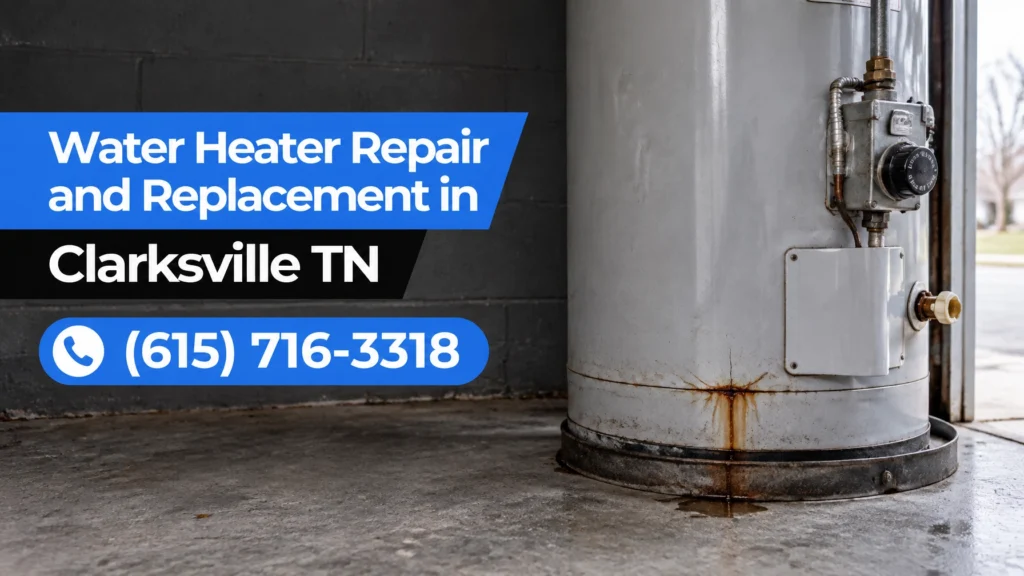
A hairline crack weeping rust-colored water at the base of a 12 year old tank is a serious warning. Water coming from the tank body usually means the inner lining or steel shell is failing. A valve or fitting may be repairable, but a leaking tank generally calls for replacement planning.
Listen for a popping or knocking sound from sediment baked onto the bottom of the tank. The noise often happens as water moves through the buildup and heats unevenly. It does not always mean the tank has failed, but it deserves an inspection.
Also check the temperature and pressure valve. A valve that has wept into the drain pan may have a faulty seal, excessive pressure, or another issue that needs a licensed pro to evaluate.

3. What to Check First Before You Spend a Dollar
Start with the simple facts. Find the equipment label, note the serial number, and look for an installation date if one is available. If the label is hard to read, estimate the age from home purchase records or previous service paperwork.
Check whether the problem affects the whole home or just one fixture. A single shower with poor hot water may have a failing mixing valve or clogged shower component. No hot water throughout the house points more toward the water heater, power supply, gas control, or heating system.
Look at the area around the tank without touching corroded parts.
- Check for water in the drain pan.
- Look for rust streaks below fittings.
- Listen for popping during a heating cycle.
- Check whether the shutoff valve is open.
- Look for a tripped electrical breaker on an electric unit.
- Confirm that the pilot or control display is operating on a gas unit.
Do not force a shutoff, gas connection, drain valve, or temperature and pressure valve. If water is near electrical equipment, keep clear and get the right help. The main shutoff guide for a Clarksville home can help identify the valve location before a leak spreads.
4. Age and Tank Condition, When Repair Stops Making Sense
Age matters, but it is not the only factor. A 12 year old tank with a working shell and a worn heating element may still be worth repairing. A younger tank with a leaking body may not be a good repair candidate.
The tank shell is the dividing line. Parts such as heating elements, thermocouples, igniters, valves, and anode rods can often be replaced. Once the steel tank itself is leaking, a new part will not restore the failed lining.
A Sango homeowner once had a 40 gallon electric tank let go on a Saturday morning, leaving water across the garage slab. The tank was old, and the leak came from the body rather than a serviceable fitting, so replacement planning became more practical than chasing another repair.
Consider these questions before deciding.
- Is the tank leaking from the body?
- Has it needed several repairs recently?
- Is hot water recovery getting worse?
- Is rust spreading around the base?
- Is the unit past the typical 8 to 12 year range?
- Would a repair leave an older tank with little useful life?
5. Repair or Replace, How to Decide Without Guessing
Repair usually makes more sense when the tank is younger, the shell is dry, and the problem is limited to one part. A heating element, thermocouple, temperature and pressure valve, or anode rod may be a reasonable fix when the rest of the system is in good shape.
Replacement deserves more attention when the unit is older, the tank body is leaking, or repairs keep adding up. Several repairs within a short period can make a new unit the better long-term choice.
A tankless water heater may appeal to homeowners who want continuous hot water or more usable space. Conversion is not a simple swap, especially when gas lines, electrical capacity, venting, condensate drainage, or permits are involved. Gas line work, tankless conversions, and code upgrades should go to the right licensed specialist.
A traditional electric or gas tank may still fit the home and budget better. It depends on household size, available fuel, demand, installation space, and expected time in the property.
If the water heater sits in a rental, list the repair history and expected remaining life. That gives a property manager or investor a clearer way to plan instead of waiting for an emergency.
6. What Drives Cost, General Ranges for Clarksville Homeowners
Water heater cost in Clarksville, TN depends on the unit, access, parts, labor, and required upgrades. The ranges below are general planning numbers, not firm quotes.
- Electric tank replacement installed, roughly $900 to $1,800.
- Gas tank replacement installed, roughly $1,200 to $2,500.
- Tankless conversion, roughly $3,000 to $5,500 or more.
- Thermocouple or igniter repair, roughly $150 to $350.
- Heating element replacement, roughly $150 to $400.
- Temperature and pressure valve, roughly $150 to $300.
- Expansion tank, roughly $200 to $400.
- Anode rod, roughly $200 to $400.
- Flushing, roughly $100 to $250.
Tank size makes a difference. So do gas versus electric connections, venting and code upgrades, permits, a drain pan and pan drain, an old shutoff valve, haul away, and access in a tight closet or attic.
A replacement in an open garage may be easier than one inside a narrow utility closet. A unit in an attic may require more time, protection for finished surfaces, and careful removal.
7. Anode Rods and Flushing, The Maintenance That Adds Years
An anode rod protects the tank by corroding before the steel lining does. In mineral heavy water, that rod can wear down faster than a homeowner expects. Once it is mostly gone, the tank has less protection against internal corrosion.
Flushing removes loose sediment from the bottom of the tank. It can improve heating performance and reduce the popping or knocking sound caused by buildup. It cannot repair a tank that is already leaking through the body.
Anode rod work and flushing should be handled carefully on an older unit. A stiff drain valve may begin leaking after it is opened, and disturbed connections may reveal existing corrosion. A pro can check whether the maintenance is still worthwhile.
Fall is a practical time to review this work before colder weather increases demand. Property managers can combine it with fall water heater checks for rental properties and keep a record of service dates, tank age, and visible condition.
A simple maintenance record should include the unit type, capacity, age, last flush, anode rod condition, valve condition, and any tenant complaints.
8. When to Get Matched With a Pro
Get matched with a pro when water is coming from the tank body, the drain pan is filling, the temperature and pressure valve keeps dripping, or the unit stops producing hot water. A pro should also inspect problems involving gas controls, electrical connections, venting, or pressure.
Homeowners can safely observe the condition if the area is dry and accessible. They can note the age, photograph the label, check for visible moisture, and identify whether the unit is gas or electric. They do not need to dismantle the heater or force a stuck part.
The pros in the Fix It Quick Network are licensed and insured. The Network matches homeowners with vetted local pros, while gas line work, tankless conversions, permits, and code upgrades are directed to the right licensed specialist.
A handyman service may help with surrounding home repair work such as drywall, trim, flooring, or access panels after the plumbing issue is addressed. The water heater itself still needs the right plumbing professional when the work involves connections, safety controls, or replacement.
9. Water Heaters in Rentals, Realtor Timelines, and Investor Turns
A failed water heater can affect a tenant, a closing date, or an investor renovation schedule. Rental properties near Fort Campbell may have short turnover windows, so waiting for a complete failure can create pressure at the worst time.
Realtors often need post-inspection repairs completed before closing. A pre listing repair checklist for sellers can help frame what to review, and a small valve leak may be handled differently from a tank replacement, but both should be documented clearly.
Investors working across Montgomery County should compare repair costs with expected property hold time. A low-cost repair may be reasonable for a newer tank, while an older unit may be better handled during a planned turn.
Keep these details with the property record.
- Tank age and size.
- Fuel type and model.
- Last repair date.
- Visible rust or leaks.
- Whether the drain pan and drain line are present.
- Any permit or code work needed.
- Expected access and removal conditions.
The fall maintenance budget planning guide for rental investors can help organize water heater costs with other common home repairs properties may need.
10. Fall and Winter Prep for Clarksville Water Heaters
Cold weather exposes weak points in garages, crawlspaces, utility closets, and exterior walls. Check exposed hot water lines for missing insulation and look for drafts around doors or access panels. Do not cover controls, vents, valves, or safety labels with insulation.
Review the water heater area before the first hard freeze. Make sure the drain pan is clear, the discharge pipe is visible, and the nearby floor is dry. A pan can catch a small amount of water, but it cannot stop a leaking tank.
Property owners should also confirm that tenants know how to report no hot water, unusual noises, or standing water. A quick report can prevent a small fitting leak from turning into damaged flooring or drywall.
The fall freeze prep guide for Clarksville rental properties follows the same seasonal routine. It also pairs well with basement moisture checks in Clarksville homes in places like St. Bethlehem, where garage and utility closet setups can leave tanks exposed to temperature swings.
If water is already spreading, avoid electrical equipment and shut off the water only if the valve operates easily and can be reached safely. Do not force an old valve.
11. What to Do Right Now
Start by identifying the tank age, fuel type, size, and visible symptoms. Take a few clear photos of the label, drain pan, fittings, and any water on the floor. Do not remove covers or touch corroded electrical or gas components.
If the tank is leaking from its body, start planning for replacement instead of paying for repeated small repairs. If the shell is dry and the issue points to a valve, element, igniter, thermocouple, sediment buildup, or anode rod, repair may still make sense.
Check the main water shutoff before an emergency happens. A little preparation can make a no hot water call or a leaking tank feel much less overwhelming.
Fix It Quick Network can match homeowners with a vetted local pro for water heater repair, replacement planning, and related home repair needs. If you would like help, call or text (615) 716-3318 or request a free match at /contact/. Start with the tank age, fuel type, and clearest symptom you can describe.
FAQs About Water Heater Repair and Replacement
Is it worth repairing a 12 year old water heater?
It depends on the condition. A 12 year old unit with a dry tank and one failed part may be worth repairing, while a tank with a leaking body, heavy rust, or repeated failures usually deserves replacement planning.
How long do water heaters last in Clarksville?
Many conventional tank water heaters last about 8 to 12 years. Hard, mineral heavy water, sediment buildup, poor maintenance, high demand, and difficult installation conditions can shorten that range.
Why is my hot water rusty or smelly?
Rusty water may come from corrosion inside the tank, a worn anode rod, or old plumbing. A rotten egg smell can also relate to the anode rod and bacteria inside the tank. A pro should inspect the water heater before the cause is assumed.
Should I switch to tankless?
Tankless may be a good fit for some homes, but conversion costs more than a standard replacement. Gas supply, electrical capacity, venting, water demand, installation space, and permits all affect the decision.
Why is my water heater popping?
Popping often comes from sediment collected at the bottom of the tank. Water can become trapped under the buildup and make noise during heating. A flush may help on a sound tank, but it will not repair a leaking tank body.
Does homeowners insurance cover a leaking water heater?
Insurance may cover sudden water damage caused by a failed water heater, depending on the policy. It often does not cover the old appliance itself, gradual wear, corrosion, or poor maintenance. Review the policy and contact the insurer before assuming coverage.