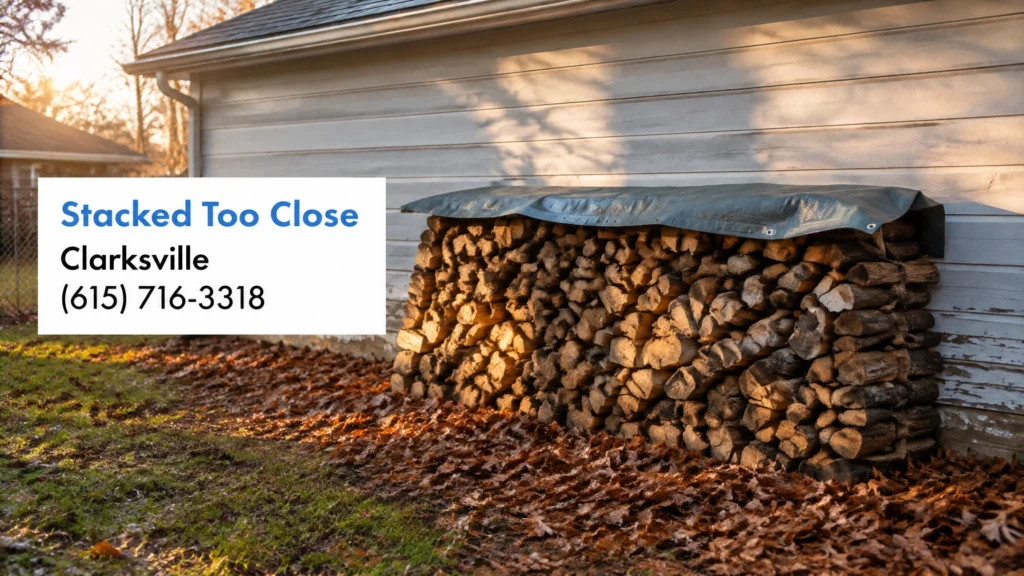
1. The three foot rule and why the wall is the real problem
A firewood pile pressed against siding can hold dampness against the paint and sheathing long after rain has passed. It also gives mice and insects a sheltered route along the wall, where small openings can be harder to spot. Cornell Cooperative Extension says to keep the main pile a small distance from the house, noting that 30 feet is adequate.
In Clarksville, many yards can’t spare 30 feet for a wood stack. Use three feet as a practical target where there’s room, but don’t let the pile touch the wall if space is tight. Keep the wood off the ground, too, so air can move beneath it instead of leaves and damp soil staying against the bottom row. The simple compromise is space from the wall and a dry, raised base.
2. Check the wall the pile has been hiding
A pile that has sat in one spot for a season can hide early signs of moisture damage. Look for a dark stain line, paint that has blistered or gone dull, and siding or trim that feels soft when gently pressed. Check the mulch along the wall as well, since a deep bed holds dampness right where the siding meets the ground. Don’t cover a soft spot with fresh paint before its cause is understood.
A homeowner in Sango stacked a cord along the garage wall in October. After the first hard rain, the bottom row was sitting in wet leaves, and the paint near the base looked dull and felt soft. A pile against a wooden fence or shed has the same problem. For related dampness clues under the home, see the crawlspace moisture checks.
3. Raise the stack and cover only the top
A pallet or two sturdy runners can lift firewood out of wet leaves and soil. Stack the pieces loosely, with the ends open, so air can move through the sides. Cover only the top with a tarp or metal sheet, and leave the sides uncovered. A tarp wrapped around the whole stack may keep rain out, but it also slows drying by trapping damp air.
Freshly cut wood can have moisture content near 100 percent, and Cornell notes that it may take six months or more to reach 20 percent. Illinois Extension gives a typical drying window of six to nine months and notes that wetter wood makes more smoke, less heat, and more creosote. Dry wood often shows small checks in the end grain, including a quarter inch split at the end of a split piece. Knock two pieces together and dry wood clinks instead of thudding.

4. Think about what can shelter in a pile
Firewood can shelter mice, carpenter ants, wood-boring beetles, and termites. The concern is greatest when the stack touches the house or sits on damp ground, giving pests both cover and a route toward the structure. In Clarksville, a pile tucked beside a St. Bethlehem foundation makes it harder to notice activity along the wall until signs appear indoors. Check the ground and siding around the stack during a regular outside walk.
Seeing an insect on a piece of wood doesn’t automatically mean the house is infested. Don’t carry questionable logs indoors and leave them beside a warm wall. Keep the main stack separate from the house, and bring in only what’s needed soon. For entry-point ideas, read the guide to sealing mice out before winter.
5. Make the trip to the door smaller and safer
Bring in only enough firewood for the next day or two, and keep the indoor stack small and off the floor. That limits how long insects or damp bark sit inside. Store ashes in a metal can with a lid, outdoors and away from combustible materials. The seasonal fireplace and hearth safety checks cover that separate part of the routine.
A wood pile can also be a trip hazard on a dark evening, especially where the path from the door is uneven or poorly lit. Watch for the wet track worn into the lawn from repeated trips. A Clarksville landlord may notice both issues during an evening walk, while a St. Bethlehem seller might catch them before listing photos. Keep the route clear, and put the stack where it won’t pinch a walkway.

6. Check the pile during turnovers and before photos
A pile left by a tenant can hide wall marks, wet leaves, and soft siding until the property is being prepared for a showing. Before photos, move the wood enough to see the wall and ground behind it, then note any stains, paint blisters, or damp patches. In Woodlawn, a rental owner may want the same quick check during a seasonal visit, not just at move-out. The pile itself can also make a yard look less cared for in listing photos.
A move-out near Fort Campbell can leave a stack behind just as the ground turns wet. Check whether the bottom row sits in saturated soil, and look for water pooling near the wall. For grading and runoff concerns, see the guide to fall drainage and grading checks. In Clarksville and Montgomery County, a dated photo and a short note by property address can help track whether the wall changes from one inspection to the next.
If you’d like help with a wall or siding concern, call or text (615) 716-3318, or request a free match. Fix It Quick Network is a referral network, not a repair crew, and the pros in the network are licensed and insured. Start by walking the outside wall behind the pile and noting any soft spots, blistered paint, or dark stain lines. That gives a matched local pro a practical place to begin.
Frequently asked questions
How far should firewood sit from a house?
Cornell Cooperative Extension says 30 feet is adequate for the main pile, though many yards don’t have that space. Keep the stack off the wall and ground, and leave as much room as the property allows.
Is a tarp over the whole stack a problem?
A tarp wrapped around the sides can limit airflow and slow drying. Cover the top only, leaving the sides open.
How can a homeowner tell if wood is dry?
Look for checks in the end grain and listen for a clear clink when two pieces are knocked together. A dull thud can mean the wood is still green, so a moisture meter can help confirm it.
Do insects in firewood mean the house is infested?
No, an insect on a log does not prove there is activity inside the home. Keep the stack away from the wall and ground, and watch for signs near the foundation and siding.
Should a rental keep firewood near the back door?
Keep only a small amount indoors or near the entry for immediate use, and keep the main stack away from the house. During turnover, check behind any pile left by a tenant.
What should be done if siding behind a pile feels soft?
Record the spot and look for moisture sources such as wet mulch or leaves along the wall. Avoid painting over it before the cause and extent of the damage are clear.