1. What actually stops the furnace
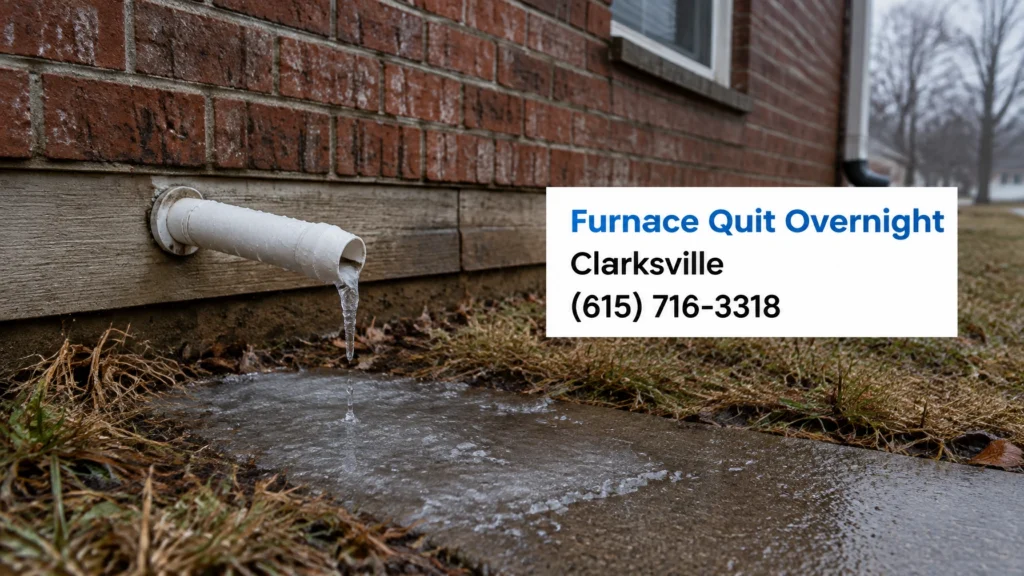
Start with what the furnace is trying to do. A high efficiency gas furnace rated 90 percent or better makes water as it burns gas, and that water drains through a small plastic trap and a white PVC line, usually three quarter inch. On a freezing Clarksville night, water can freeze in the exposed run or at the outlet. The blockage stops condensate from draining, pressure builds, and a safety pressure switch shuts off the burners.
The confusing part is that the unit may still run. The blower can keep moving air, so the vents feel cool even though the thermostat is still calling for heat. A homeowner in St. Bethlehem woke to a 58 degree house after the furnace shut down overnight, with the thermostat still calling for heat. Ice at the end of the PVC line was the cause. A heat pump problem is a different system and a different check, covered in this heat pump guide.

2. Find the line and see whether it is frozen
Follow the white PVC pipe from the furnace cabinet. The line often runs through the rim joist, or down into a crawlspace, before it exits outside to daylight. Look for an icicle hanging off the discharge end, a frost patch or bulge on the pipe, or a shallow puddle on concrete near the furnace that has refrozen. Those clues narrow the search, though they don’t confirm the drain is the only problem.
Check the small plastic condensate trap near the furnace, too. It holds water as part of the drain system, and that water can freeze if the area gets cold enough. Don’t take the trap apart or open furnace panels. In Clarksville rentals, a quick visual check of the accessible pipe and outlet can give a tenant or manager useful details to report. A dated photo of the ice or puddle can help the HVAC pro see what happened.

3. Thaw it safely
Turn the furnace off at its service switch before working near the drain. Use a hot water bottle against the frozen pipe, warm damp rags wrapped around it, or a hair dryer set to low or medium, moving along the frozen section. The hair dryer method can take 20 minutes or more. The HVAC.com thawing guide also warns against boiling water, which can crack PVC.
Never use an open flame, and don’t use an electrical appliance outside in rain or snow. Once the ice clears, switch the furnace back on and listen for the burners to catch. If they don’t, or the line is cracked, stop there and arrange an HVAC check. You don’t need to keep resetting the system or open the trap.
4. Keep it from freezing again
Insulate exposed sections of the drain with foam pipe wrap, and keep the discharge end clear of snow, leaves, and any leaf dam at ground level. In Clarksville, a line that exits close to the ground also picks up splash and wet leaf litter. Check that the line still falls toward the outside so water doesn’t sit in a low spot. Repeated freezes usually mean the drain needs a closer look. For other seasonal checks, see the guide to fall heating system checks.
A long term fix may involve changing where the pipe exits the house. One HVAC School article describes a near horizontal line with only an eighth to a quarter inch of fall, and discusses a steeper 45 degree downward exit or upsizing the pipe from three quarter inch to one and a half inches. These changes need to follow local code and belong with a licensed HVAC pro, not a weekend repair. The technical explanation notes that they can be complex and costly.
5. What it costs and when to get matched with a pro
The cost depends on what the pro finds. A short daytime visit to thaw and check an accessible line may be in the low hundreds, while after hours service, poor access, or a drain reroute can cost more, sometimes several hundred dollars or more. These are general ranges, not a quote. The slope of the line, an outlet blocked by leaves or ice, and whether the problem has happened before all affect the work.
If the line keeps freezing, get matched with a pro instead of repeating the same thaw every cold snap. A failed heat exchanger, cracked inducer, or furnace replacement is specialty HVAC work. Fix It Quick Network is a referral network, not a repair crew, and can point you to the right HVAC specialist. The pros in the network are licensed and insured. A clean filter is worth checking, but it won’t fix a frozen drain. See the guide to winter HVAC filter changes for that separate maintenance task.
6. The rental, vacancy, and closing angle
A thermostat set back too far in a vacant rental can leave the drain and other cold areas more exposed. A Sunday night no heat call may mean a tenant is using space heaters while waiting for help. If the condensate line freezes twice in one week, record the dates and let the property manager know. For a property manager working in Clarksville and Montgomery County, those notes can help show whether the issue is recurring and what needs attention.
Before listing photos or a pre-listing walk, check that the heat runs and make a dated photo of the discharge end, with a note tied to the property address. That simple record is useful during a Fort Campbell move out or turnover in Sango or Woodlawn. Before leaving a home vacant in cold weather, arrange a documented heat check and make sure someone knows how the system is set. The empty house winterization guide covers other vacancy checks.
If you’d like help finding the right local pro, call or text (615) 716-3318, or request a free match. Share the property address, what the furnace is doing, and whether the drain has frozen before. That’s enough for a practical next step.
Frequently asked questions
Why does a furnace run but blow cold air on a freezing night?
A blocked condensate drain can shut off the burners while the blower continues to move air. The thermostat may still be calling for heat.
How can a homeowner tell if the condensate line is frozen?
Look for ice or an icicle at the outlet, frost on the pipe, or a puddle near the furnace that has refrozen. These signs are clues, not a full diagnosis.
Will hot water thaw a frozen drain line?
Use warm damp rags or a hot water bottle on the pipe. Don’t pour boiling water on PVC, since the sudden heat can crack it.
Why does it freeze again every winter?
Water may be sitting in a low spot, the outlet may be blocked, or the drain may pass through a cold area. A repeat freeze needs an HVAC pro to check the setup.
Is a frozen condensate line an emergency?
A furnace that can’t heat the home during freezing weather needs prompt attention. If safe thawing doesn’t restore heat, arrange an HVAC specialist rather than continuing to reset the unit.
What should a landlord do when a rental loses heat?
Respond promptly, ask the tenant to report the thermostat setting and symptoms, and arrange an HVAC check. Document the call, any temporary steps, and whether the drain froze before.