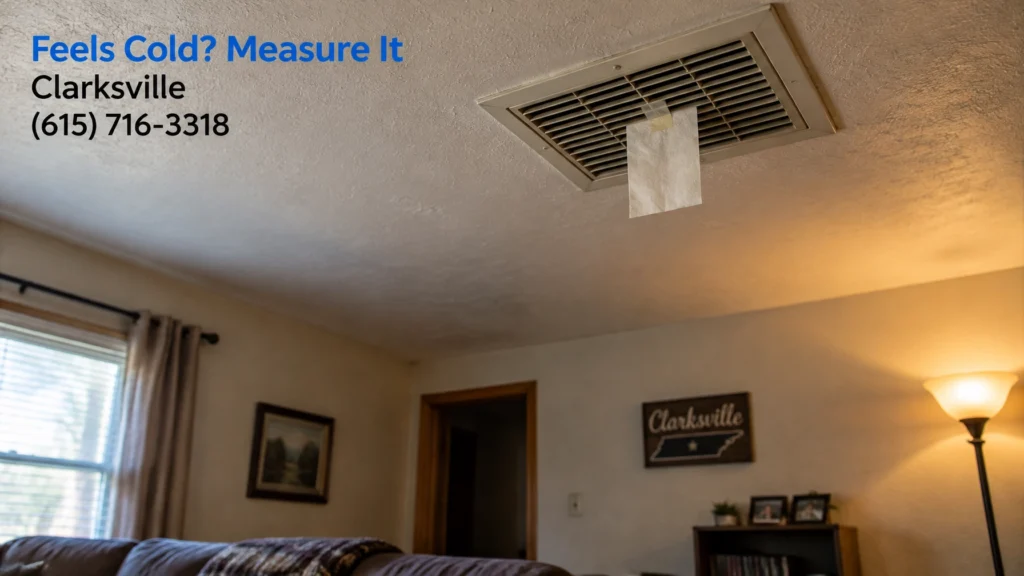
1. Feel the air first, then measure it
A hand is a poor thermometer. Heat pump supply air often lands around 85 to 95°F, while a gas furnace may deliver air at 120°F or hotter. If the room is 68°F, the heat pump air can feel cool against skin used to furnace heat. The complaint feels real, even if the system is heating normally.
For a useful check, place a cheap digital thermometer in a supply register for five minutes, then compare the reading with the room temperature on the thermostat. After the heat pump has run for ten minutes, supply air roughly 15 to 20 degrees above room temperature is a good sign. Readings below that don’t prove a failure, but they do mean something may be off.
A piece of tissue taped to a supply grille that hangs limp instead of fluttering can also hint at weak airflow. Start with the temperature reading. It gives the next step a clearer basis than a hand at the vent.
2. Read the thermostat setting before you touch anything else
Check the thermostat display and switches before changing any settings or touching wiring. Confirm that the mode says heat, not cool or auto, and look at the fan setting. Fan set to ON is a common reason air feels cool between heating cycles. The blower keeps moving room temperature air through the ducts, even when the heat pump isn’t actively warming it.
Also check for a summer schedule still running, low batteries in a display that remains lit, or emergency heat left on after a cold morning. Don’t open the thermostat or adjust wiring. A display can still light up while weak batteries cause odd behavior.
A homeowner in Sango called during the first cold week because the register in a back bedroom felt cold every morning around six. The fan switch on the thermostat was set to ON, so the blower was pushing room temperature air through the ducts between heating cycles. Setting it back to AUTO fixed the complaint with no service call.

3. Expect a defrost cycle on a cold damp morning
A heat pump draws heat from outdoor air, which can leave its outdoor coil cold enough for frost to form. Fine white frost feathering along the outdoor coil on a damp 35 degree morning is a familiar sight. Every so often, the system reverses briefly to warm the outdoor coil and melt that frost.
During defrost, the indoor coil briefly does the cooling job. The registers may blow cool air, the outdoor fan may stop, and steam may rise from the unit. Then the system switches back to heating and the air warms again. A brief cool spell like this is normal, and understanding it can spare a worried call at six in the morning.
The cycle should clear ordinary frost. A solid block of ice that doesn’t clear, or frost that stays on the coil long after the system has run, calls for an HVAC specialist to check the equipment. This can happen in Clarksville during damp winter weather, even when the temperature is above freezing.

4. Clear the outdoor unit and leave it uncovered
A heat pump needs to move air across its outdoor coil through winter. Leaves, a snow drift, a tarp, storage tubs, or a vinyl cover can get in the way. Keep about two feet clear on all sides, leave the top open, and don’t rinse the unit while it’s running.
A full cover can turn a normal cold-weather system into an airflow problem. In St. Bethlehem, as elsewhere around Clarksville, a heat pump needs to stay uncovered and powered. For more on seasonal outdoor equipment, see closing down an outdoor AC unit for winter. That guidance explains why a heat pump is different from a cooling-only unit.
5. Check indoor airflow before blaming the equipment
Airflow problems can make a system feel weak throughout the house. Look at the filter and replace a dirty disposable one, or clean a reusable one according to the equipment instructions. Check that a return grille isn’t half covered by a sofa or rug, and that registers haven’t been shut in unused bedrooms.
A heat pump moves a lot of air at a lower temperature than a furnace. If the return is choked, air from every register may feel weak and cool. In a Sango home, notice whether airflow feels poor in every room or just one. A tissue at the grille that hangs limp instead of fluttering can be another clue.
For seasonal filter basics, read HVAC filter changes for winter. A dirty filter is a simple check, not a reason to open equipment panels or try to diagnose internal parts.

6. Know which part belongs to a specialist
Some heat pump concerns need an HVAC technician. Refrigerant charge, the reversing valve, defrost board, compressor, auxiliary heat wiring, and the electrical panel on the outdoor unit are not homeowner projects. Gas equipment and refrigerant work belong with the right specialist, too.
A diagnostic visit often lands in the low hundreds. The total cost depends on which part is involved, the equipment’s age, and whether the home has a straight heat pump or a dual fuel setup. Those are general ranges, not a quote. For seasonal checks and warning signs, see fall heating system checks for Clarksville homes.
The pros in the network are licensed and insured. Fix It Quick Network is a referral network, not a repair crew, and can point homeowners in Montgomery County to the right HVAC specialist. That includes homes in Woodlawn and near Fort Campbell. If the equipment is iced over or the house keeps losing temperature, stop at the basic checks and arrange a specialist visit.
If you’d like help finding the right specialist, call or text (615) 716-3318, or request a free match. A practical first step is to write down the register temperature, thermostat setting, and how long the system has been running.
Frequently asked questions
Why does a heat pump feel cool when it is heating?
Heat pumps usually deliver lower-temperature air than gas furnaces, so the airflow can feel cool against skin even while it warms the room. A register reading above room temperature helps tell the difference.
How long does a defrost cycle last?
A defrost cycle usually lasts a few minutes, though the timing varies by system and conditions. The air should warm again once the cycle ends.
Should the fan be set to AUTO or ON in winter?
AUTO is usually the better setting for normal heating. ON can keep the blower running between heating cycles and make room-temperature air feel like cold air from the vents.
What temperature should the air at a register be?
Supply air often measures around 85 to 95°F while a heat pump is heating. Check after the system has run for ten minutes and compare the reading with the room temperature.
Will a heat pump keep up when it drops below freezing in Clarksville?
Many heat pumps can heat below freezing, though capacity and efficiency depend on the equipment and outdoor conditions. If the home keeps getting colder or the system relies on auxiliary heat for long stretches, arrange an HVAC specialist check.