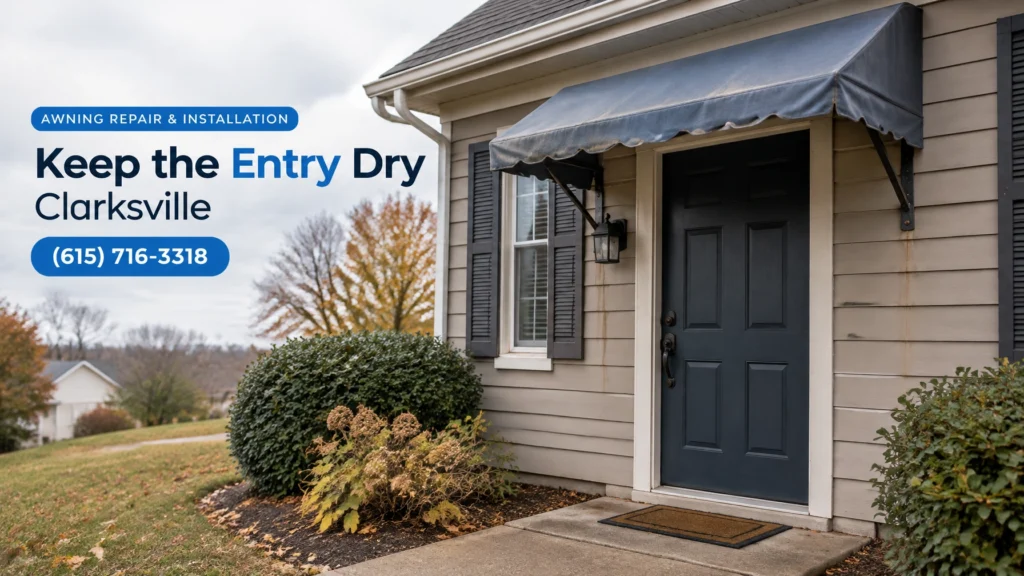
A small awning can make a front door more comfortable in summer and keep some rain off the threshold. But if the fabric sags, the frame rattles, or water runs behind the wall brackets, the awning may need more than a quick cleaning.
The good news is that you don’t need to guess whether to repair or replace it. A few safe checks can show what’s going on, and the right local pro can inspect the mounting and drainage before recommending work. Fix It Quick Network connects homeowners in Clarksville and Middle Tennessee with vetted local handymen. The Network doesn’t perform repairs.
1. What an exterior door awning does for your entry
An awning helps shield the doorway from sun and rain. It can also make the entry feel more comfortable when you’re opening the door or bringing in groceries during a shower.
Good drainage matters. The awning should slope away from the house, and water should leave at the front edge rather than collect in a sagging pocket or seep behind the wall connection. A properly fitted canopy also needs enough clearance for the door to open freely.
Look at how your awning handles an ordinary rain, not just how it looks on a dry day. Check whether water drips at the front edge, runs down the siding, or pools near a bracket. An awning is a small feature, but its attachment and drainage affect the wall around it.
2. Signs your awning needs attention
Small changes often show up before an awning becomes a bigger concern. Look from a safe spot on the ground and notice whether anything has shifted, loosened, or begun to hold water.
Common signs are easy to spot from the ground.
- Fabric that looks slack, torn, or pulled away from its frame
- A bent support arm or a rattly frame in a light breeze
- A low spot where rainwater can gather
- A bracket that appears to pull away from the wall
- Rust, cracked plastic, or loose visible fasteners
- A dark water stain or split caulk near the wall connection
- A door that catches the awning or no longer opens fully
A hairline crack in a rigid panel may spread over time. A small gap at a mounting point can also let water behind the siding or trim. If you see movement, sagging, or pooling, avoid standing beneath the awning and arrange an inspection.
3. Common awning problems around Clarksville
Weather, age, and how an awning was attached all affect its condition. In Clarksville and across Montgomery County, a mix of sun, rain, humidity, and seasonal storms can wear fabric, loosen fasteners, and expose weak points in the wall connection.
Fabric awnings may fade, split at a seam, or lose tension. Metal canopies may dent or develop rust around joints. Polycarbonate panels can crack, and loose or poorly fitted fasteners may allow water to work into the connection. Sometimes the awning itself is still sound, but the trim or siding behind it has started to soften.
A homeowner in Sango noticed a small drip beside the entry after a steady rain. The awning fabric looked mostly fine, but the siding had a dark stain near one bracket. That’s a useful reminder to check the wall as well as the canopy.
4. Easy checks you can do first
A ground level visual check is a sensible place to start. You don’t need to climb onto the awning, pull on a support, or remove hardware to learn whether it may need attention.
Check these items from a safe position.
- Look for visible sagging, tears, cracks, rust, or bent supports.
- Notice where water drips during rain and whether it gathers on the canopy.
- Check for staining or separated caulk where the awning meets the wall.
- Open and close the door slowly to confirm it clears the awning.
- Listen for rattling in a mild breeze, but don’t push or shake the frame.
Don’t climb a ladder to reach a loose bracket or try to tighten a loaded awning. If a section is pulling away, visibly bent, or holding water, keep clear and get it inspected. A photo taken from the ground can help describe the issue when you request a match.
5. Fabric awning care and cleaning
A fabric awning may only need gentle cleaning if it’s intact, taut, and draining properly. Start by checking the manufacturer’s care instructions, since cleaning products and methods vary by fabric.
For light dirt, a soft brush and mild soap may be enough. Rinse gently and allow the fabric to dry fully. Avoid harsh cleaners and forceful spray, which can damage the finish or push water into seams and the wall connection.
Check for a split seam, frayed edge, or fabric pulling from its frame. Cleaning won’t fix stretched fabric or a weak support. If the cover is damaged but the frame and attachment are sound, a replacement fabric cover may be possible without replacing the whole awning.

If you’re thinking about washing the surrounding siding, use care around the entry. The exterior cleaning guide for Clarksville homes explains why stronger spray can force water behind exterior materials.
6. Metal and polycarbonate awning fixes
Rigid awnings need a sound frame, secure attachments, and a clear path for rainwater. A small dent or a cracked panel may look like a simple part replacement, but first check whether the supports and wall connection are still stable.
Metal canopies may need attention if a joint is rusty, a panel is bent, or the drip edge no longer sheds water away from the entry. Polycarbonate panels need support and a proper slope. A flat panel can hold water just like sagging fabric.
Don’t patch a cracked panel or seal around a bracket without understanding where the water is going. A surface patch may hide the entry point while moisture continues behind the siding. A qualified pro can check whether the panel, frame, fasteners, and wall connection need separate repairs.

7. Mounting hardware and attachment to the house
The wall connection is one of the most important parts of an awning. A canopy can look secure from the driveway while its brackets are attached only to trim or siding, rather than to sound framing or masonry.
The installation should account for the wall material and the awning’s size. It should also keep water from slipping behind the bracket. Caulk can help seal an exterior joint, but it isn’t a substitute for sound attachment and proper flashing.
Look for signs that water may be getting behind the connection, such as a dark stain, peeling paint, soft trim, or a recurring damp patch. Don’t remove the bracket to investigate. If the wall feels soft or the awning moves, have the attachment checked before the next storm.
If the entry itself has a sticky door or a worn threshold, mention that too. The floor transition repair guide covers another common issue at doorways, though an awning and an interior floor transition need separate inspections.
8. When sagging or pooling water means replacement
Sagging deserves attention because trapped rain adds weight. If water is pooling, the frame is bending, or the awning is pulling away from the wall, stay out from underneath it and don’t try to lift or adjust it yourself.
A repair may be reasonable when the frame is sound and the problem is limited to a fabric cover, a replaceable panel, or a small hardware issue. Replacement may make more sense if several parts are worn, the frame has bent, or the wall connection has failed.
A pro should also look for moisture damage where the awning attaches. If the surrounding structure is soft or damaged, that work may need a carpenter or another specialist. The next step should match the cause, not just make the canopy look better.
9. Related problems to watch elsewhere on the entry
The awning isn’t the only part of the entrance that can show water wear. Check the door trim, threshold, nearby siding, and the ground below the entry for signs that water is landing where it shouldn’t.
Look for split caulk, peeling paint, a swollen section of trim, or a soft spot near the bottom of the door frame. Watch whether rain runs along the wall or collects at the threshold. These details can help a local pro tell whether the awning is draining poorly or another part of the entry needs attention.
If you’re preparing a home for a showing in St. Bethlehem or a rental turnover near Fort Campbell, take a few clear photos and note when the leak or drip appears. A short record can help separate a cosmetic issue from a repair that needs prompt attention.
Water concerns elsewhere in the home deserve their own checks too. A water heater showing rust or dampness is a separate system, but it’s another reminder that small signs are worth noting early.
10. What awning repair and replacement may cost around Clarksville
Awning costs depend on size, material, access, and what the inspection finds behind the bracket. A simple repair to fabric or hardware may cost a few hundred dollars or less. A full replacement commonly falls around $500 to $2,000 as a broad planning range, with custom designs and more involved work sometimes costing more.
The final cost may change based on several factors.
- Awning width and how far it projects from the house
- Fabric, metal, or polycarbonate material
- Whether the frame can be reused
- Height and access to the entry
- Removal and disposal of the old awning
- Wall repairs, flashing, or replacement fasteners
- Custom fabrication or special design requirements
These are general ranges, not a quote. Ask for a written estimate that explains what is being repaired or replaced, what happens at the wall connection, and whether any additional wall work is expected. For a larger or fixed canopy, check with local building officials about any permit or placement requirements before work begins.
11. Get a Free Match with a Local Pro
You can handle a basic visual check and gentle cleaning if the awning is stable. You don’t need to climb up, tighten a questionable bracket, or decide on replacement before someone checks the attachment and drainage.
If the awning sags, pools water, has a loose connection, or shows signs of moisture at the wall, Fix It Quick Network is a referral network, not a repair crew. We can match you with a vetted local pro, and the pros in our network are licensed and insured. The Network serves homeowners around Clarksville, Montgomery County, Sango, St. Bethlehem, and Fort Campbell.
If you’d like help with the next step, call or text (615) 716-3318 or request a free match. Include your location and a photo taken from the ground, if it’s safe. That gives the local pro a useful starting point.

12. Frequently Asked Questions
Can I repair an exterior door awning myself?
You can inspect it from the ground and gently clean intact fabric if the manufacturer allows it. Don’t climb onto the awning, adjust a loose support, or work beneath a sagging canopy. Get a pro to check any movement, pooling, or wall damage.
How do I know if my awning needs replacement?
Replacement may be worth considering if the frame is bent, several parts are worn, fabric has stretched or torn, or the attachment to the house has failed. A pro can check whether a limited repair is still practical.
Is pooling water on an awning a serious concern?
It can add weight and strain the fabric, frame, and mounting points. Keep clear of an awning that is sagging or holding water, and arrange an inspection rather than trying to lift or drain it yourself.
Can a new awning be attached to siding?
The mounting method depends on the home’s construction and the awning. A secure attachment needs to suit the wall behind the siding, not just the visible exterior layer. Ask the installer to explain how the brackets will be attached and how the wall connection will shed water.
How much does awning replacement cost in Clarksville?
A full replacement commonly falls around $500 to $2,000 for general planning, but size, material, custom work, access, and wall repairs can change the cost. Get a written estimate for the specific home and awning.
Should I retract or secure an awning before severe weather?
Follow the manufacturer’s directions for your specific awning. Before severe winds, avoid going outside to adjust it once conditions become dangerous. FEMA’s severe wind guidance recommends inspecting and securing exterior features such as canopies as part of property preparation.